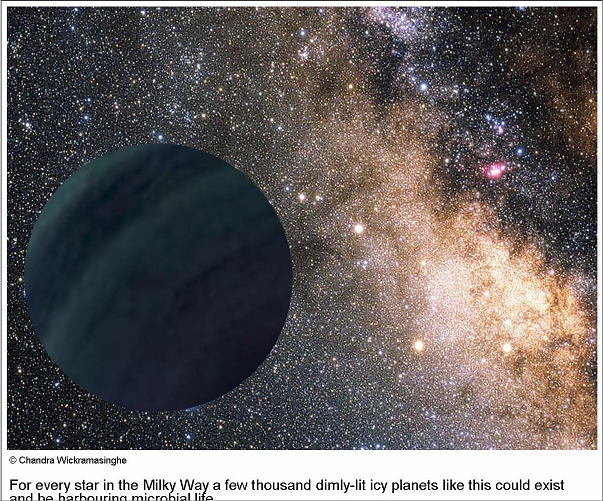
A few hundred thousand billion free-floating, Earth-sized planets may exist in the space between stars in the Milky Way, argues an international team of scientists in Astrophysics and Space Science.
Because it's required for astronomy claims this decade, they make note that those planets could have alien life.
Since "spacetime" is simply a term for a space that has a component we call "time", we need only concentrate on spaces in a somewhat general sense. Now, as
Derek Potter, on this site, pointed out to me,
a little while ago, "To us, a space is somewhere to put a box :)" So, let's take a short "detour" to address what we will mean by a space, in this series.
Athletes sometimes 'choke' - succumb to pressure and underperform - in key situations. How can an athlete be among the top 1,000 participants in the world at a task and be paralyzed by situations in a game they play with expertise?
Choking happens to lots of people. We've all heard people say they can't take tests, for example. A new analysis from the California Institute of Technology (Caltech) suggests that when there are higher incentives to succeed, people can become so afraid of losing their potential reward that their performance suffers.
It's no surprise that tattoos and piercings
have been linked to other risky decisions but capped Internet bandwidth?
People who claim to see the 'aura' of others - and subsequently claim they can modify them - may actually have synesthesia, according to new research.
Synesthesia is believed to occur due to cross-wiring in the brain; synesthetes have more synaptic connections than 'normal' people and some are interconnected in ways others are not, including across brain regions. Since the brain regions responsible for the processing of each type of sensory stimuli are intensely interconnected, synesthetes see or taste a sound, feel a taste, or associate people with a particular color.
CONTENTS
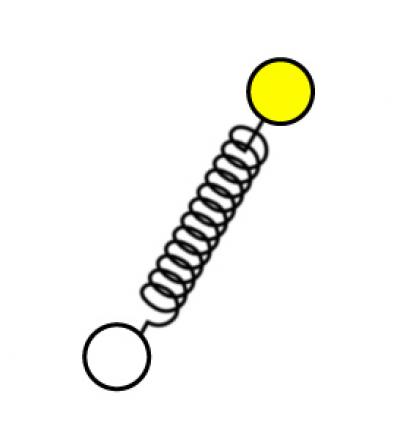
PART A: Introduction: does the inertia of a body depend upon its energy content?
PART B: The Toolkit: mathematical and physical assumptions
PART C: The Thought Experiment and the Word Problem
PART D: The Derivation. Solving the Word Problem
PART E: Conclusion: Einstein's Style or How to not be a Crack Pot
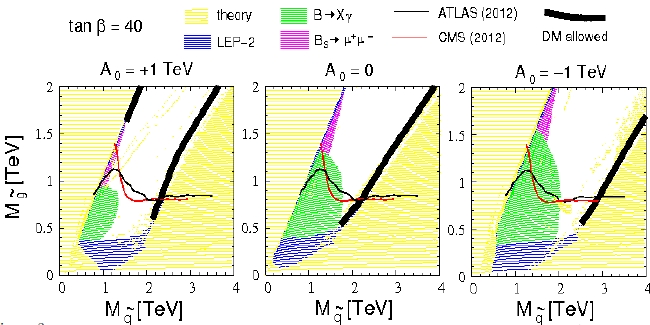
Today I read with pleasure a paper on Supersymmetry which is surprisingly well written and clear. I can only warmly advise anybody seriously interested in the phenomenology of SUSY (in particular, the version called "constrained minimal supersymmetric extension of the Standard Model", cMSSM for friends) to give it a close look.
The cMSSM is a very attractive "minimal" option to extend the Standard Model with a minimal addition of parameters (still, quite a few, as in any Supersymmetric theory). Its appeal lies in the fact that one may basically study the resulting predicted phenomenology by just investigating five crucial parameters.
PITTSBURGH and LYON, France, May 11, 2012 /PRNewswire/ -- Mylan Inc. today announced that it has launched Atorvastatin Calcium Tablets, 10 mg, 20 mg, 40 mg and 80 mg in France, Belgium, the UK, the Netherlands and Ireland. Mylan has received marketing authorization from each country's respective health authority to begin selling its product immediately. Atorvastatin Calcium is the generic version of Pfizer's Lipitor® Tablets. This product is indicated for the prevention of cardiovascular disease and hypercholesterolemia.
Shortly after celebrating the tenth anniversary of its time in service, engineers have declared the Envisat satellite lost, following numerous attempts to re-establish contact since April 8th.
Which countries are the best at providing higher education?
The Universitas 21 Ranking was announced today at Lund University in Sweden. Universitas 21, a network of research universities, has developed their own ranking as a benchmark for governments, education institutions and individuals to highlight the importance of creating a strong environment for higher education institutions that will contribute to economic and cultural development, provide a high-quality experience for students and help institutions compete for overseas applicants.
So calibrate accordingly when the metrics for 'higher education' don't actually mention education.




.gif "The Most Famous Equation Of Physics And Its Derivation")

 last image.jpg "The End For Envisat")


