




The World Conference on Science Journalism held in London 2009 has its own web site, of course. Today they were so kind to let me know they had published there the recordings of all sessions, among which was the one where I gave my speech. The session title was "Blogs, Big Physics, and Breaking News", it featured Matin Durrani as chair, and Matthew Chalmers, myself, and James Gillies as speakers. The abstract ran as follows:

How are blogs changing the way science news develops and is reported?
The commissioning of the Large Hadron Collider at CERN will offer a
telling case study over the next few years. Who will be first with news
The knock on drastic global warming mitigation solutions by detractors is that it may end up being expensive and not accomplish much - the classic government scenario.

'Cash for Clunkers' is an example of that, according to new UC Davis estimates which say the federal government's 'Cash for Clunkers' program is paying at least 10 times the sticker price to reduce emissions of carbon dioxide.

And that's in comparison to carbon credits, already unlikely to work.   Carbon credits are projected to sell in the U.S. for about $28 per ton (today's price in Europe was $20) so even the best-case calculation of the cost of the clunkers rebate is $237 per ton, said UC Davis transportation economist Christopher Knittel.
Air conditioning technology hasn't changed much in the last 50 years and though different climates have different optimal air conditioning requirements, economies of scale force companies into a one-size-fits-all method.

Many western states are hot and dry, for example, but use cooling systems that were designed for warm and humid climates.

Launched in June 2008, the UC Davis Western Cooling Challenge is a program of activities designed to help cooling-unit manufacturers deliver better products and get them installed in low-rise, nonresidential buildings, like suburban retail and office buildings.  The Cooling Challenge is based on the premise that Western-specific technologies should be able to cool using far less energy.
Small bursts of heat and energy called nanoflares cause temperatures in the sun's atmosphere to reach millions of degrees, according to NASA researchers..

The sun's outer atmosphere, or corona, is made up of loops of hot gas that arch high above the surface. These loops are comprised of bundles of smaller, individual magnetic tubes or strands that can have temperatures reaching several million degrees Kelvin (K), even though the sun's surface is only 5,700 degrees K.
A Dresden research team using laser tweezers  measured the friction between a single motor protein molecule and its track and say that within our cells, motors work against the resistance of friction and are restrained in its operation—usually by far not as much though as their macroscopic counterparts.

These first experimental measurements of protein friction could help researchers to better understand key cellular processes such as cell division which is driven by such molecular machines.
A new mathematical model  could significantly improve the automatic recognition and processing of spoken language, meaning algorithms which imitate brain mechanisms could help machines to perceive the world around them.

Many people will have personal experience at how difficult it is for computers to deal with spoken language - people who "communicate" with automated telephone systems need a great deal of patience because if they speak just a little too quickly or slowly, or pronunciation isn't clear, the system often fails to work properly.
Members of sexual minorities are almost twice as likely as heterosexuals to seek help for mental health issues or substance abuse treatment.  48.5% of lesbian/gay/bisexual individuals reported receiving treatment in the past year as compared to 22.5% of heterosexuals. In addition, gender was shown to play a large role; lesbians and bisexual women were most likely to receive treatment and heterosexual men were the least likely, according to the results in BMC Psychiatry.

Susan Cochran worked with a team of researchers from the University of California, Los Angeles using data they collected from 2074 people first interviewed in the California Health Interview Survey.
Michael Massing at The NY Review of Books weighs in on the future of news organizations in the era of blogs:
A couple of months ago I wrote here about the first observation of a process called "diboson production", a quite rare occurrence in hadronic collisions: for the first time, the CDF collaboration could observe that rare process in events containing hadronic jets, which are usually riddled by enormous backgrounds.
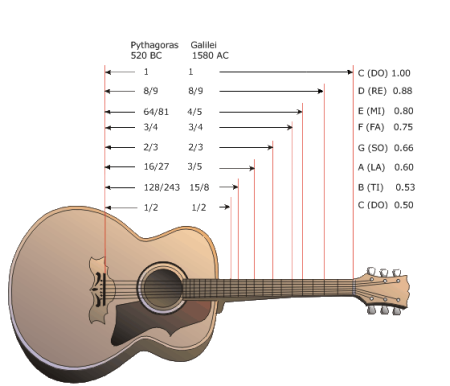
Because I have played guitar some 30 years, I have always been interested in guitar construction.   I have multiple guitars because they all have different tones and are used for different things - that doesn't always make sense to people because a guitar is a guitar but I am not even in the top 50,000 guitarists obsessed with tone.    

Eric Johnson, most famous for "Cliffs of Dover"(1) says he can hear a difference in the batteries he uses in his gear - and I believe him.  There are too many instances of elite (yeah, I used that word) people doing extraordinary things to pass it off as placebo effect.

