LONDON, July 22 --
The nascent Russian navigation and telematics market is witnessing a reversal
of trends, with global positioning system (GPS)-enabled smartphone technology
gaining ground over traditional portable navigation devices (PND). In 2009, the
smartphone-based navigation market already exceeded 350,000 units sold in
Russia, while the PND market failed to register even half that amount.
(Logo: http://www.newscom.com/cgi-bin/prnh/20081117/FSLOGO)
SAN DIEGO, July 22 --
- Revenues US$2.8 Billion, EPS US$0.44
- Pro Forma EPS US$0.54
- Raises Fiscal 2009 Revenue and Operating Income Guidance
Qualcomm Incorporated (Nasdaq: QCOM), a leading developer and innovator of
advanced wireless technologies, products and services, today announced results
for the third quarter of fiscal 2009 ended June 28, 2009.
One of my recently developed rules: avoid the last minute rush. I don't run to catch the Metro train, and I don't scramble to put my data into some sort of coherent form when I have to give a lab meeting presentation on short notice.
So I'm not scrambling for my lab meeting talk tomorrow. My plan is, in the absence of any solid results to present, to go visionary, saying whatever I want to, without having to back it up with supporting data. And in the spirit of scientific openness, I'm providing a sneak preview of what may tomorrow turn out to be a terrific mess of a lab meeting talk.
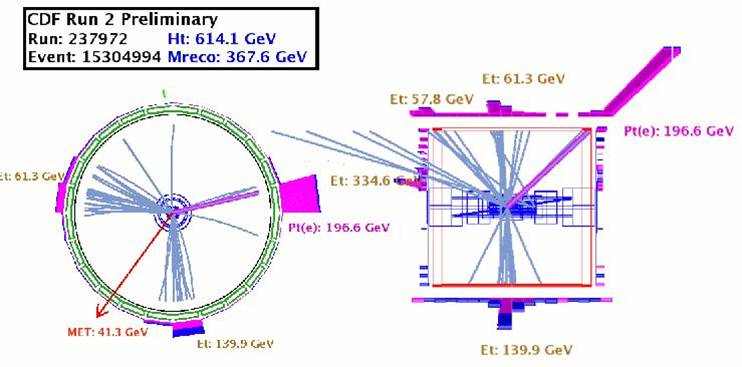
In this two-parts article I wish to describe in some detail, but still at an elementary level, the characteristics of one of the most important probes of the physics of subnuclear collisions at today's particle physics experiments: jets of hadrons originated from energetic bottom quarks, or more familiarly, b-jets. By posting a dedicated article on b-jets, I hope I will be able to describe in more detail elsewhere other physics topics, such as Higgs boson decays or top quark signatures, without being hampered by having to introduce the phenomenology and detection of b-jets from scratch every time.
Scientists in Nevada are reporting development of a new and environmentally friendly process for chicken parts that are a lot better for you than Chicken Nuggets - namely, producing
biodiesel fuel from 'chicken feather' meal, the 11 billion pounds of poultry industry waste that accumulate annually in the United States alone.
In the study Mano Misra, Susanta Mohapatra, Narasimharao Kondamudi, and Jason Strull used chicken feather meal, which consists of processed chicken feathers, blood, and innards that have been processed at high temperatures with steam.
University of Utah School of Medicine researchers and their colleagues at University of Texas (UT) Southwestern Medical Center have found strong evidence that abnormal calcium signaling in neurons may play an important role in the development of spinocerebellar ataxia type 2 (SCA2), a disorder causing progressive loss of coordination, speech difficulty, and abnormal eye movements. Their findings are published in the Journal of Neuroscience.
SCA2 is an inherited neurodegenerative disease that predominantly affects neurons called Purkinje cells in the cerebellum, the region of the brain that controls voluntary muscle movements, balance, and posture. It is one of a group of genetic disorders characterized by ataxia, or loss of muscle coordination.
Scientists in Hangzhou joined residents and tourists across China and India in observing the longest total solar eclipse in a century - and probably the most-viewed one ever. The moon's shadow traced a path across the world's two most populous countries for five minutes and 36 seconds, a treat for scientists and spectators alike.
"We saw it! The clouds kept getting thinner, and we even had a pretty good-sized hole in the clouds for the five minutes of totality," reported Expedition Leader Jay Pasachoff, Field Memorial Professor of Astronomy at Williams and chair of the International Astronomical Union's Working Group on Solar Eclipses, at an observatory near Hangzhou, China as part of the Williams College Eclipse Expedition.
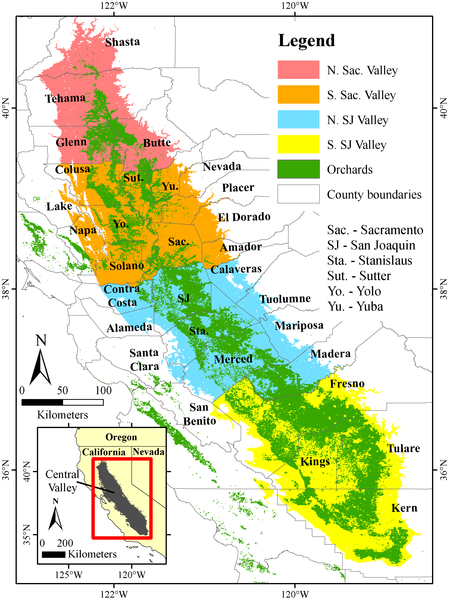
If global warming projections hold up, tree crops that rely on the 'winter chill' in California's Central Valley could be in peril, say researchers in a new study. If you aren't aware, California's Central Valley fields produce 25 percent of America’s table food, which seems like a big responsibility for a state that is below Romania in world standing in the eyes of financiers who gauge whether or not a government can pay its bills.
The study is the first to map winter chill projections for all of California, which is home to nearly 3 million acres of fruit and nut trees that require chilling. The combined production value of these crops was $7.8 billion in 2007, according to the California Department of Food and Agriculture.
A new study conducted by researchers at the National Institute of Mental Health (NIMH) and Georgia State University looked at psychiatrically healthy Americans ages 9 to 17 to determine what happens in the brains of preteens and teens at a time of significant change in social behavior.
The youths looked at photos of peers and rated their interest in interacting with each one. Then they underwent a brain scan while reviewing the pictures and rated how much each young person in the picture might want to interact with them in return. The youths were told they would be matched with a peer for a chat after the scan.
The three-spine stickleback, tiny fish that thrive in oceans and in fresh water, appear to be the same yet ecologists are finding that they are actually a diverse collection of very specialized individuals. Understanding the ecological causes and consequences of such ecological variation is the goal of a group of scientists meeting at the National Institute for Mathematical and Biological Synthesis (NIMBioS) at the University of Tennessee, Knoxville, July 27-29.