





Our brain creates our imagination by switching electric signals within a huge network of approximately 100 billion nerve cells, the individual nerve cells not having direct electric contact to each other, but being separated by a very small gap.

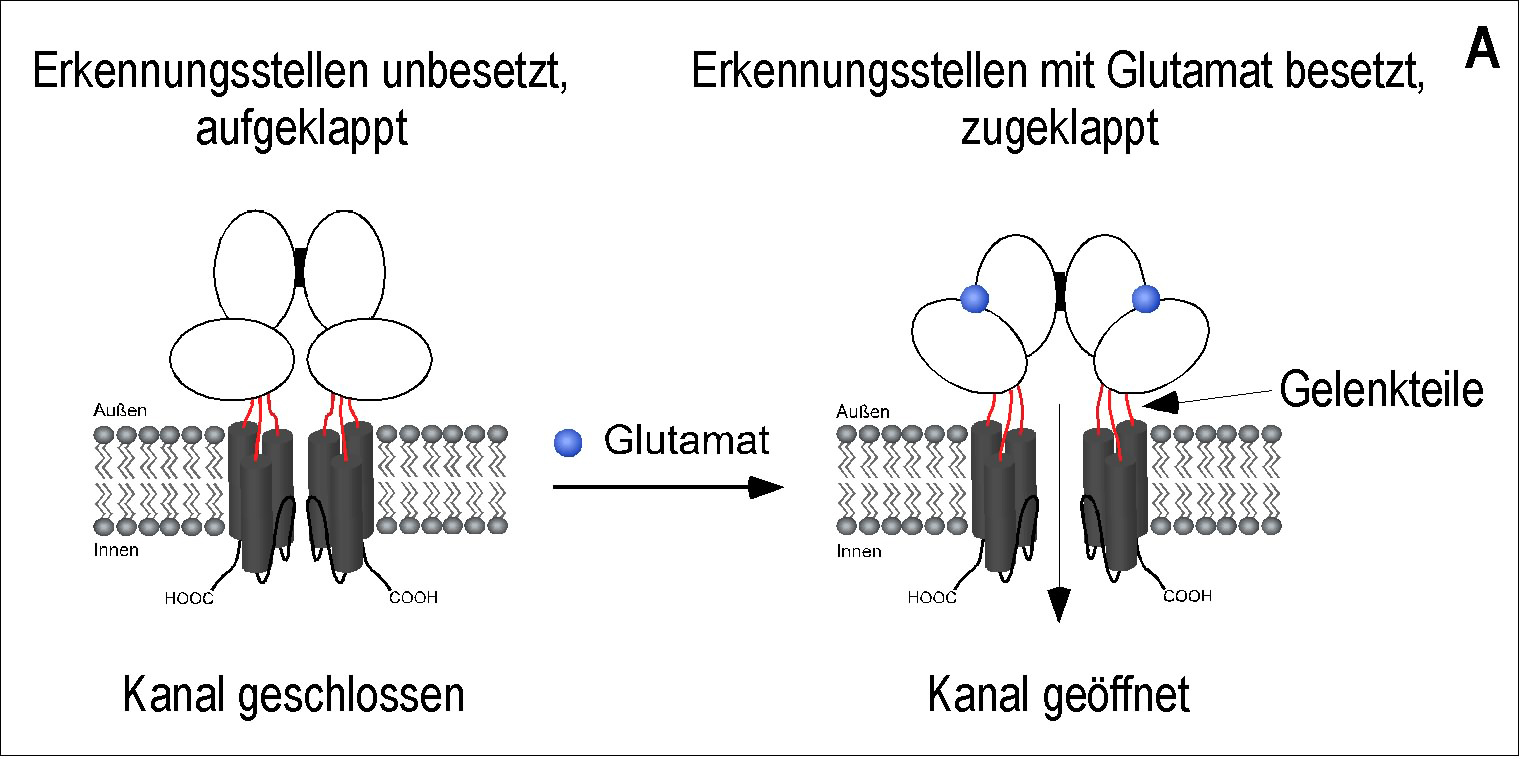
Any signals which are to be transmitted from one cell to the other need to bridge this gap. This is done by the so-called synapses, special points of contact, where signals are transmitted by way of a chemical messenger, the neurotransmitter, , which is discharged by the electrically excited nerve cell. The neurotransmitter then traverses the gap and is recognized by the recipient cell.

In the brain, the most frequently used neurotransmitter will be the amino acid glutamate.

An immune system messenger molecule that normally helps quiet inflammation could be an effective tool against multiple sclerosis (MS). Neurology researchers led by Abdolmohamad Rostami, M.D., Ph.D., professor and chair of the Department of Neurology at Jefferson Medical College of Thomas Jefferson University and the Jefferson Hospital for Neuroscience in Philadelphia, have found that the protein interkeukin-27 (IL-27) helped block the onset or reverse symptoms in animals with an MS-like disease.

The results suggest that IL-27 may someday be part of a therapy to temper over-active immune responses, which are thought to be at the heart of MS, an autoimmune disease (in which the body attacks its own tissue) affecting the central nervous system.

A research team led by scientists at The University of Texas Medical School at Houston has identified a defective gene that affects vascular smooth-muscle cells in people who suffer from hereditary thoracic aortic disease, which can kill victims with little warning in the prime of their lives.

Thoracic aortic disease, specifically thoracic aortic aneurysms leading to aortic dissections, is the 15th leading cause of death in the country, killing up to 20,000 people a year. Actor John Ritter (age 54 years) and “Rent” creator Jonathan Larson (age 35 years) both died from the disease. Cardiac surgeons in the Texas Medical Center – including Michael DeBakey. M.D., and Denton Cooley, M.D. – pioneered the surgical repair of thoracic aortic disease.

The world oceans are by far the largest sink of anthropogenic CO2 on our planet. Until now, they have swallowed almost half of the CO2 emitted through the burning of fossil fuels but scientists are concerned about the ability of the oceans to continue to shoulder this environmental burden as CO2 levels rise.

Current models for the development of the global climate system do not incorporate the reaction of marine organisms nor the processes that they influence.

To investigate the biological processes and their potential changes with time, scientists in a new study made use of an unusual experimental set up in the Raunefjord in Norway.

A UN eport says a ban on human reproductive cloning, coupled with restricted therapeutic research, is the global compromise on this ethical dilemma most likely to succeed.

According to authors of a new policy analysis by the United Nations University’s Institute of Advanced Studies, the world community quickly needs to reach a compromise that outlaws reproductive cloning or prepare to protect the rights of cloned individuals from potential abuse, prejudice and discrimination.

A legally-binding global ban on work to create a human clone, coupled with freedom for nations to permit strictly controlled therapeutic research, has the greatest political viability of options available to the international community, says the report: Is Human Reproductive Cloning Inevitable: Future Options fo

Motorized prosthetic arms can help amputees regain some function, but these devices take time to learn to use and are limited in the number of movements they provide.

Todd A. Kuiken, M.D., Ph.D., a physiatrist at the Rehabilitation Institute of Chicago and professor at Northwestern University, has pioneered a technique known as targeted muscle reinnervation (TMR), which allows a prosthetic arm to respond directly to the brain’s signals, making it much easier to use than traditional motorized prosthetics.

This technique, still under development, allows wearers to open and close their artificial hands and bend and straighten their artificial elbows nearly as naturally as their own arms.

Wind energy is one of the fastest growing sectors of the energy industry, but not without environmental consequences. Nocturnally active birds and bats have become prey to turbines, yet little guidance could be found for assessing impacts of wind energy on this group until now. A new article published in the latest issue of The Journal of Wildlife Management gives guidance about the methods and metrics of this subject.

Songbirds are by far the most abundant flying vertebrates in most terrestrial ecosystems and until recently have been the most frequently reported fatalities at utility-scale wind facilities in the United States.

Only recently it was hard to imagine a game in which people compete only with their minds. Today, you can play it. At the end of this year Mindmower, the first biological Internet game, goes into beta testing.

Players fight against each other not with joysticks, but with their minds.

A device connected to the fingers, deciphers the player’s physiological parameters and sends them to the server. Your thoughts have a key influence on your avatar and the course of the whole game.

Anyone who has thrown a backyard barbecue knows that hot dogs are inexplicably packaged in different numbers than buns — eight hot dogs per pack versus 10 hot dog buns. Put in ecological terms, this means that weenie roasts are “hot-dog limited” — the extra buns are worthless without hot dogs to fill them.

Such limiting factors are a cornerstone of natural ecology, where phosphorus or nitrogen limits plant production in most ecosystems. According to the customary model, the relative importance of these two key nutrients varies by ecosystem; but a group of researchers led by Arizona State University professor James Elser has found that this view might need to be updated.

Researchers at UCSF and the University of Toronto have identified a potential new way of fighting against HIV infection that relies on the remnants of ancient viruses, human endogenous retroviruses (HERV), which have become part of the genome of every human cell.

Mounting evidence suggests that HIV infection could enable HERV expression by disrupting the normal controls that keep HERV in check.

In some HIV-infected individuals, infection fighting T cells are able to target HERV expressing cells.

