






The scientific community is progressively experiencing a greater interest in environmentally friendly energy generation technologies, and their suitable applications, such is the case of hydrogen fuel cells applied to aeronautics.

This contamination free technology has taken a crucial role in the development of modern aeronautics and the present objective is the realization of fully electrical planes. Hydrogen fuel cells are currently being tested as propulsion system in Unmanned Aerial Vehicles by companies like Boeing, where all the advantages it could offer are being taken into consideration, from its efficiency to the possibility to recycle the water generated as by-product, maybe for use in the plane’s toilets.

An appetite-suppressing chemical also improves glucose tolerance and lowers insulin levels in obese and diabetic mice, researchers report in the November issue of Cell Metabolism, a publication of Cell Press. Importantly, the researchers found, those effects of the drug occurred at a low dose that had no influence on feeding behavior, body weight, activity level, or energy expenditure.

The decades-old drug compound, known as m-chlorophenylpiperazine (mCPP), triggers serotonin receptors in the brain. The findings suggest a new strategy for treating the rising tide of people with type 2 diabetes via targeting the so-called serotonin 2C (5-HT2C) receptors.

Which have bigger brains, chimpanzees or baboons? If you guessed chimps, you’re right. Chimpanzees are our closest relatives on the planet. They share between 98.6% and 99% of our genes, depending on who’s counting. They are way up there in animal brainpower. An average chimp’s brain is more than twice as large as the brain of a baboon.

Now for question number two. Which are smarter, chimpanzees or baboons? The answer is … baboons. But how could that be? Chimps are brainier. Shouldn’t they also be, well, umm, brainier? Brighter by far? If baboons are winners on IQ measures, doesn’t that mean that intelligence is not just a matter of brain matter?

The answer is yes, there’s more to intellect than the number of neurons in your skull.

Researchers at Harvard University and Pennsylvania State University have invented a technology, inspired by nature, to reduce the accumulation of atmospheric carbon dioxide (CO2) caused by human emissions.

By electrochemically removing hydrochloric acid from the ocean and then neutralizing the acid by reaction with silicate (volcanic) rocks, the researchers say they can accelerate natural chemical weathering, permanently transferring CO2 from the atmosphere to the ocean. Unlike other ocean sequestration processes, the new technology does not further acidify the ocean and may be beneficial to coral reefs.

Scientists can now measure how full or hungry a mouse feels, thanks to a new technique which uses imaging to reveal how neurons behave in the part of the brain which regulates appetite.

Researchers hope the technique, which uses magnetic resonance imaging, will enable a far greater understanding of why certain people become obese when others do not, and why different people have different appetites. The new study, led by researchers from Imperial College London, is described in a paper published in the Journal of Neuroscience.

It had previously been very difficult to measure satiety, which is the psychological feeling of being full and satisfied rather than physical fullness.

Why do people live in places like southern California where homes intermingle with wooded areas and the risk of wildfire is so great? Leading social scientists have a surprising answer: because the emotional benefits interfere with their ability to assess the risks.

Recent fire activity in the state of California supports this unusual theory offered by researchers funded by the National Science Foundation (NSF). According to the U.S.

Taking a page from nature, a team of researchers have developed a method to enhance removal of carbon dioxide from the atmosphere and place it in the Earth's oceans for storage.

Unlike other proposed ocean sequestration processes, the new technology does not make the oceans more acid and may be beneficial to coral reefs. The process is a manipulation of the natural weathering of volcanic silicate rocks.

"The technology involves selectively removing acid from the ocean in a way that might enable us to turn back the clock on global warming," says Kurt Zenz House, graduate student in Earth and planetary sciences, Harvard University. "Essentially, our technology dramatically accelerates a cleaning process that Nature herself uses for greenhouse gas accumulation."

Here’s a nice essay about the Women’s Health Initiative, a nine-year mega-million-dollar experiment to measure the effect of “healthy eating” especially a low-fat diet.

Obesity is a well known risk factor for prostate, breast and colon cancer, but recent studies have shown that a protein responsible for generating fat cells also plays an important role in cancer. Researchers at the Genome Institute of Singapore have conducted, for the first time, a genome-wide analysis of how the protein, called perixosome proliferator-activated receptor gamma (PPARg), turns on various genes related to obesity.

Simply suppressing the protein entirely could prevent the generation of adipocytes – the precursors to fat cells – the researchers say, but it would decrease the protein’s beneficial properties.

Researchers at the University of Reading, School of Pharmacy have developed an important new technique to study one of the most common causes of premature birth and prenatal mortality.

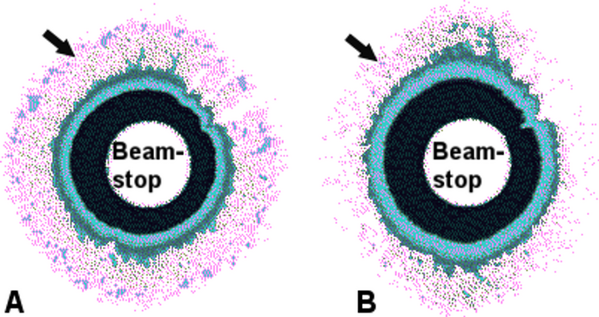
Dr Che Connon, a Research Councils UK Fellow in Stem Cells and Nanomaterials, and his team used a powerful X-ray beam to examine tiny structures within the protective sac - amniotic membrane - which surrounds the developing baby.

This beam can resolve structures far smaller than a light or electron microscope.


