

Geologists have uncovered evidence of when Earth may have first supported an oxygen-rich atmosphere similar to the one we breathe today. The study suggests that upheavals in the earth’s crust initiated a kind of reverse-greenhouse effect 500 million years ago that cooled the world’s oceans, spawned giant plankton blooms, and sent a burst of oxygen into the atmosphere.

That oxygen may have helped trigger one of the largest growths of biodiversity in Earth’s history.

Matthew Saltzman, associate professor of earth sciences at Ohio State, reported the findings Sunday at the meeting of the Geological Society of America in Denver.

Biological cements to repair ‘burst fractures’ of the spine are being developed and tested in a major new collaborative project between the University of Leeds and Queen’s University Belfast.

Bone cements, similar to those used in joint replacement surgery, are already being used to strengthen damaged vertebrae of patients with diseases such as osteoporosis, in a procedure known as vertebroplasty, but ‘burst fractures’ to the spine, injuries often sustained in major impact accidents and falls, are much more difficult to treat. They account for over 1,000 emergency NHS admissions each year and often require highly complex, invasive surgery and a long stay in hospital.


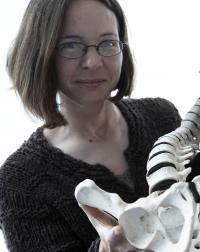
Engineer Dr. Ruth Wilcox, University of Leeds.

The Flynn Effect is the steady improvement in IQ scores over the last 50 years or so in many places. It was documented by James Flynn, a professor of moral and political philosophy at the University of Otago. Flynn gave a talk at Berkeley recently. I asked him how the Flynn Effect came to be.
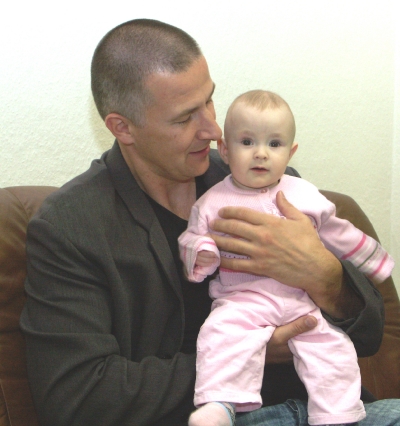

Baby Miriam's mother lost her amniotic fluid in the 20th week of pregnancy, giving the baby a very slim chance of surviving birth and, even if she had, because her lungs had stopped growing, she would probably have suffocated shortly afterward.

Doctors at Bonn Univer-sity Clinic saved Miriam's life with surgery in the womb that stimulated lung growth - the first time this method has been used worldwide in a case of premature rupture of the fetal membrane. The baby is now one year old and very healthy. The doctors will report the case study in this month's Fetal Diagnosis and Therapy.


Professor Kohl with Miriam

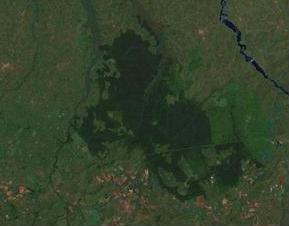
A campaign by conservationists has helped save one of Africa’s unspoilt forests from massive development for biofuel.

Mabira Forest Reserve is about eight miles north of Lake Victoria. Logging began in 1906 and damage from intensive coffee, banana cultivation and charcoal production continued until 1988 when many people were evicted from the forest. The illegal collection of plants and timber, and charcoal burning, continues on a reduced scale.

An autoimmune inflammatory disease that takes a progressive toll on the heart, kidney and liver as well as the joints, rheumatoid arthritis (RA) is associated with a high risk of early death. This sobering fact is well known. Less is known about whether longevity has improved for RA patients over the past few decades of remarkable improvements in longevity in the general population. Are earlier diagnosis, breakthrough drugs, and more aggressive antirheumatic treatment regimens paying off in terms of survival?

Smoking cigarettes is associated with an increased risk of cancers of the lung, head and neck, esophagus, bladder and many others and also affects response to anti-cancer treatments. But smoking does not result in more advanced stage diagnoses or aggressive breast cancers at the time of diagnosis. That is the result of an analysis of 35 years of data for more than 6,000 patients presented today at the American Society for Therapeutic Radiology and Oncology’s 49th Annual Meeting in Los Angeles.

“We hypothesized that tobacco use could result in more advanced stage or more aggressive breast cancer presentation, but that doesn’t appear to be the case,” said Matthew Abramowitz, M.D.,a resident in the radiation oncology department at Fox Chase Cancer Center.

In political polling, as the same questions are asked of more and more people the uncertainty (expressed as margin of error) declines and the results become a clearer snapshot of public opinion - yet with climate issues additional research does not substantially reduce the uncertainty.

"Uncertainty and sensitivity have to go hand in hand. They're inextricable," said Gerard Roe, a University of Washington associate professor of Earth and space sciences. "We're used to systems in which reducing the uncertainty in the physics means reducing the uncertainty in the response by about the same proportion.

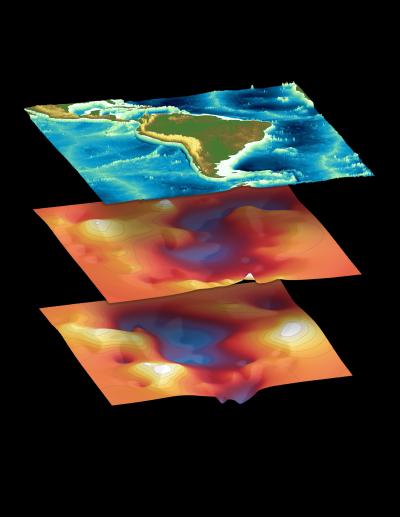
Seismologists in recent years have recast their understanding of the inner workings of Earth from a relatively benign homogeneous environment to one that is highly dynamic and chemically diverse. This new view of Earth’s inner workings depicts the planet as a living organism where events that happen deep inside can affect what happens at its surface, like the rub and slip of tectonic plates and the rumble of the occasional volcano.

New research into these dynamic inner workings are now showing that Earth’s upper mantle (an area that extends down to 660 km) exhibits how far more than just temperature and pressure play a role in the dynamics of the deep interior.

Chilean researchers have identified a region of the brain – the insular cortex – that plays a role in drug craving in amphetamine-addicted rats, according to a report published Science. This finding ultimately may help support the development of new therapies to treat drug addiction as well as certain behavioral side effects of medications.

The insular cortex, also known as the insula, lies deep inside the brain. It is a part of the interoceptive sensory system that monitors the body’s perception of its physiological states and needs. The researchers used rats for these studies and before the findings can be shown to apply in humans, researchers will have to perform similar tests in human subjects.