





Laboratory animals are the source of major discoveries and breakthroughs in biology, not just in tackling disease but also unravelling fundamental molecular processes.

Delegates at a recent research conference organized by the European Science Foundation (ESF) and Wellcome Trust heard how technology capable of analyzing animal genes across the whole genome is yielding many benefits for agriculture and human society.

In breeding both domestic and farm animals for example, it is now possible to select individuals with a wide spectrum of desirable traits in a single generation.

It used to be dogma that the brain was shut away from the actions of the immune system, shielded from the outside forces of nature. But that’s not how it is at all. In fact, thanks to the scientific detective work of Kevin Tracey, MD, it turns out that the brain talks directly to the immune system, sending commands that control the body’s inflammatory response to infection and autoimmune diseases. Understanding the intimate relationship is leading to a novel way to treat diseases triggered by a dangerous inflammatory response.

Dr. Tracey, director and chief executive of The Feinstein Institute for Medical Research, will be giving the 2007 Stetten Lecture on Wednesday, Oct. 24, at the National Institutes of Health in Bethesda, MD.

Global temperatures predicted for the coming centuries may trigger a new ‘mass extinction event’, where over 50 per cent of animal and plant species would be wiped out, warn scientists at the Universities of York and Leeds.

The research team has, for the first time, discovered a close association between Earth climate and extinctions in a study that has examined the relationship over the past 520 million years – almost the entire fossil record available.

Matching data sets of marine and terrestrial diversity against temperature estimates, evidence shows that global biodiversity is relatively low during warm ‘greenhouse’ phases and extinctions relatively high, while the reverse is true in cooler ‘icehouse’ phases.

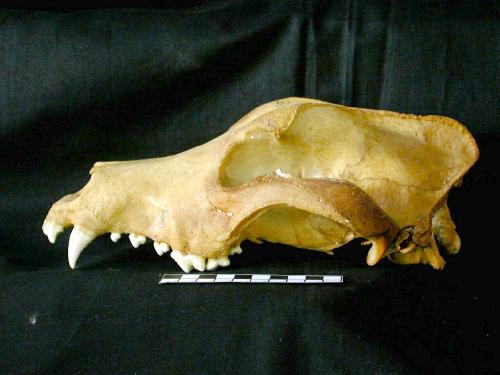
The St Bernard dog – named after the 11th century priest Bernard of Menthon – may have ironically challenged the theory of creationism, say scientists.

Biologists at The University of Manchester say that changes to the shape of the breed’s head over the years can only be explained through evolution and natural selection.

The team, led by Dr Chris Klingenberg in the Faculty of Life Sciences, examined the skulls of 47 St Bernards spanning 120 years, from modern examples to those of dogs dating back to the time when the breed standard was first defined.


St. Bernard 1892. The angle between the top of the
nose and the forehead is far less acute than the more recent dog below.

Field research has traditionally been a fundamental training element for Mammalogists; however social, institutional and bureaucratic changes that have accelerated over the past decade are threatening the ability of Mammalogists to conduct fieldwork and train the next generation.

These changes include the following five threats to Field Mammalogy:

1.The decline in natural history studies in United States Universities: Increased commercialization and for-profit activities have led to a shift from field research to laboratory-based research.

2.The increasing number and complexity of regulations: Bureaucratic regulations present a relatively small, but increasingly complex obstacle to field research.

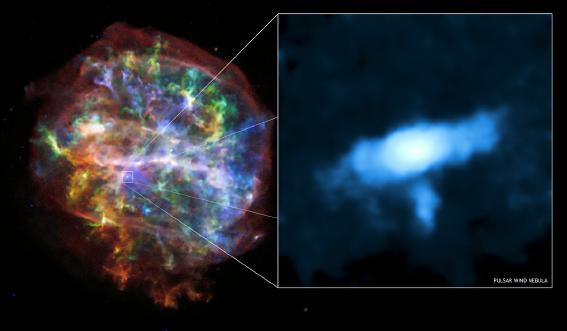
Stars die just like people but a spectacular new image shows how complex a star’s afterlife can be. By studying the details of an image made from a long observation by NASA’s Chandra X-ray Observatory, astronomers can better understand how some stars die and disperse elements like oxygen into the next generation of stars and planets.

At a distance of about 20,000 light years, G292.0+1.8 is one of only three supernova remnants in the Milky Way known to contain large amounts of oxygen.

For the first time, researchers at the University of Pennsylvania are able to pinpoint brain waves that distinguish true from false memories, providing a better understanding of how memory works and creating a new strategy to help epilepsy patients retain cognitive function.

The study, the first to show that brain waves predict the veracity of human memories, is available online in the journal Psychological Science and in the November 2007 print edition.

To test whether distinct patterns of electrophysiological activity prior to a response can distinguish true from false memories, psychologists at Penn recorded brain activity from 52 neurosurgical patients being treated for drug-resistant epilepsy.

A video game designed by McGill University researchers to help train people to change their perception of social threats and boost their self-confidence has now been shown to reduce the production of the stress-related hormone cortisol.

Envisat satellite image captures fierce easterly desert winds blowing smoke from wildfires in Southern California. Gale-force winds have fed more than a dozen fires from Santa Barbara to the Mexican border since breaking out on Sunday, killing one person and forcing the evacuation of a quarter of a million people.

In the full image below, sand is visible being blown from Mexico’s Baja California Peninsula over the Gulf of California to the east and the Pacific Ocean to the west.


CLICK ABOVE FOR HIGH RESOLUTION.

In America, religion and politics or science and politics or politics and anything else don't mix well. According to a new University of Missouri-Columbia study, though, religion and health care work together just fine.

Research shows that religion and spirituality are linked to positive physical and mental health but most studies have focused on people with life threatening diseases. The new study determines that religion can help individuals with disabilities adjust to their impairments and give new meaning to their lives.

Persons facing impending death may use religion to help them accept their condition, come to terms with unresolved life issues, and prepare for death.

