
Okay, entrepreneurs and venture capitalists, here are two words that can help your investment in a startup business succeed: direct flights.

A new study co-authored by an MIT professor shows that venture capitalists do help startup firms by closely monitoring their development, and that the availability of direct airplane flights between the two parties helps improve that oversight.

Researchers have constructed the first comprehensive model of how neurons in the brain behave when faced with a complex decision-making process, and how they adapt and learn from mistakes.

The mathematical model, developed by researchers from the University of Cambridge, is the first biologically realistic account of the process, and is able to predict not only behaviour, but also neural activity. The results, reported in The Journal of Neuroscience, could aid in the understanding of conditions from obsessive compulsive disorder and addiction to Parkinson's disease.

In a paper published today in Nature: Scientific Reports a group of researchers led by LSTM have found that the key to an inherited deficiency, predisposing people to emphysema and other lung conditions, could lie in their Viking roots.

Archaeological excavations of Viking latrine pits in Denmark have revealed that these populations suffered massive worm infestations. The way that their genes developed to protect their vital organs from disease caused by worms has become the inherited trait which can now lead to lung disease in smokers.

Similar to stem cells differentiating to make your body's tissues, the immune system's macrophages pick a life path, differentiating into macrophages that recruit resources for wound repair or macrophages that recruit resources for wound sterilization. An article in the journal Cancer Research describes the relevance of macrophages to cancer: Cancers encourage macrophages to pick the path of wound-repair, making what are called "M2" or "repair-type" macrophages. Cancers use these M2 macrophages to promote their own growth. However, researchers can now successfully flip M2 macrophages into their wound-sterilizing cousins, called "M1" or "kill-type" macrophages, which, contrary to promoting the growth of new tissue, may aid the immune system in clearing the body of cancer.

An international team led by a researcher from Hiroshima University has succeeded in revealing the detailed structure of a massive ionized gas outflow streaming from the starburst galaxy NGC 6240. The team used the Suprime-Cam mounted on the 8.2-meter Subaru Telescope on Maunakea in Hawaii.

The ionized gas the astronomers observed extends across 300,000 light-years and is carried out of the galaxy by a powerful superwind. That wind is driven by intense star-forming activity at the galactic center. The light-collecting power and high spatial resolution of Subaru Telescope made it possible to study, for the first time, the complex structure of one of the largest known superwinds being driven by starbirth - and star death.

DURHAM, N.C. -- Meditation eases anxiety, fatigue and pain for women undergoing breast cancer biopsies, according to researchers at the Duke Cancer Institute. They also found that music is effective, but to a lesser extent.

The researchers note that adopting these simple, inexpensive interventions could be especially helpful in light of recent reports citing anxiety and pain as potential harms from breast cancer screenings and testing.

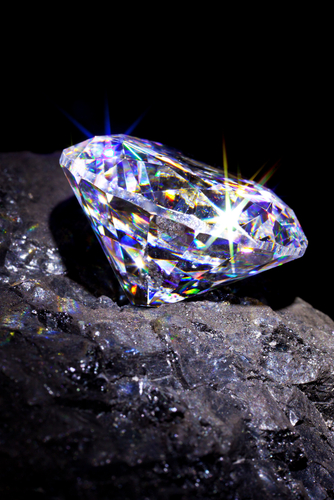
Diamonds are made of carbon, graphite is also made of carbon. Both are natural, yet one is quite valuable and the other is a commodity.

Because of basic similarities, everyone wants to know if the value and hype of diamonds are justified, especially when they see them all over mainstream department stores.

Is diamond really as rare as people make it out to be?  The short answer is yes, diamonds are incredibly rare, geologically speaking. The longer answer is that they could even be considered Mother Nature’s scientific miracle. 

MIAMI--New research from a University of Miami (UM) Rosenstiel School of Marine and Atmospheric Science-led science team provides new insight into one of the world's most diverse and extensive ecosystems of living microbes. The study offers a new perspective on the growth and structure of rare, microbial reefs, called stromatolites, which are a window into the emergence and evolution of life on Earth.

When it comes to health and nutrition, academia goes through fads, they make their way to government panels, and then popular culture is stuck with them.

An international team of scientists has for the first time shown that mitochondria, the batteries of the cells, are essential for ageing.

In a study, published today in the EMBO Journal and led by Dr João Passos at Newcastle University, they found that when mitochondria were eliminated from ageing cells they became much more similar to younger cells. This experiment was able for the first time to conclusively prove that mitochondria are major triggers of cell ageing.

This brings scientists a step closer to developing therapies to counteract the ageing of cells, by targeting mitochondria.

