



A new study shows that surface water temperature in the Chesapeake Bay is increasing more rapidly than air temperature, signaling a need to look at the impact of warming waters on one of the largest and most productive estuaries in the world. The study was completed by Haiyong Ding and Andrew Elmore of the University of Maryland Center for Environmental Science's Appalachian Laboratory.

"I was surprised that the pattern of increasing water temperature was so clear," said study co-author Andrew Elmore. "If you take any group of five years, they are generally warmer than the previous five years. A consistent warming trend happening over a really large portion of the Bay."

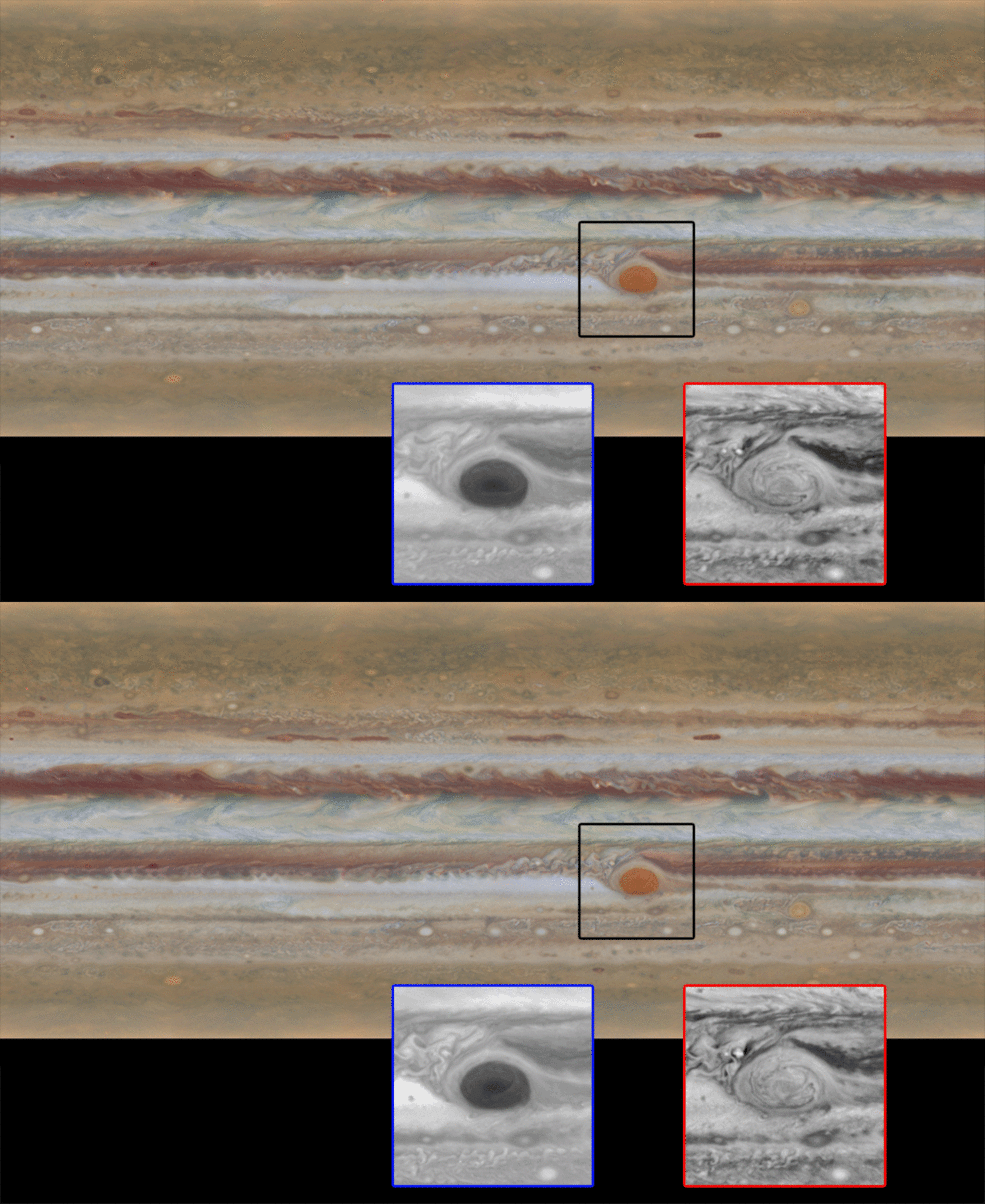
Scientists using NASA's Hubble Space Telescope have produced new maps of Jupiter -- the first in a series of annual portraits of the solar system's outer planets.

Collecting these yearly images -- essentially the planetary version of annual school picture days for children -- will help current and future scientists see how these giant worlds change over time. The observations are designed to capture a broad range of features, including winds, clouds, storms and atmospheric chemistry.

Already, the Jupiter images have revealed a rare wave just north of the planet's equator and a unique filamentary feature in the core of the Great Red Spot not seen previously.

Researchers have been able to watch the interior cells of a plant synthesize cellulose for the first time by tricking the cells into growing on the plant's surface.

"The bulk of the world's cellulose is produced within the thickened secondary cell walls of tissues hidden inside the plant body," says University of British Columbia Botany PhD candidate Yoichiro Watanabe, lead author of the paper published this week in Science.

"So we've never been able to image the cells in high resolution as they produce this all-important biological material inside living plants."

Much like the flapping of a windsock displays the quick changes in wind's speed and direction, called turbulence, comet tails can be used as probes of the solar wind - the constant flowing stream of material that leaves the sun in all directions.

According to new studies of a comet tail observed by NASA's Solar and Terrestrial Relations Observatory, or STEREO, the vacuum of interplanetary space is filled with turbulence and swirling vortices similar to gusts of wind on Earth. Such turbulence can help explain two of the wind's most curious features: its variable nature and unexpectedly high temperatures.

Scientists engineered stem cells to better understand the mechanisms behind a form of leukemia caused by changes in a key gene.

Past work had established that inherited changes in the DNA code for the gene PTPN11 cause Noonan syndrome, a genetic disease that comes with a high risk for the blood cancer called juvenile myelomonocytic leukemia (JMML). The mechanisms behind the disease, and what influences its severity, were unknown going into the current study.

In addition, the only current treatment for JMML, a bone marrow transplant to replace the hematopoietic stem cells that become blood cells, is effective in only 50 percent of patients. This has further spurred efforts to understand related disease mechanisms as a step toward designing better treatments.

Antipsychotic drugs are initiated in patients with Alzheimer's disease (AD) more frequently than in the general population - already 2-3 years before the Alzheimer's diagnosis, according to a new study from the University of Eastern Finland. Most commonly, antipsychotics were initiated during the six months following the Alzheimer's diagnosis; however, the incidence of new antipsychotic users was high also later on. 

Bipolar disorder is a diagnosis given to people who experience periods of intense low mood but also periods of elation and increased energy which can lead to impaired judgement and risky behaviour. The Royal College of Psychiatrists estimates that around 1% of the adult population experience bipolar symptoms at some point in their life.

A new challenges prevailing wisdom by identifying the atmosphere as the driver of a decades-long climate variation known as the Atlantic Multi-decadal Oscillation (AMO) and offering new insight on the causes and predictability of natural climate variations, which are known to cause wide-ranging global weather impacts, including increased rainfall, drought, and greater hurricane frequency in many parts of the Atlantic basin.

For decades, research on climate variations in the Atlantic has focused almost exclusively on the role of ocean circulation as the main driver, specifically the Atlantic Meridional Overturning Circulation, which carries warm water north in the upper layers of the ocean and cold water south in lower layers like a large conveyor belt.


Earlier this week, former National Basketball Association star Lamar Odom was found unconscious in a Nevada brothel, after taking what the owner said was a large quantity of “herbal Viagra.” He is said to be near death at this time.

It may be little consolation for his family and friends, but this tragic development can serve as a cautionary tale for the American public, which has been systematically been fed lie after lie about the benefits of dietary supplements.

Thanks to the Dietary Supplement Health and Education Act (DSHEA) of 1994, courtesy of Senators Orrin Hatch (R, UT) and Tom Harkin (D, IA), so-called dietary supplements have been given a special niche. 

Scientists have developed a blood test that could help pair cancer patients with the most suitable therapy for their disease and then track the tumor's progress to see if the treatment is working, according to research published today (Thursday) in Clinical Cancer Research.

Using the blood test throughout a patient's treatment gives a 'running commentary' of what is happening to tumors - giving scientists the lowdown on how well the treatment is working, how the cancer is changing and whether it is becoming resistant to treatment. It is the first time a blood test has been used in this way during clinical trials of targeted drugs, proving that the technique can monitor cancer simply and quickly.

