




Following one of the largest-scale scientific reproducibility investigations to date, a group of psychology researchers has reported results from an effort to replicate 100 recently published psychology studies; though they were able to successfully repeat the original experiments in most all cases, they were able to reproduce the original results in less than half, they report.

Male teens who experiment with cannabis before age 16, and have a high genetic risk for schizophrenia, show a different brain development trajectory than low risk peers who use cannabis.

The discovery, made from a combined analysis of over 1,500 youth, contributes to a growing body of evidence implicating cannabis use in adolescence and schizophrenia later in life. 

"If I offered you a bruised banana, you probably wouldn't be interested," said Jonathan Deutsch, PhD, director of Drexel University's Center for Hospitality and Sport Management. "But what if I offered you some banana ice cream on a hot summer day? I bet you'd find that a lot more appealing."

It was this simple observation that inspired a new model for recovering would-be wasted - or surplus - food and repurposing it to feed hungry people, generate revenue and even create jobs. The model was recently piloted in West Philadelphia, home to a large population of low-income and food insecure individuals, as part of the Environmental Protection Agency's Food Recovery Challenge with support from Brown's Super Stores.

This is just for fun. At first sight this seems impossible - the smallest stars are heavier than the heaviest planets, and how can something heavier orbit something that is lighter? But what if you have a very dense star and very large very low density planet? And if you interpret "orbiting it" as "having barycenter (the "center of mass of the system") within the planet"?

Also, could a star sometimes be lighter than a planet, is that possible at all? I'll also describe a way that a heavier object can, in a way, "orbit" a lighter one - a way to get a heavier star move in such a way that the barycenter of the system lies within a large low density planet - can you figure out how, before I get to it?

Thanks to decades of action against tobacco, smoking rates among children and young people are in decline: far fewer teenagers are now taking up smoking than in the past.

A new study clearly establishes a partial genetic basis underlying racial differences in slow-wave sleep, suggesting that it may be possible to develop sleep-related therapies that target specific genetic variants.

Using a panel of 1,698 ancestry informative genetic markers, the study found that greater African genetic ancestry was associated with lower amounts of slow-wave sleep in African-American adults. African ancestry explained 11 percent of the variation in slow-wave sleep after adjustment for potential confounders. Although a similar association was observed for delta power, no association with African ancestry was observed for sleep duration and efficiency.

Images of the systematic destruction of archaeological sites and art pieces in Syria are no news any more, but I was especially saddened to see before/after aerial pictures of Palmyra's site today, which demonstrate how the beautiful temple of Bel has been completely destroyed by explosives. A picture of the temple is shown below.

dinner-at-mcdonalds-1440401The War on Fast Food hasn't led to the health care bonanza overzealous regulators assured us would result - but that hasn’t stopped them from opening another front on Happy Meals.
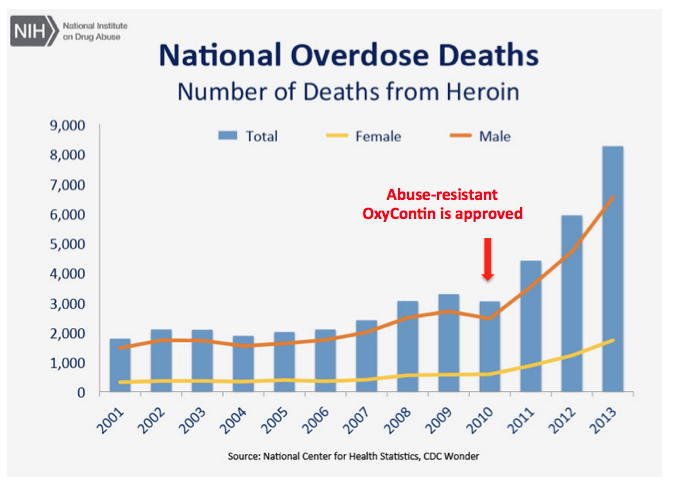
In 1985 Michael Hovey, an organic chemist at duPont in Wilmington, Delaware cooked up in his lab a batch of 3-methylfentanyl—a narcotic that is more than 6,000-times stronger than morphinethus ushering in the era of designer drugs. 
Hovey's drug, which belongs to a class of drugs called "synthetic heroins," had a street value of $112 million. 

Much attention is being given to what people ate in the distant past as a guide to what we should eat today. Advocates of the claimed paleo diet recommend that we should avoid carbohydrates and load our plates with red meat and fat. Its critics, on the other hand, argue that these are the same ingredients that would set us up for heart attacks. Moreover, these animal-derived foods require more space to produce on our crowded planet filled with starving humans.

