
By Rebecca Boyle, Inside Science -- When light bulbs colonize our homes, humans get much less sleep.

It's an intuitive idea, but a new study measures this effect in a real-life situation for the first time by examining hunter-gatherers in Argentina.

Communities with access to electric lighting have shifted their bedtimes to later in the evening, curtailing a normal night of shuteye.

"When you have access to electricity, you can decide when you turn the lights off, and that resets your biological clock," said Horacio de la Iglesia, a biologist at the University of Washington, in Seattle, who led the study.

Even a short period of inactivity can be extremely bad for our bones, and for astronauts facing months in zero gravity, the risks are serious.

But there is an animal that has already solved all of the problems faced by immobile humans - black bears who hibernate for six months at a time. 

When you can be arrested for letting your children go to the park alone, we might be a little hyper-vigilant, yet on the other side multiple times per week there is indignation that child protective services failed to stop some idiot parents who were harming a child. It may be the precautionary principle run amok but doctors and government workers are the people who will be sued if they are not going overboard looking for problems.

Blind cavefish that have adapted to annual cycles of starvation and binge-eating have mutations in the gene MC4R, the same gene that is mutated in certain obese people with insatiable appetites, according to a new study in PNAS which reveals more about how vertebrates evolved to have different metabolisms from one another and could provide insights into the relationship between human obesity and disease.

As the name suggests, Mexican cavefish live in dark, isolated caves in northeastern Mexico. In the hundreds of thousands of years since they were separated from their surface-dwelling cousins, they have adapted to their harsh environment in several ways.

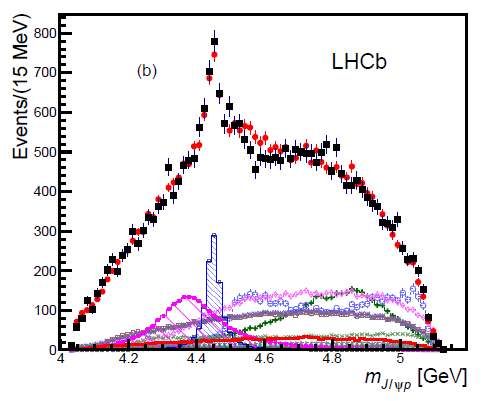
The CERN Director General Rolf Heuer issued the following statement today, reporting the discovery of exotic pentaquark states by the LHCb collaboration:
Geneva, 14 July 2015. Today, the LHCb experiment at CERN’s Large Hadron Collider has reported the discovery of a class of particles known as pentaquarks. [...]
 

The Natural Resources Defense Council (NRDC) is making $100 million per year scaring people about food and other science. It isn't helping the public be any safer, it is just making people enjoy food less, according to a new study.

New research finds that high vitamin C concentrations in the blood from the intake of fruit and vegetables are associated with a reduced risk of cardiovascular disease and early death.

Fruit and vegetables are healthy, we all know that, and the new paper by scholars from the University of Copenhagen and Herlev and Gentofte Hospital says that the risk of cardiovascular disease and early death falls with a high intake of fruit and vegetables, and that this may be due to vitamin C. 

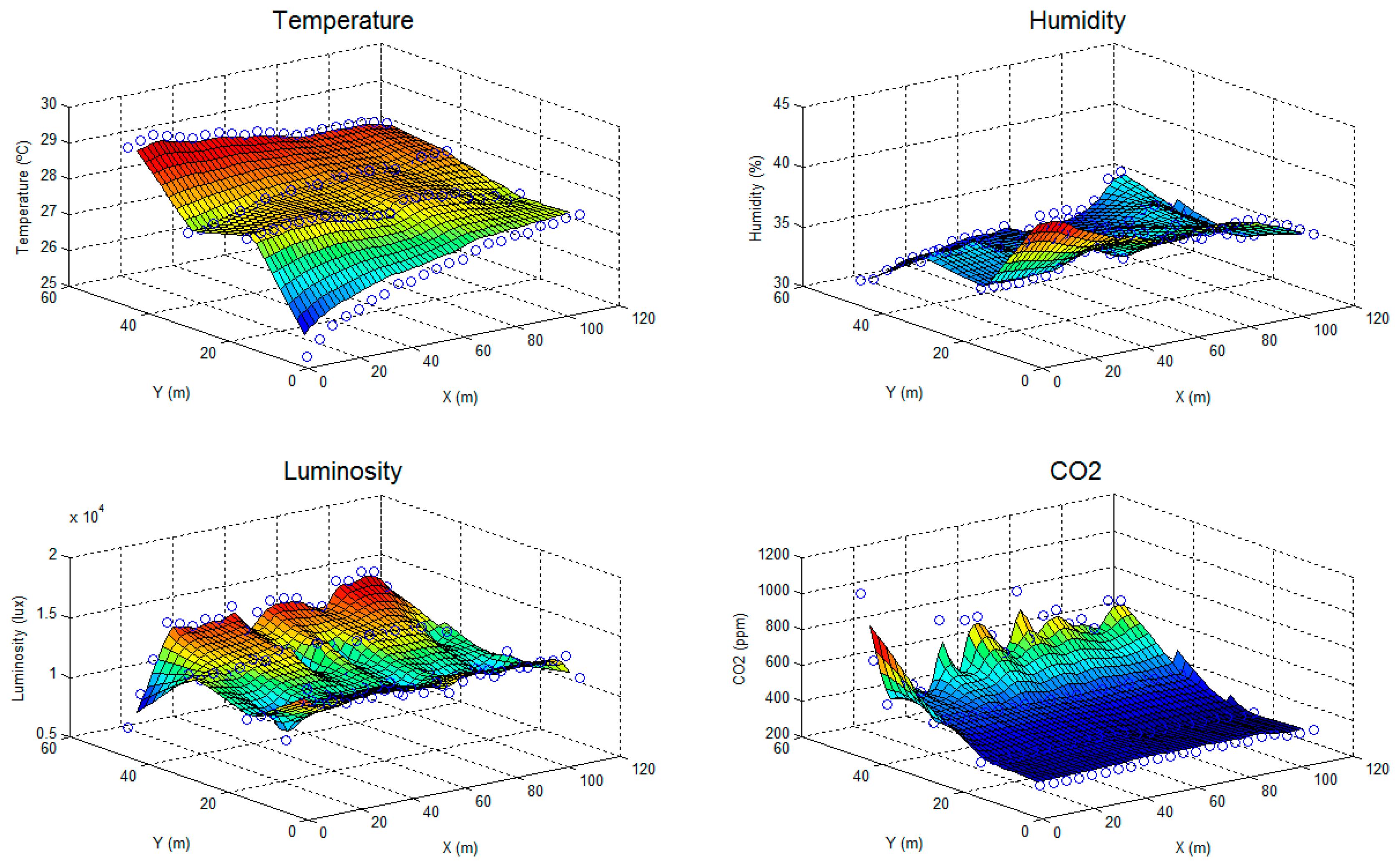
A study carried out by researchers from Robotics and Cybernetics Research Group (RobCib) at Centre for Automation and Robotics (CAR) has used a drone to measure the temperature, humidity, luminosity and carbon dioxide concentration in a greenhouse.

The capacity of an aerial vehicle to move in three-dimensional space and the possibility to place the sensor at any point have clear advantages compared to other alternatives such as the sensor networks. Thus, the use of this technology can help improve the climate control systems and monitor crops. Greenhouse farming has suitable soils to apply new technologies.
Researchers have discovered that chromosomes play an active role in animal cell division. This occurs at a precise stage – cytokinesis – when the cell splits into two new daughter cells.

It was observed by a team of researchers including Gilles Hickson, an assistant professor at the University of Montreal’s Department of Pathology and Cell Biology and researcher at the CHU Sainte-Justine Research Centre, his assistant Silvana Jananji, in collaboration with Nelio Rodrigues, a PhD student, and Sergey Lekomtsev, a postdoc, working in the group led by Buzz Baum of the MRC Laboratory for Molecular Cell Biology at University College London.

Youth from low-income families who succeed academically and socially may actually pay a price when it comes to their health, because relentlessly pursuing goals can undermine health.