




It has been a mystery why unusually severe epidemics of influenza occur from time to time, such as in 1947 and 1951, when illness and mortality rates exceeded standard epidemic levels.

The standard model of human influenza virus evolution holds that major influenza pandemics, the largest of which occurred in 1918, are caused by reassortment between human and avian influenza viruses. But seasonal influenza epidemics, which occur each winter in the United States, do not involve the reassortment of genetic material.

Researchers at Pennsylvania State University and the National Institute of Health used an evolutionary analysis of influenza viruses sampled from 1918 – 2005 to investigate the influenza viruses that cause seasonal epidemics in humans, particularly those where mortality was unusually high.

PLANO, Texas, February 28 /PRNewswire/ --

- With Photo

- Todd Fleming Assumes New Leadership Role

Symon Communications, a global provider of digital signage solutions announced today at the Digital Signage Expo in Las Vegas that Todd Fleming has been named Senior Vice President of Global Sales, effective immediately. Fleming has been Managing Director of the Symon international team for the past several years. In that role, he has done an outstanding job of growing the financial results and expanding the Symon footprint globally.

(Photo: http://www.newscom.com/cgi-bin/prnh/20080228/LATH088)

The distinctive ability of mothers to identify the cries of their offspring is widely evident in nature, where it is critical to the survival of these offspring. In humans, we are aware that the distinctive ability of mothers to recognize and respond to the smiles and cries of their babies plays an important role in the psychological, cognitive, and social development of these babies.

We have had a very limited understanding of how the maternal brain accomplishes these amazing feats, but a new study published in Biological Psychiatry now provides some new insight.

Noriuchi, Kikuchi, et al. used functional magnetic resonance imaging (fMRI), a tool that enables scientists to study the function of brain circuits in people, to examine patterns of maternal brain activation.

While its known that cigarette smoking can cause cancer it has been unclear how cigarette smoke causes healthy lung cells to become cancerous.

Researchers from U.C. - Davis say that hydrogen peroxide (or similar oxidants) in cigarette smoke is the culprit. This finding may help the tobacco industry develop “safer” cigarettes by eliminating such substances in the smoke, while giving medical researchers a new avenue to developing lung cancer treatments.

“With the five-year survival rate for people with lung cancer at a dismally low 15.5 percent, we hope this study will provide better insight into the identification of new therapeutic targets,” said Tzipora Goldkorn, senior author of the report.

A highly specialised computer modelling technique developed at The University of Nottingham has been instrumental in the design of a revolutionary new swimsuit which is now being hailed as the fastest in the world.

Dr Herve Morvan, a lecturer in fluid mechanics in the School of Mechanical, Materials and Manufacturing Engineering, is working as an advisor to the AQUALAB, Speedo’s competition research and development department, responsible for the development of Speedo’s new LZR Racer swimsuit.

Within a week of its launch athletes wearing the new swimsuit had broken three world records.


Numerical results show a 5 percent improvement over the FS Pro pictured here.

Differences in gene expression levels between people of European versus African ancestry can affect how each group responds to certain drugs or fights off specific infections, say researchers in the American Journal of Human Genetics.

They used Affymetrix exon arrays to show that expression levels for nearly five percent of the 9,156 human genes they studied varied significantly between individuals of European and African ancestry. The research team took an unbiased whole genome approach and found significant differences in several unrelated processes, especially among genes involved in producing antibodies to potential microbial invaders.

PHILADELPHIA and LONDON, February 28 /PRNewswire/ --

Thomson Scientific, part of The Thomson Corporation (NYSE: TOC; TSX: TOC) and leading provider of information solutions to the worldwide research and business communities, today announced the promotion of Marian Hollingsworth to the role of Director of Publisher Relations, reporting directly to Jim Testa, senior director, editorial development.

A report in a recent New England Journal of Medicine, led by researchers at the New England Newborn Screening Program (NENSP) of the University of Massachusetts Medical School (UMMS), indicates a declining incidence of a genetic disease, providing what may be the first demonstration of a link between two independent population-based screening programs.

The state of Massachusetts has offered universal newborn screening to detect cystic fibrosis (CF) since 1999. Independently, recommendations for nationwide (adult) carrier screening for CF were introduced in the U.S. around 2002, coming from the National Institutes of Health, the American College of Obstetrics and Gynecology and the American College of Medical Genetics.

Scientists at the John Innes Centre in Norwich have discovered how roots find their way past obstacles to grow through soil. The discovery also explains how germinating seedlings penetrate the soil without pushing themselves out as they burrow.

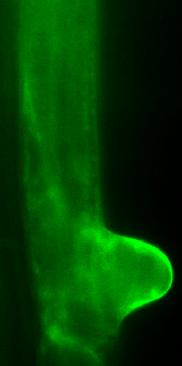
“The key is in the fuzzy coat of hairs on the roots of plants” says Professor Liam Dolan. “We have identified a growth control mechanism that enables these hairs to find their way and to elongate when their path is clear”.

Root hairs explore the soil in much the same way as a person would feel their way in the dark. If they come across an obstacle, they feel their way around until they can continue growing in an opening.


