




SAN MATEO, California, February 14 /PRNewswire/ --

- Record 2007 Revenue of US$108.5M, up 62% year-over-year

- Record Q4 2007 Revenue of US$31.7M, up 13% quarter-over-quarter

- Record Q4 2007 Cash Flow from Operations of US$3.7M

- Record Q4 2007 Unique Log-ins of 930,000

NetSuite Inc. (NYSE: N), a leading vendor of on-demand, integrated business management application suites that include Accounting / Enterprise Resource Planning (ERP), Customer Relationship Management (CRM) and Ecommerce software for small and medium-sized businesses and divisions of large companies, today announced operating results for its fourth quarter and fiscal year ended December 31, 2007.

(Logo: http://www.newscom.com/cgi-bin/prnh/20021024/SFTH024LOGO)

LONDON, February 14 /PRNewswire/ --

The 13 members of the Organization of Petroleum Exporting Countries (OPEC) pumped an average 32.25 million (m) barrels per day (b/d) of crude oil in January, or a 220,000 b/d increase from December's rate of 32.03 million b/d, a Platts (http://www.platts.com/) survey of OPEC and oil industry officials showed February 14.

The biggest single increase came from Saudi Arabia, which boosted volumes to 9.2 million b/d in January from 9.02 million b/d in December. The UAE boosted production to 2.59 million b/d from 2.5 million b/d in December after a field maintenance program reduced output to 2.15 million b/d in November. Other smaller increases came from Angola, Iran and Kuwait.

Researchers from the University of Chicago have discovered that many of the genetic variations that have enabled human populations to tolerate colder climates may also affect their susceptibility to metabolic syndrome, a cluster of related abnormalities that include obesity, elevated cholesterol levels, heart disease, and diabetes.

Scientists have long noted that humans inhabiting colder regions were bulkier and had relatively shorter arms and legs. In the 1950s, researchers found correlations between colder climates and increased body mass index (BMI), a measure of body fat, based on height and weight. Now scientists have found a strong correlation between climate and several of the genetic variations that appear to influence the risk of metabolic syndrome, consistent with the idea that these variants played a crucial role in adaptations to the cold. Also, some genes associated with cold tolerance have a protective effect against the disease, while others increase disease risk.

Researchers have provided the first global analysis of human proteins interacting with proteins of viruses and other pathogens. The network of interactions, described in an article published February 15 in the open-access journal PLoS Pathogens, reveals possible key intervention points for the future development of therapeutics against infectious diseases.

“Infectious diseases result in millions of deaths each year,” said co-author Matt Dyer. “Although much effort has been directed towards the study of how infection by a pathogen causes disease in humans, only recently have large data sets for protein interactions become publicly available.”

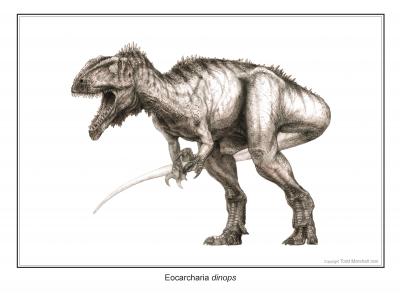
Two new 110 million-year-old dinosaurs unearthed in the Sahara Desert highlight the unusual meat-eaters that prowled southern continents during the Cretaceous Period. Named Kryptops and Eocarcharia in a paper appearing this month in the scientific journal Acta Palaeontologica Polonica, the fossils were discovered in 2000 on an expedition led by University of Chicago paleontologist Paul Sereno.

Sereno and co-author paleontologist Stephen Brusatte of the University of Bristol say the new fossils provide a glimpse of an earlier stage in the evolution of the bizarre meat-eaters of Gondwana, the southern landmass. “T-rex has become such a fixture of Cretaceous lore, most people don’t realize that no tyrannosaur ever set foot on a southern continent,” said Sereno.

Nothing would seem to be stranger than bats flying without their special radar. They would be the Keystone Cops of zoology. But the discovery of a remarkably well-preserved fossil representing the most primitive bat species known to date demonstrates that the animals evolved the ability to fly before they could echolocate.

The new species, named Onychonycteris finneyi, was unearthed in 2003 in southwestern Wyoming and is described in a study in the Feb. 14 issue of the journal Nature, on which University of Michigan paleontologist Gregg Gunnell is a coauthor along with researchers from the American Museum of Natural History (AMNH) in New York, the Royal Ontario Museum in Canada and the Senckenberg Research Institute in Germany.

When it comes to romantic attraction men primarily are motivated by good looks and women by earning power. At least that’s what men and women have been saying for a long time. Based on research that dates back several decades, the widely accepted notion permeates popular culture today.

But those sex differences didn’t hold up in a new in-depth study of romantic attraction undertaken by two Northwestern University psychologists.

In short, the data suggest that whether you’re a man or a woman, being attractive is just as good for your romantic prospects and, to a lesser extent, so is being a good earner.

The United States will be home to a $1 trillion carbon emission market by 2020 if federal and state policymakers continue on their current path towards a comprehensive "cap-and-trade" program that is confined to domestic trading only. In an analysis of bills today before the U.S. Congress, New Carbon Finance research economists based in New York, Washington D.C. and London, U.K. predict that in 12 years a carbon-constrained U.S. economy that includes a cap-and-trade system allowing only domestic trades will produce:

  • A $1 trillion carbon trading market -- more than twice the size of the European Union's Emissions Trading Scheme;

  • A carbon price of $40 per tonne as soon as 2015, which will result in a rise in consumer energy prices in real terms of roughly 20% for electricity, 12% for gasoline and 10% for natural gas -- as well as impacts on other prices as higher energy and transportation costs filter through the economy; and
  • Major U.S. investments in renewable energy, energy efficiency, and greenhouse gas mitigation projects and technologies.

“Flies are nature’s ultimate sensory machines, outperforming any human-engineered devices,” said Mark Frye of the University of California, Los Angeles. Adult fruit flies can distinguish small differences in odor concentration across antennae separated by less than one millimeter. Flies can also see in all directions at once, though the picture may be grainy.

Flies’ keen senses allow for some incredible maneuvers. During flight, a male housefly chasing a female can make turns within 40 milliseconds—less than the blink of an eye. When they’re hungry, flies track weak scents of food to far-flung places. Both feats depend on the tight integration of sight and smell.

CAMBRIDGE, England, February 14 /PRNewswire/ -- Executives from Senexis and O2H, both located in Cambridge, UK, announced an agreement under which O2H will provide synthetic and computational chemistry services to the drug discovery programmes at Senexis on an FTE basis.

"We believe our collaboration with O2H leverages the complementary expertise of both organisations and will benefit our search for new therapeutics to treat ageing-related diseases by helping Senexis increase the return on its chemistry research budget" said David Scopes, BSc, MSc, PhD - Chief Scientific Officer at Senexis.

