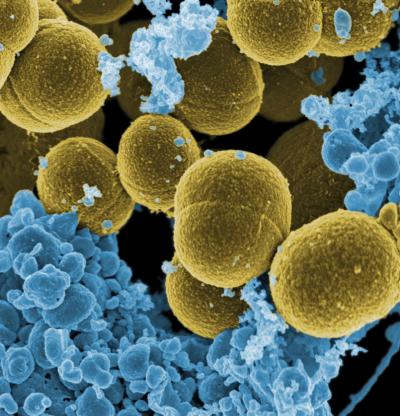





Community-associated methicillin-resistant Staphylococcus aureus (CA-MRSA) infections are caused primarily by a single strain—USA300—of an evolving bacterium that has spread with “extraordinary transmissibility” throughout the United States during the past five years, according to a new study led by National Institutes of Health (NIH) scientists.

CA-MRSA, an emerging public health concern, typically causes readily treatable soft-tissue infections such as boils, but also can lead to life-threatening conditions that are difficult to treat.

The study, from the National Institute of Allergy and Infectious Diseases (NIAID) of NIH, resolves debate about the molecular evolution of CA-MRSA in the United States.

Denizens of oceans, lakes and even wet soil, diatoms are unicellular algae that encase themselves in intricately patterned, glass-like shells. Curiously, these tiny phytoplankton could be harboring the next big breakthrough in computer chips.

Diatoms build their hard cell walls by laying down submicron-sized lines of silica, a compound related to the key material of the semiconductor industry—silicon. “If we can genetically control that process, we would have a whole new way of performing the nanofabrication used to make computer chips,” says Michael Sussman, a University of Wisconsin-Madison biochemistry professor and director of the UW-Madison’s Biotechnology Center.

Climate scientists are teaming up with economics experts to improve forecasting models and assess more accurately the economic as well as environmental impact of rising atmospheric carbon dioxide levels.

Although there is broad consensus that there will be a significant rise in average global temperature, there is great uncertainty over the extent of the change and the implications for different regions.

To provide a sound basis for major policy decisions and to ensure that politicians and the public get accurate information, the climate modelling community has turned to some of the statistical tools that could improve their modelling of climate change and have been developed for econometric problems which have some of the same features.

Our bodies sense painful stimuli through certain receptors located in the skin, in joints and many internal organs. Specialized nerve fibers relay these signals coming from the periphery to the brain, where pain becomes conscious. “The spinal cord is placed between these structures as kind of a pain filter”, says Hanns Ulrich Zeilhofer, Professor at the Institute of Pharmaceutical Sciences at ETH Zurich and at the Institute of Pharmacology and Toxicology of the University of Zurich.

That filter assures that pain is not evoked by everyday stimuli like light touch. This is accomplished by inhibitory nerve cells located in the spinal dorsal horn that release the messenger molecule-amino butyric acid (GABA) at specialized contacts between neighboring nerve cells, so-called synapses. GABA then activates chloride channels on those neighboring cells which relay the pain signals to the brain.

In patients with chronic inflammatory diseases, such as rheumatoid arthritis or after nerve damage, for example following injuries, the pain inhibiting action of GABA becomes severely compromised. Pain signals are then conducted to the brain nearly unfiltered. Benzodiazepines, such as the sedative drug Valium®, which enhance the action of GABA, alleviate chronic pain when they are applied directly to the spinal cord via an injection into the spinal canal.

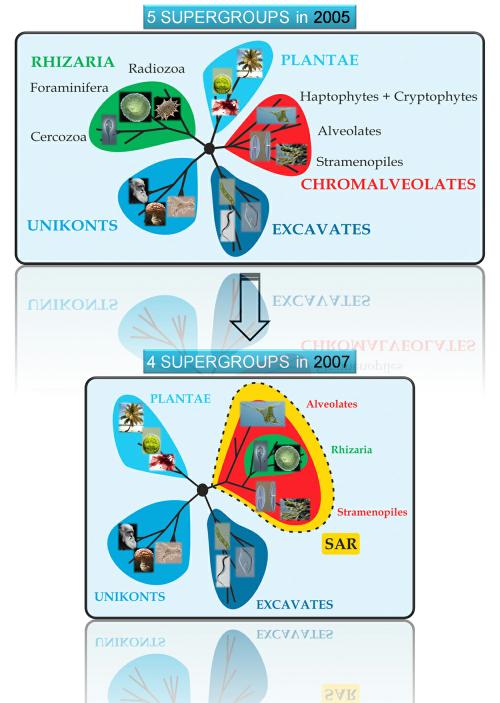
The Tree of Life has lost one of its branches due to the discovery that two formerly separated branches share a similar evolutionary history.

It's more than just re-drawing textbooks.

The discovery by Norwegian and Swiss researchers has gained attention from biologists worldwide. The findings come from the largest ever genetic comparison of higher life forms on the planet. Of 5000 genes examined, researchers identified 123 common genes from all known groups of organisms; these common genes have been studied more closely. The study has required long hours of work from the researchers and an enormous amount of computing resources—supplied through a large network of computers at the University of Oslo.

“The results were pretty astounding.

I wouldn't touch celery without a swath of peanut butter layered on top. I probably wouldn't touch it even then. Celery is not a stand-alone food for me.

But a study in the Journal of Agricultural and Food Chemistry reports identification of the flavor-boosting components in celery - and it reaffirms what cooks have known all along.

In their paper, Kikue Kubota and colleagues note that cooks have long recognized celery’s “remarkable” ability to enchance the complex flavors of soups and broths - it takes on a sweet-spicy flavor after boiling, helping to give food a thick, full-bodied, satisfying taste. Until now, however, scientists have been unable to track down the roots of celery’s effects.

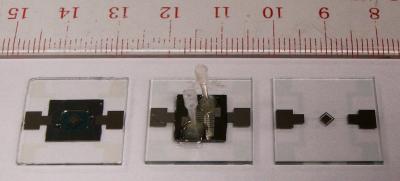
Researchers in Hong Kong have miniaturized technology needed to perform the versatile polymerase chain reaction (PCR) — widely used in criminal investigations, disease diagnosis, and a range of other key applications.

Published in Analytical Chemistry, they report development of a long-sought PCR microchip that could permit use of PCR at crime scenes, in doctors’ offices, and other out-of-lab locations.

I-Ming Hsing and colleagues note that PCR works like a biological copy machine, transforming a few wisps of DNA into billions of copies. However, existing PCR machines are so big and complex that they can be used only in laboratories.

The seminar that I give most often when I am invited to speak at other universities begins with a brief introduction to genomes, sets up some comparisons between bacteria and eukaryotes, and then moves into a short overview of bacterial genome size evolution before spending the remainder of the time on genome size diversity and its importance among animals. The main things that I have to say about bacterial genomes are:

1) Unlike in eukaryotes, bacterial genome size shows a strong positive relationship with gene number (in other words, bacterial genomes contain little non-coding DNA).


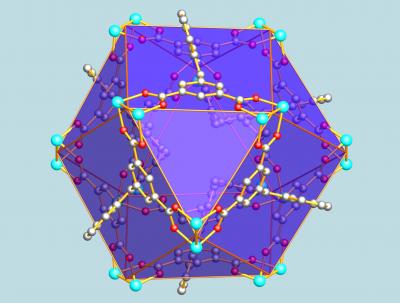
In a major advance in alternative fuel technology, researchers report development of a sponge-like material with the highest methane storage capacity ever measured.

It can hold almost one-third more methane than the U.S. Department of Energy’s (DOE) target level for methane-powered cars, they report in a new study. It is scheduled for the Jan. 23 issue of ACS’ Journal of the American Chemical Society, a weekly publication.

Hong-Cai Zhou and colleagues note that lack of an effective, economical and safe on-board storage system for methane gas has been one of the major hurdles preventing methane-driven automobiles from competing with traditional ones.

HALIFAX, Canada, January 21 /PRNewswire/ -- ImmunoVaccine Technologies Inc. (IVT), a clinical stage vaccine development company, will receive CAD $3 Million from the Atlantic Canada Opportunities Agency (ACOA), under the Atlantic Innovation Fund (AIF). This funding will enable IVT to undertake a CAD $6 million project to develop new potent immune enhancement systems.

"Having ACOA recognize the market potential of our innovative vaccine platform is a tremendous boost," commented Brian Lowe, Vice President of IVT. "This funding will enable us, over the next three years, to create novel vaccines for the treatment of cancer and infectious diseases.


