




Raptor 03, the third F-22 manufactured by the team of Lockheed Martin, Boeing and Pratt & Whitney is now part of a new exhibit at The National Museum of the U.S. Air Force. One of nine F-22s built for engineering, manufacture and development testing, Raptor 03 will remain on display in the museum.

The F-22 was the winner of the Advanced Tactical Fighter (ATF) contract, a "stealth fighter" designed to replace the F-15 Strike Eagle and surpass the capabilities of Soviet-era Su-27 "Flanker"-class fighter aircraft.

Raptor 03 was the test fleet workhorse. It was used for loads testing, crosswind landing trials, arrester hook evaluations,and weapons bay environment studies.

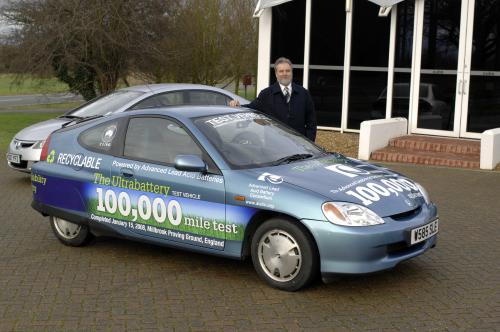
The odometer of a low emission hybrid electric test vehicle today reached 100,000 miles as the car circled a track in the UK using the power of an advanced CSIRO battery system.

The UltraBattery combines a supercapacitor and a lead acid battery in a single unit, creating a hybrid car battery that lasts longer, costs less and is more powerful than current technologies used in hybrid electric vehicles (HEVs).

“The UltraBattery is a leap forward for low emission transport and uptake of HEVs,” said David Lamb, who leads low emissions transport research with the Energy Transformed National Research Flagship. “Previous tests show the UltraBattery has a life cycle that is at least four times longer and produces 50 per cent more power than conventional battery systems.

A preliminary assembly and annotation of the soybean genome, Glycine max, has been made available by the U.S. Department of Energy Joint Genome Institute (DOE JGI), to the greater scientific community to enable bioenergy research.

The announcement was made by Eddy Rubin, DOE JGI Director, during his keynote remarks Jan. 15 at the Plant and Animal Genome XVI Conference in San Diego,CA.

The large-scale shotgun DNA sequencing project began in the middle of 2006 and will be completed in 2008. A total of about 13 million shotgun reads have been produced and deposited in the National Center for Biotechnology Information (NCBI) Trace Archive in accordance with the consortium’s commitment to early access and consistent with the Fort Lauderdale genome data release policy.

ATLANTA, January 20 /PRNewswire/ --

CeloNova BioSciences, Inc. ("CeloNova"), leading and accelerating healthcare solutions through the provision and development of innovative medical devices, has released data from THE SPHERE, an 11 center, 8 country European study of uterine fibroid embolization using the Company's Embozene(TM) Microspheres. The study results were reported at the 20th Annual International Symposium on Endovascular Therapy.

(Photo: http://www.newscom.com/cgi-bin/prnh/20080120/CLSU001 )

ATLANTA, January 20 /PRNewswire/ --

CeloNova BioSciences, Inc. ("CeloNova"), leading and accelerating healthcare solutions through the development of innovative medical devices, today announced breakthrough results from the ATLANTA study of the CATANIA(TM) Coronary Stent System with NanoThin Polyzene(R)-F at the 20th Annual International Symposium on Endovascular Therapy (ISET).

(Photo: http://www.newscom.com/cgi-bin/prnh/20080120/CLSU002 )

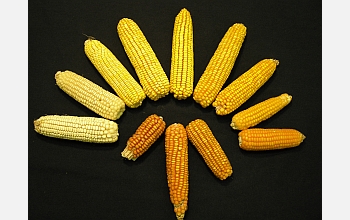
Corn can grow in many places but from a nutritional point of view, its fiber benefits are offset by its poor vitamin content.

Deficiencies in vitamin A cause eye diseases, including blindness, in 40 million children annually, and increased health risks for about 250 million people, mostly in developing countries.

It makes sense to find ways to improve corn planting so that corn with more nutritional value will be in use and a team of researchers say they have done just that. This is not genetic modification of corn, this is a tool that analyzes "the genetic makeup of corn that will enable developing countries to identify and increase cultivation of corn that has naturally high levels of vitamin A precursors," says Ed Buckler, a co-leader of the research team from the U.S.

Yes, you read that right. I said Blu-ray. Ever since the defection of Warner Bros. from HD-DVD to Blu-ray a few days before the Consumer Electronics Show(CES), every expert who knows anything at all about this industry has predicted the demise of HD-DVD. And they're wrong.

The most important reason is that no one is an expert on the high-definition marketplace. The industry barely even exists so people making projections based on expert knowledge of laser disc or DVD figures are only slightly more accurate than Voodoo shamen sorting chicken bones. You just can't rely on recent sales in a nascent industry and extrapolate a projection from it. Projections about what people will or will not do at this stage are even less accurate than political exit polls.

My thoughts are not based on any secret knowledge of the DVD marketplace but I have a pretty good knowledge of business. Absent an overwhelming leap in technology from Blu-ray some time soon, here are my reasons HD-DVD will win:

A non-invasive diagnostic tool to detect surface cancers quickly and painlessly using technology currently employed by gyms to calculate body composition has been developed by a QUT PhD medical physics researcher.

Jye Smith from QUT’s School of Physical and Chemical Sciences has developed a new diagnostic technique using bioimpedance spectroscopy to diagnose cervical and skin cancers. Bioimpedance measures the electrical characteristics of biological tissue and is used by gyms to calculate amounts of lean tissue, water and fat.

Do antioxidant supplements reduce the risk of cancer and deaths related to cancer?

While some trials have suggested that antioxidants have beneficial effects, results from other trials have been negative. It has been unclear which antioxidant compounts are more beneficial (or more harmful), and how individual antioxidants affect target organs and specific patient populations. To examine these issues, Mayo researchers writing in Mayo Clinic Proceedings conducted a systematic review on the topic.

A study led by McGill University researchers has demonstrated that small differences between individuals at the DNA level can lead to dramatic differences in the way genes produce proteins. These, in turn, are responsible for the vast array of differences in physical characteristics between individuals.

The study was originally initiated by Dr. Tom Hudson, former director of the McGill University and Genome Quebec Innovation Centre, and drew upon the data collected by the vast HapMap (Haplotype Map) Project, a global comparative map of the human genome, which Hudson and his colleagues were instrumental in completing.

