 Dr. Alex Durig (see picture) is a professional freelance writer, with a PhD in social psychology from Indiana University (1992). He has authored seven books in his specialization of perception and logic. He claims to have experienced great frustration resolving his experience of perception and logic when it comes to physics, but he says he no longer feels crazy, ever since Anomaly! was published. So I am offering this space to him to hear what he has to say about that...
------
On Dorigo's Anomaly! and the Social Psychology of Professional Discourse in Physics, by Alex Durig
Ovaries constructed of 3-D printed scaffolds that house immature eggs were successful in boosting hormone production and restoring fertility by actually ovulating - and they produced healthy offspring which mothers also were able to nurse.
By removing a female mouse's ovary and replacing it with a bioprosthetic ovary, the mouse was able to not only ovulate but also give birth to healthy pups. The moms were even able to nurse their young. The bioprosthetic ovaries are constructed of 3-D printed scaffolds that house immature eggs, and have been successful in boosting hormone production and restoring fertility in mice, which was the ultimate goal of the research.
Natural gas has seen a resurgence due to hydraulic fracturing ("fracking") which has allowed geologists and engineers to extract it from wells that were previously considered unusable. CO2 emissions from energy have plummeted back to early 1990s levels and emissions from dirtier forms of energy like coal are back at early 1980s levels.
A paper has linked Monarch butterfly populations to glyphosate - but only when it was first used, and not when it was most heavily used. It also linked the populations to seasonal variation. That is to be expected, except since it's 2017, they try to claim that's climate change rather than wetter weather in some years.
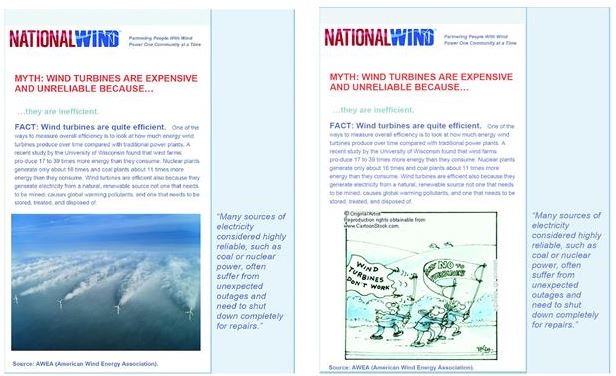
Though photos are considered more credible, if you are evangelizing a controversial energy type like wind, a cartoon may appear more persuasive.
In a recent study, participants were shown one of two versions of the same set of brochures. Each set was designed to debunk a myth about wind energy, the intent being to give readers desired information about wind energy and assuage their concerns. Each pair of brochures was identical in design, text, color, size, etc.
The only difference was that the originally designed brochures featured a beautiful, professional photograph of wind turbines, while the look-alike brochures created for the study swapped out the photograph with a cartoon.
Solar power is all the rage, at least for government officials who don't understand physics but do spend a lot of time with environmental (and solar panel) lobbyists.
Even in a small country like Belgium, solar can't even meet half of energy needs. In order for it to meet energy needs would require batteries, and that means doubling the cost for the public. If it were implemented in a large country like America, the cost would be astronomical, and that's without adding new transmission lines equivalent to every paved road in the U.S.
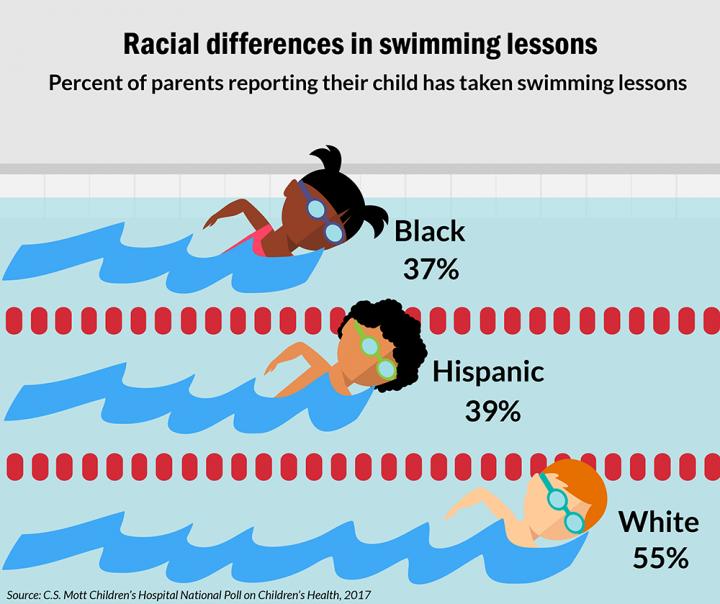
A new national poll says that parents are in a panic about things like swimming pools.
Least likely to think their kids can swim; black parents. A slight majority of white parents are fine with kids swimming sans parental hovering. Almost all parents think a natural lake (84 percent) or ocean (87 percent) , lacking concrete and a diving board, is too dangerous to be allowed. Only 63 percent would even allow kids to swim in their backyard.
Granted, pools can be dangerous, with some 5,000 child and teen injuries a year and around 1,000 drowning deaths occurring, but it shows we are bad at evaluating risk. Sharks attack fewer people than cows do, but who do you think parents worry more about after Shark Week?
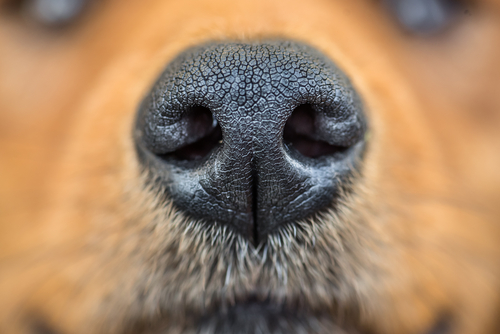
We are at the top of the food chain, but some of our senses got short shrift when it came to other animals. Dogs can hear at frequencies we can't, mantis shrimp got 16 visual pigments and we are stuck with just 3.5, and don't even get other animals started on our pathetic sense of smell.
But a weak nose in humans is really just a 19th century myth that won't go away, like homeopathy and organic food, according to a new analysis. Instead of being limited to a paltry 10,000 odors, humans can discriminate maybe one trillion different ones, the same as dogs and rodents.
The faulty persistent claim is thanks to Paul Broca, a 19th century brain surgeon and anthropologist as the culprit for the falsehood that humans have an impoverished olfactory system.
Yesterday I visited the Liceo “Benedetti” of Venice, where 40 students are preparing their artwork for a project of communicating science with art that will culminate in an exhibit at the Palazzo del Casinò of the Lido of Venice, during the week of the EPS conference in July.
The National Commission on Forensic Science was dissolved by Attorney General Jeff Sessions in a decisive action that brought an end to a highly decorated body of professionals, but one that was frequently stymied by legal gamesmanship and discord. The commission, a precipitant of the Obama administration's criminal justice reform efforts, was curiously loaded with trial attorneys, law professors, and other academicians but relatively few forensic scientists.