



In an article in Nature, The Cancer Genome Atlas (TCGA) has reported results from its first comprehensive study which focused on the deadly brain cancer glioblastoma.

The TCGA team, comprised of more than 100 investigators from seven cancer centers and research institutions throughout the country, analyzed 601 genes in tumor samples from 91 glioblastoma multiforme (GBM) patients.

Investigators at the Johns Hopkins Kimmel Cancer Center and University of Southern California, members of the TCGA team, studied 2000 genes.

The probability of someone cheating during the course of a relationship varies between 40 and 76 percent. "It's very high," says Geneviève Beaulieu-Pelletier, PhD student at the Université de Montréal's Department of Psychology.

According to psychologists, people with avoidant attachment styles are individuals uncomfortable with intimacy and are therefore more likely to multiply sexual encounters and cheat. But this has never been proved scientifically, which is what Beaulieu-Pelletier attempted to do in a series of four studies.

The student wanted to know if the type of commitment a person has with his or her loved ones is correlated to the desire of having extra-marital affairs. "The emotional attachment we have with others is modeled on the type of parenting received during childhood," she says.

Virginia Tech chemistry Professor Harry Dorn has developed a new area of fullerene chemistry that may be the backbone for development of molecular semiconductors and quantum computing applications.

Dorn plays with the hollow carbon molecules known as fullerenes as if they are tinker toys. First, in 1999, he figured out how to put atoms inside the 80-atom molecule, then how to do it reliably, how to change the number of atoms forming the carbon cage, and how to change the number and kinds of atoms inside the cage, resulting in a new, more sensitive MRI material and a vehicle to deliver radioactive atoms for applications in nuclear medicine.

LONDON, September 8 /PRNewswire/ --

Antibiotics are still being over-prescribed by GPs in contravention of guidelines, potentially contributing to antibiotic-resistant "superbugs", research launched at the British Pharmaceutical Conference (BPC) in Manchester has shown.

Researchers from John Moores University, Liverpool, studied almost 4,000 prescriptions issued in Western Cheshire during December 2007, and found that 13% of those for antibiotics were for specific medications not recommended in the local PCT antibiotic formulary guidelines, (Management of Infection Guidelines for Primary Care).

LONDON, September 8 /PRNewswire/ --

Over half the public are still ignorant about coronary heart disease (CHD) - the UK's leading killer disease, research launched at the British Pharmaceutical Conference (BPC) in Manchester has shown.

Pharmacy researchers from Queen's University in Belfast found an alarming 48% of people failed to define CHD, recognise its symptoms or identify its risk factors.

LONDON, September 8 /PRNewswire/ --

A breakthrough method has been found to reduce the dangerous side-effects of a medicine that successfully tackles epilepsy, according to research released at the British Pharmaceutical Conference (BPC) in Manchester.

Epilepsy is an incurable condition which causes people to suffer repeated seizures caused by a burst of abnormal electrical activity in the brain. It affects about one in 30 people in the UK.(1)

Anti-epileptic medicines such as valproic acid help stabilise the electrical activity in the brain and prevent seizures in most epilepsy patients. Its use is restricted due to rare, but potentially life-threatening side effects, such as toxic liver damage, stomach ulcers and serious inflammation of the pancreas.

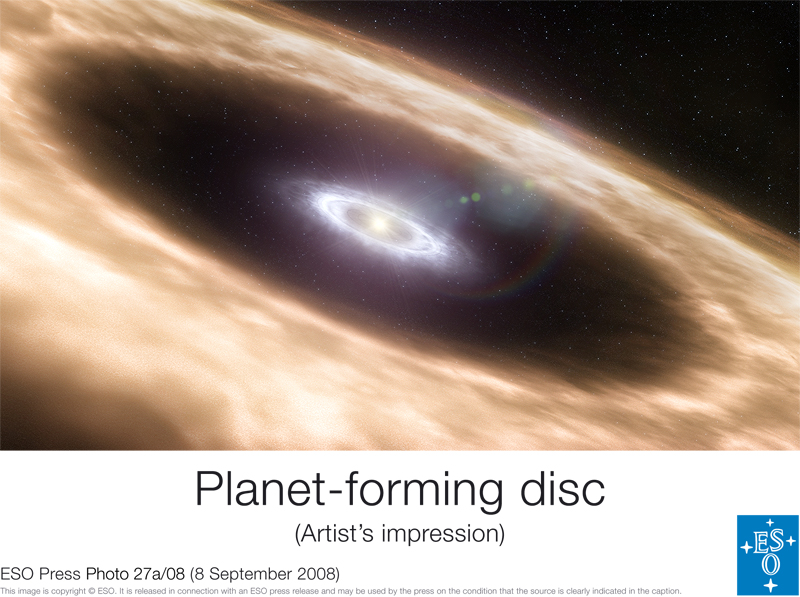
Astronomers have been able to study planet-forming discs around young Sun-like stars in unsurpassed detail, clearly revealing the motion and distribution of the gas in the inner parts of the disc. This result, which possibly implies the presence of giant planets, was made possible by the combination of a very clever method enabled by ESO's Very Large Telescope.

Planets could be home to other forms of life, so the study of exoplanets ranks very high in contemporary astronomy. More than 300 planets are already known to orbit stars other than the Sun, and these new worlds show an amazing diversity in their characteristics. But astronomers don't just look at systems where planets have already formed - they can also get great insights by studying the discs around young stars where planets may currently be forming. "This is like going 4.6 billion years back in time to watch how the planets of our own Solar System formed," says Klaus Pontoppidan from Caltech, who led the research.

Apparently, you can tell a lot about people from the way they move - gender, age, and even mood.

Researchers say they have found that observers perceive masculine motion as coming toward them, while a characteristically feminine walk looks like it's headed the other way.

Such studies are done by illuminating only the joints of model walkers and asking observers to identify various characteristics about the largely ambiguous figures.

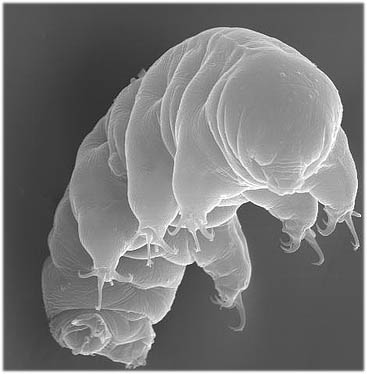
Space is extremely cold, near absolute zero, and it is a vacuum, so no oxygen, plus there is the threat of lethal radiation from stars. It is considered the most hostile of environments, where unprotected humans would last for a fraction of a second.

But research by Ingemar Jönsson and colleagues in Current Biology shows that some animals — the tardigrades, or 'water-bears' — can do away with space suits and can survive exposure to open-space vacuum, cold and radiation just fine.

The protein IKKalpha (IKKα) regulates the cell cycle of keratinocytes and plays a key role in keeping these specialized skin cells from becoming malignant, researchers at The University of Texas M. D. Anderson Cancer Center report in Cancer Cell.

Keratinocytes originate in the basal layer of the epidermis to replace skin cells at the surface that have been shed. As keratinocytes gradually move up through the skin layers, they differentiate and eventually form the top layer of the skin, which is composed of squamous cells. The cycle ends through terminal differentiation, in which cells lose their ability to reproduce by dividing in two. They eventually die.


