



The upconversion of photons allows for a more efficient use of light: Two photons are converted into a single photon having higher energy. Researchers at KIT now showed for the first time that the inner interfaces between surface-mounted metal-organic frameworks (SURMOFs) are suited perfectly for this purpose - they turned green light blue. The result, which is now being published in the Advanced Materials journal, opens up new opportunities for optoelectronic applications such as solar cells or LEDs. (DOI: 10.1002/adma.201601718)

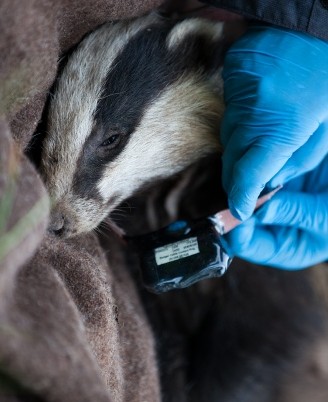
In recent years in Britain, we have heard much about bovine tuberculosis, which affects a wide variety of mammalian species, including mustelids, including the European badger Meles meles. There has been much argument over whether badgers should be culled to control the spread of the disease among cattle: indeed, badger culling in the United Kingdom has been a fraught and controversial subject.

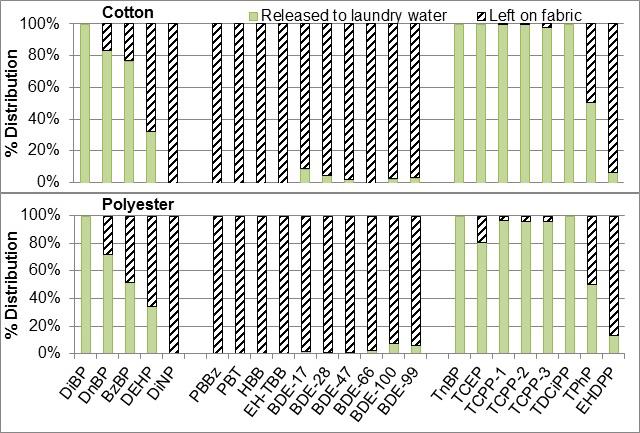
In recent years, litigation attorneys and environmental epidemiologists have attempted to link flame retardants, which were put in furniture and electronics to prevent immolation by national mandate, to health problems. Studies have shown that the substances, or their constituents, can leach out of products, and end up in indoor dust,  over time. In a world where we can now detect parts per quadrillion, they can also be found in us.

A new paper in Environmental Science&Technology discusses how flame retardants in our homes could also be ending up in surface water, via our laundry.

Heavy users of partisan media outlets are more likely than others to hold political misperceptions that are in defiance of facts. So if you think Republicans blocked Zika funding by withholding money for Planned Parenthood, or that Hillary Clinton is having DNC staffers whacked, it is a good indication you partake in fringe media sites.

As explained in the first installment of this series, these questions are a warm-up for my younger colleagues, who will in two months have to pass a tough exam to become INFN researchers. In fact, now that the application period has ended, I can say that there have been 718 applications for 58 positions. That's a lot, but OTOH any applicants starts off with a one-in-12.4 chance of getting the job, which is not so terribly small. 

Tumor shrinkage is not the only measure of a successful anti-cancer therapy. A University of Colorado Cancer Center article published in the journal Frontiers in Oncology describes a promising alternative: metabolic imaging. Tumors rush their metabolism to grow and proliferate. By recognizing a drug's ability to stop this energy overuse, doctors may be able to determine a patient's response to a new, targeted therapy far earlier and with far more precision than watching and waiting for a tumor to shrink.

New, highly curative hepatitis C therapy is both safe and effective as a treatment option for people who inject drugs,  the major population affected by the virus, according to a paper in the Annals of Internal Medicine.

SAN FRANCISCO, CA--With a trick of engineering, scientists at the Gladstone Institutes improved a potential weapon against inflammation and autoimmune disorders. Their work could one day benefit patients who suffer from inflammatory bowel disease or organ transplant rejection.

The Body's Natural Defense

Mesenchymal stromal cells (MSCs) reside in bone marrow and have been found to secrete anti-inflammatory proteins that help regulate the immune system. More than 500 clinical trials are trying to use these cells to fight diseases, but so far, many have failed.

Bright light combined with caffeine can improve driving performance and alertness of chronically sleep deprived young drivers, according to a Queensland University of Technology road safety study.

Dr Shamsi Shekari, from QUT's Centre for Accident Research & Road Safety - Queensland (CARRS-Q) presented her findings at the 2016 International Conference on Traffic and Transport Psychology held in Australia this month.

CARRS-Q and Griffith University co-hosted the event which brought together international experts from across the globe to share the latest in road safety research with the aim of reducing road trauma.

Malignant cancers strike certain organs, such as the colon or breast, more often than others. In an Opinion publishing August 9 in Trends in Cancer, researchers propose that this vulnerability in some organs may be due to natural selection. Humans can tolerate tumors in large or paired organs more easily than in small, critical organs, such as the heart, and so the larger organs may have evolved fewer mechanisms to defend against cancerous cells.

