

Consistent with previous reports, poor sleep quality was linked with joint pain in a recent Arthritis Care & Research study of the general population, but the study found no association between obstructive sleep apnea and pain or daytime sleepiness. This lack of association between pain and sleep apnea is surprising given the established link between pain and poor sleep quality.

Additional studies are needed to determine whether the relationship between pain and sleep apnea is different depending on the cause of sleep apnea. Furthermore, the mechanisms behind the different relationship between pain and sleep apnea compared with that of pain and sleep quality remain unclear and should be investigated.

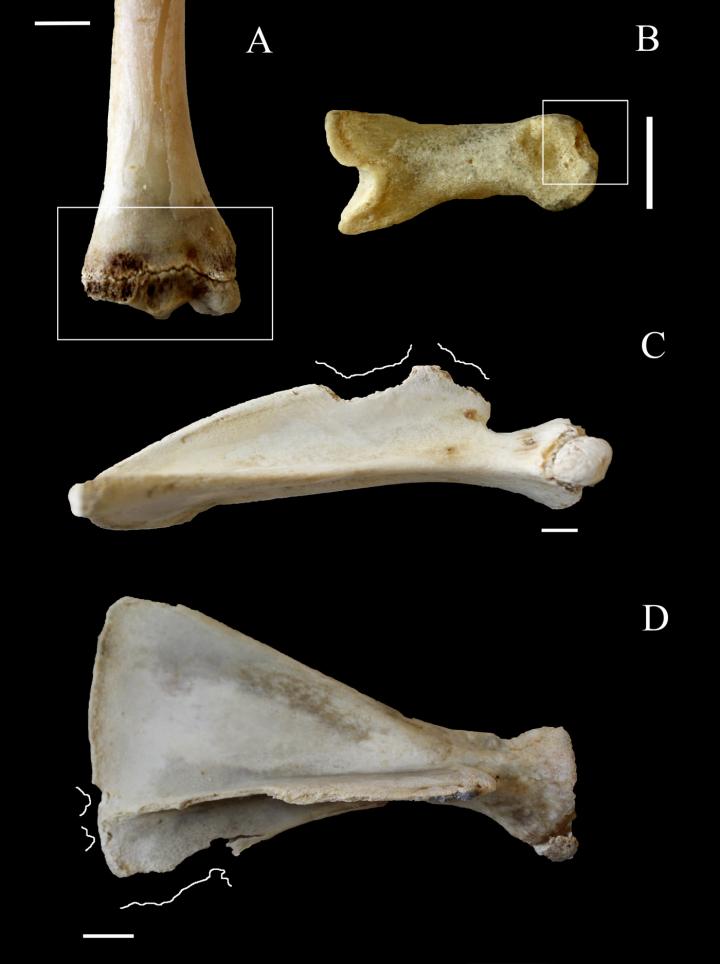
Archaeological sites speak about the everyday lives of people in other times. Yet knowing how to interpret this reality does not tend to be straightforward. We know that Palaeolithic societies lived on hunting and gathering, but the bones found in prehistoric settlements are not always the food leftovers of the societies that lived in them. Or they are not exclusively that.
Farmers are doing a lot more than just feeding the world, they are also offsetting tropical forests declines, capturing nearly 0.75 giga-tons of carbon dioxide every year ---but global warming estimates never account for that. 

In a recent study of girls and women diagnosed with at least one autoimmune disease, vaccination against human papillomavirus (HPV) did not increase the risk of developing another autoimmune disease. In fact, being vaccinated was associated with a slightly reduced risk compared with not being vaccinated.

The study included all 70,265 girls and women between 10 and 30 years of age in Sweden in 2006 to 2010 diagnosed with an autoimmune disease.

Dr. Lisen Arnheim-Dahlstrom, senior author of the Journal of Internal Medicine study, noted that individuals with autoimmune disease are vulnerable to vaccine-preventable diseases.

Source: Wiley

A study released in the July 2016 issue of the American Journal of Roentgenology found that biphenotypic primary liver carcinoma (also called hepatocholangiocarcinoma) may be misclassified as hepatocellular carcinoma (HCC) if interpretation is based on major imaging features alone.

Whatever happened to energy crops? A decade ago, the UK authorities confidently expected farmers to devote swaths of land to growing the likes of short-rotation willow and poplar and perennial grasses. These were to help feed one of the UK’s promising new renewable power sources – biomass energy, which burns plant materials to produce heat and power.

Should we be warning consumers about over-consumption of meat as well as sugar?

That's the question being raised by a team of researchers from the University of Adelaide, who say meat in the modern diet offers surplus energy, and is contributing to the prevalence of global obesity.

There is just one problem. The only data available is types of food, they have no idea whether the obese people ate any meat. Or any sugar. If just the availability of meat makes people obese, they have overturned everything science knows about cellular respiration.

Argonne, Ill. (July 29, 2016) -- As scientists and policymakers around the world try to combat the increasing rate of climate change, they have focused on the chief culprit: carbon dioxide.

Produced by the burning of fossil fuels in power plants and car engines, carbon dioxide continues to accumulate in the atmosphere, warming the planet. But trees and other plants do slowly capture carbon dioxide from the atmosphere, converting it to sugars that store energy.

In a new study from the U.S. Department of Energy's Argonne National Laboratory and the University of Illinois at Chicago, researchers have found a similar way to convert carbon dioxide into a usable energy source using sunlight.

August 1, 2016 - Should children be considered for facial transplantation? While there are some special ethical and psychological concerns, these shouldn't rule out the possibility of performing face transplant in carefully selected children, according to an expert review in the August issue of Plastic and Reconstructive Surgery®, the official medical journal of the American Society of Plastic Surgeons (ASPS).

A group of researchers at Immunology Frontier Research Center (IFReC), Osaka University and RIKEN Center for Integrative Medical Sciences jointly clarified the mechanism for inducing germinal-center B cells' differentiation into memory B cells, immune cells that remember antigens, at the molecular level.

When re-exposed to antigens such as bacteria or viruses, our bodies get rid of antigens by producing more antibodies than in the primary response. This is because memory B cells, which remember antigens in the primary immune response, are induced and respond faster in the secondary exposure to bacteria or viruses and differentiate into antibody-producing cells.

