Last week we revealed the
Top 10 Schools for Science based on the results of a 3-year study performed by US News&World Report. The study ranked the nation’s best science graduate programs, based upon the results of surveys sent to academics in Biological Sciences, Chemistry, Computer Science, Earth Science, Mathematics, and Physics.
So who came out on top? Several universities had a strong showing in one particular science specialty, but the top schools demonstrated high performance in multiple disciplines. Which schools scored the highest across all specialties? Here are the Top 10:
1.
Stanford University
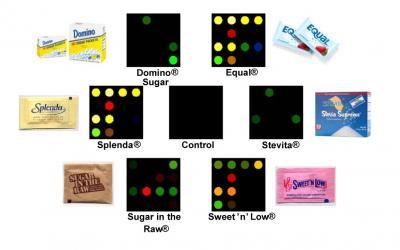
After taking a new approach to developing an effective "electronic tongue" that mimics human taste, scientists in Illinois are reporting development of a small, inexpensive, lab-on-a-chip sensor that quickly and accurately identifies sweetness — one of the five primary tastes. It can identify with 100 percent accuracy the full sweep of natural and artificial sweet substances, including 14 common sweeteners, using easy-to-read color markers.
A large number of hydrocarbon yielding plants like Calotropis procera, Euphorbia antisyphilitica have been reported to yield bio-fuel products. Attempts have been made to increase their growth and hydrocarbon yield potential.
Studies were conducted to improve growth and productivity of these plants under field conditions In Rajasthan, Calotropis procera grows wild while Euphorbia antisyphilitica has been introduced from Mexico. Jatropha grows wild in south east Rajasthan which lies on south east side of Aravalli hill range which roughly divides the state in semi-arid and arid regions.
James Hollis, Ph.D., is a graduate of the C. G. Jung Institute in Zurich. He has taught mythology and religion, men's issues, and midlife. His books have been translated into Russian, German, Swedish, Spanish, Portuguese, Turkish, Italian, Korean, Finnish, and Japanese. "Under Saturn's Shadow - THE WOUNDING AND HEALING OF MEN" is the impetus for my interview.
SB: Taking words from your book, I feel empowered to dive into life and struggle for depth and meaning. Dr. Hollis, thanks very much for this interview. Shall we get serious about psyche?
"Devil's claw" is a plant that may hold a natural for arthritis, tendonitis and other illnesses that affect millions each year.
Years of drought in Africa's Kalahari Desert have pushed the Devil's claw toward extinction but scientists are making headway in efforts to produce the valuable medicinal chemicals of the Devil's claw and one group reported an advance at the American Chemical Society (ACS) meeting. The researchers described the first successful method of producing the active ingredients in Devil's claw — what made it a sensation to natural medicine proponents in Europe.
They say their technique could lead to the development of "biofactories" that produce huge quantities of rare plant extracts quickly and at little cost.
One of the biggest mistakes environmentally conscious people make is thinking that an 'organic' pesticide is somehow superior to an inorganic one. The word 'organic' may be the most misunderstood word in western Civilization because there is no structural difference in complex, carbon-based molecules whether they were created in a lab or on a tree.
Nature understands exactly what organic means, including what pesticides are designed to do. Whether or not a small group of people consider them organic is irrelevant - you won't want to eat food treated with Pyrethrin even though it is considered completely 'organic', for example.
But marketing wins big battles so people want foods produced in more natural ways - enter rosemary, thyme, clove, and mint.
In discussing individualism and collectivism it needs to be clear that this represents overall philosophical perspectives that aren't confined to simple economic or political interpretations. Rather these ideas permeate human society, its interactions, and the subgroups within it.
Google “E=mc2 is wrong” and you get 1,060 hits. Google “E=mc2 is correct” and you get a mere 138 hits. There you have it. It took us a more than a century, but finally this crazy inconsistent theory of relativity got outvoted. Common sense cries victory!
Fortunately, science does not work that way. Science is no democracy, and we do not render a theory invalid by popular vote. Einstein's theory of relativity has stood the test of time and its correctness is beyond any doubt. But... there is an issue with what is arguably the most famous equation in the history of natural sciences.
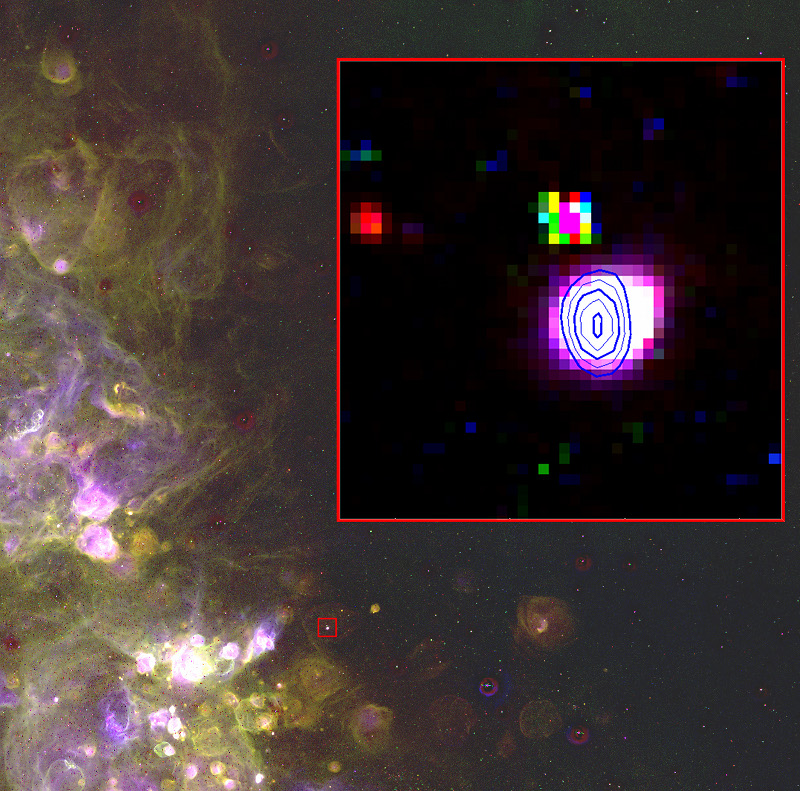
Planetary nebulae are gas and dust shells ejected by stars near the end of their lives - typically seen around stars comparable or smaller in size than the Sun.
The existing population of planetary nebulae is found around small stars comparable in size to our Sun but a new population discovered due to the presence of unusually strong radio sources may be the long predicted class of similar shells around heavier stars.
A team of scientists in Australia and the United States call the new class of object “Super Planetary Nebulae.” They report their work in the journal Monthly Notices of the Royal Astronomical Society.
The UK Government, in its Digital Britain report in June, made a commitment that every home in the UK should have broadband access by 2012. A range of technologies, including wireless, will be used to deliver the basic broadband.
But the same government and its laws aimed at tackling illegal use of wireless internet connections are making broadband access impossible, according to research published today.
Daithí Mac Síthigh, a lecturer in IT and internet law at the University of East Anglia (UEA), says legislation may not be the most appropriate way to regulate 'wi-fi' sharing, where a network is used by more than one person, and needs clarifying so it does not hold back provision of community wifi schemes.