



NEW YORK, September 11 /PRNewswire/ --

- With its technology, the iCrete System produces a stronger, more cost effective, environmentally safe concrete for the Freedom Tower at the World Trade Center in New York City.

(With permission from the pages of Concrete Today magazine, September 2008) -- One of the problems concrete contractors were faced with in a pour the magnitude of the Freedom Tower at the World Trade Center was controlling the heat generated in the core of the concrete, along with the changes in temperature, which, during hydration and consolidation, can cause cracks due to stress. The answer to this dilemma within New York's most important structure came from an unlikely source, a California company called iCrete(R).

ATLANTA and MOSCOW, September 11 /PRNewswire/ --

Global Payments Inc. (NYSE: GPN), a leading provider of electronic transaction processing solutions, announced today it has agreed to acquire ZAO United Card Service ("UCS") from ZAO United Investments in a stock purchase transaction. The transaction is subject to regulatory and noteholders' approval and customary closing conditions.

(Logo: http://www.newscom.com/cgi-bin/prnh/20010221/ATW031LOGO )

TORONTO, Canada, September 11 /PRNewswire/ --

- Redline's RedMAX(TM) Family of WiMAX Forum Certified(R) Products Will Provide IDNet Customers With Advanced Data and Internet Services

Redline Communications Group Inc. ("Redline") (TSX and AIM: RDL), a leading provider of WiMAX and broadband wireless infrastructure products, and IDNet, a leading Costa Rican wireless broadband services operator, today announced that IDNet has deployed Redline's award-winning RedMAX(TM) family of WiMAX Forum Certified(R) products, to provide enterprise and residential customers with advanced internet and data services. The project represents the first live private WiMAX network operating in the 3.3 GHz licensed spectrum in Costa Rica.

TORONTO, September 11 /PRNewswire/ -- GuestLogix Inc. (TSX-V:GXI), the leading provider of on-board retail technology and solutions to the airline industry, today announced that US Airways, America's fifth largest domestic carrier, has selected the GuestLogix Mobile Virtual Store(TM) solution, comprising proprietary handheld devices and integrated software services, to grow a la carte sales on-board its domestic and international flights.

We all know that people can be influenced in complex ways by their peers. But two new studies in the September 11th issue of Current Biology reveal that the same can also be said of fruit flies.

The researchers found that group composition affects individual flies in several ways, including changes in gene activity and sexual behavior, all mediated by chemical communication.

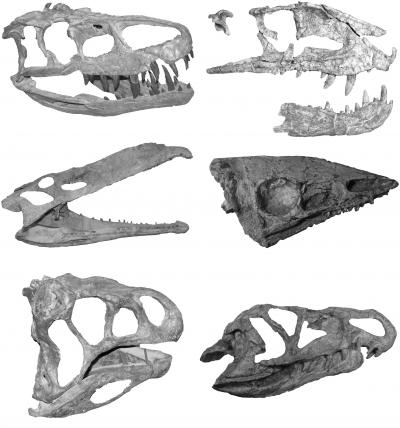
Depending on if you are pro- or con- on the dinosaur issue, you have good or bad things to say. While dinosaurs dominated land for well over 100 million years and evolved into numerous species, they still got snuffed out rather suddenly 65 million years ago. epitomize both success and failure. Failure because they went extinct suddenly 65 million years ago; success because they dominated terrestrial ecosystems for well over 100 million years evolving into a wide array of species that reached tremendous sizes.

University of Bristol researchers Steve Brusatte and Professor Mike Benton say it was just bad luck, and that's okay, because it was only good luck that made them dominant in the first place. This defies conventional thinking that some feature or characteristic helped them out-compete other vertebrate groups.

Like crocodiles, say Brusatte and Benton. They examined the evolution of dinosaurs and their closest competitors during the Triassic period (251 to 199 million years ago)and identified the the crurotarsan archosaurs, a large group of animals that are closely related to crocodiles, as the most likely 'competitors' to early dinosaurs. The other part of the group Archosauria are dinosaurs and their descendants, the birds.

We hear lots of concern about global warming and the world's rainforests, though they have even begun to thrive under warming conditions - but what about ancient rainforests, long before the Dawn of Man and the destruction we apparently set into motion just by evolving?

The answer lies in underground coalmines in Illinois.

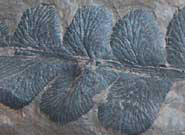
There lay the remains of the first tropical rainforests to evolve on our planet around 300 million years - when the USA lay on the equator. An amazing feature of the forests is that they are preserved over a vast area. One example covers 10,000 hectares - the size of a city.

Our brains contain their own navigation system much like satellite navigation ("sat-nav"), with in-built maps, grids and compasses, neuroscientist Dr Hugo Spiers told the BA Festival of Science at the University of Liverpool today. The brain's navigation mechanism resides in an area know as the hippocampus, which is responsible for learning and memory and famously shown to be different in London taxi drivers in a Wellcome Trust-funded study carried out by Professor Eleanor Maguire at UCL (University College London).

That's right, cabbies have better brains for GPS. The study showed that a region of the hippocampus was enlarged in London taxi drivers compared to the general population. Even bus drivers do not have the same enlarged area, and general skill at navigating is not related to hippocampus size, suggesting that the difference is linked to 'The Knowledge' of the city's 250,000 streets built up by taxi drivers over many years.

Prof. Leonid Yaroslavsky from Tel Aviv University believes that humans may have an ability to "see" colors and shapes - with their skin.

He outlines his 'optic-less imaging model' in a chapter of a new book, "Advances in Information Optics and Photonics", and even says it could lead to a new form of optical imaging technology that beats the limitations of today's lens-based imaging devices. This model, he says, may also explain how a controversial primordial instinct might have evolved over millions of years.

Mayo Clinic investigators have demonstrated that stem cells can be used to regenerate heart tissue to treat dilated cardiomyopathy, a congenital defect, according to research published in Stem Cells.

The study expands on the use of embryonic stem cells to regenerate tissue and repair damage after heart attacks and demonstrates that stem cells also can repair the inherited causes of heart failure.

The team reproduced prominent features of human malignant heart failure in a series of genetically altered mice. Specifically, the "knockout" of a critical heart-protective protein known as the KATP channel compromised heart contractions and caused ventricular dilation or heart enlargement.


