



By James Todd (in italics) and Kim Wombles
Maybe your need to feel like a Hollywood celebrity outweighs the long-published perils of cocaine use and you just need a little something to push you back over the edge to sanity - if so, crusty, purplish areas of dead skin that are extremely painful and can open the door to nasty infections might do the trick. 

The condition is called purpura, usually a range of rare disorders, but increasingly associated with the use of cocaine, specifically cocaine that has been increasingly contaminated with a de-worming drug used by veterinarians. The drug, called levamisole, was found in 30 percent of confiscated cocaine in 2008 and 70 percent in 2009, according to the U.S. Drug Enforcement Administration.
Other than wasting away due to illness, there is no shortcut to weight loss.   You can, of course, simply not eat at all and that will work but if you resume your old habits you would gain the weight back and the drastic changes to your body might do harm.

Some people are motivated to lose weight - as long as it can happen right now.  And any number of gimmicks and diet programs will help, if you just buy the book or the meals.    But the failure rate is far greater than the success rate because, ordinarily, if people had the discipline to stick to a weight loss plan, they wouldn't be obese.    
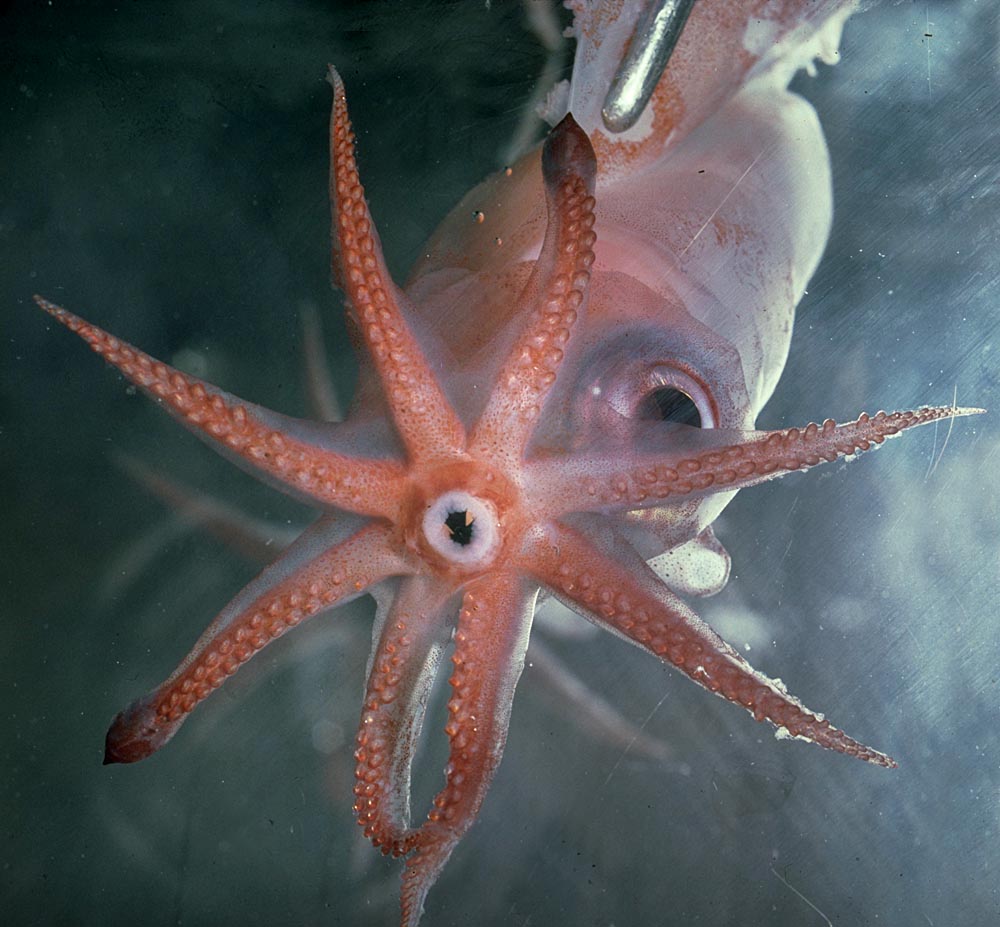
Whenever friends or family learn that there exists in the depths of the sea a particular species known as the Dana Octopus Squid, they draw the obvious conclusion that I must have been named after this squid, or (even more flattering) the squid was named after me. Alas, neither is the case. Wikipedia reveals all:
Taningia danae is named after Danish fisheries biologist Aage Vedel Taaning (1890–1958), who often traveled on the research vessel Dana.
Of course, the truly perceptive will note that since my name has two n's, there can be no possible connection between the squid and me.
Writing at the Washington Post's Capital Weather Gang blog,  Jason Samenow advocates an idea he recently saw pitched by atmospheric scientist Alan Betts, namely that science studies be accompanied by layperson explanations.
The world is changing. Climate change, deforestation, and much more, are all having an impact on our litlle planet. A question that follows this statement quite naturally, is 'Will the earth's organisms be able to adapt to the changing circumstances?'

Well, probably, some will, given enough time. But that might be a problem.

The world is changing fast. So the question should really be 'Will the earth's organisms be able to adapt to the changing circumstances fast enough?' 
There was a time when I could hide my gray hairs with some strategic combing. Now, I have succumbed and describe my new hair color as “executive blond.” Of course, that also means that the important stuff under my scalp is getting older too. Brains start to “go gray” about the same time the hair does, which is why exercise for older adults has become the new anti-aging fix for our senior cerebellums. Several new studies provide more evidence that a brain in motion tends to remain... young.

The Dutch translation of Ray Kurzweil's 2005 bestseller “The Singularity is Near: When Humans Transcend Biology” (the title says it all!) is about to be released, so this post on 'practical PAC' will be a summary of my objections to this idea. The Singularity was a case study in my research to see if I could analyse the claims with PAC.

