AMSTERDAM, The Netherlands, January 20 /PRNewswire/ -- Elsevier today announced the launch of SciTopics (http://www.scitopics.com), a free online expert-generated knowledge sharing service for the research community to quickly offer scientific, technical and medical knowledge on a variety of subjects. Designed as a perfect starting point for scientific research, the website integrates a content publishing platform with search functionalities and community features. SciTopics guarantees high scientific standards by incorporating a very strict editorial policy, safeguarded by subject specific editors. The service includes a continually growing number of pages with over 650 SciTopics pages today, from more than 800 scientists.
Captain Chesley "Sully" Sullenberger's
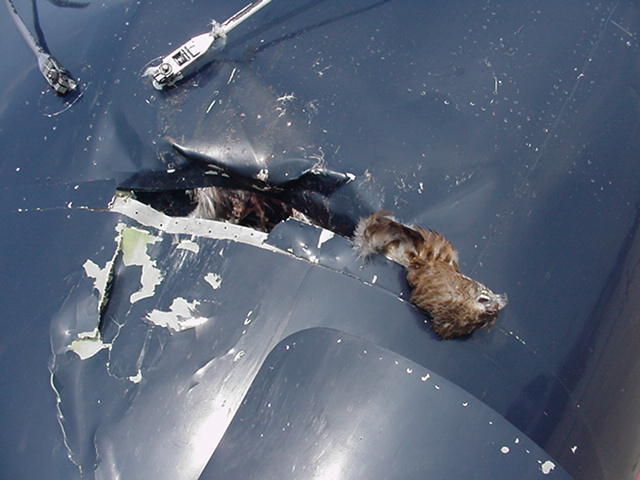
heroic Hudson River landing was a good reminder that a twenty pound bird at 200 miles per hour is not so different from a bowling ball shot from a cannon. The results range from minor dents to Flight 1549's disabled engines to the damage below: double-lapped, 1/16” reinforced aluminum totally blown through, and feathers clear to the cockpit.
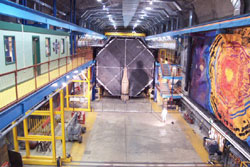
Half a mile underground is probably the last place you might expect to be able to observe atmospheric phenomena. If you knew about the MINOS experiment, however, you might think otherwise. MINOS, which stands for Main Injector Neutrino Oscillation Search, was built to detect particles originating far away but of terrestrial origin.
Recently, researchers have noticed that the detectors at MINOS occasionally detect particles from the atmosphere, and that these detections correlate with weather patterns in the high atmosphere.
Did a catastrophic flood of biblical proportions occur, as stated in the story of Noah's Ark? If so, it may have been the shores of the Black Sea that were drowned 9,500 years ago, wiping out early Neolithic settlements around its perimeter.
Imaging systems, artificial intelligence and computer programs for facial recognition could get a boost by work from Dr. Adrian Dyer of Monash University, one of Australia's leading bee experts - he says his latest research shows that honeybees can learn to recognize human faces even when seen from different viewpoints.
The findings show that despite the highly constrained neural resources of the insects (their brains are 0.01 per cent the size of the human brain) their ability has evolved so that they're able to process complex visual recognition tasks.
A recent theory of aging says that
caloric restriction may do the trick but the research is inconsistent; the mice in the most promising studies were weaned that way, something unlikely to happen in human children. New research says even those studies may not be entirely accurate and that for lean mice – and therefore lean humans, if prior mouse studies were to be taken at face value – caloric restrictions as an anti-aging strategy may be a pointless, frustrating and even dangerous exercise.
But for fat mice, dieting makes sense and will extend life, the researchers say. That goes for people as well.
The movement of facial skin and muscles around the mouth plays an important role not only in the way the sounds of speech are made, but also in the way they are heard according to a study by scientists at Haskins Laboratories, a Yale-affiliated research laboratory.
"How your own face is moving makes a difference in how you 'hear' what you hear," said first author Takayuki Ito, a senior scientist at Haskins Laboratories.
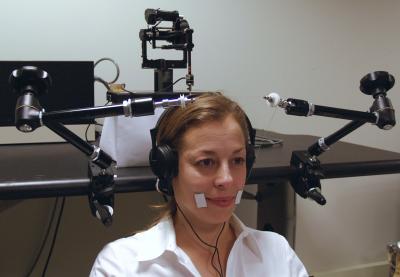
When, Ito and his colleagues used a robotic device to stretch the facial skin of "listeners" in a way that would normally accompany speech production they found it affected the way the subjects heard the speech sounds.
To prolong the shelf life of foods, manufacturers often add hydrogen to natural oils, a process called hydrogenation. But hydrogenation also results in the production of trans fats, which have adverse health effects such as raising bad cholesterol and increasing the risk for coronary heart diseases. Trans fats are found in vegetable shortenings, some margarines, crackers, cookies and snacks. Health authorities worldwide recommend that people reduce their consumption of trans fats.
UC Riverside chemists have designed a catalyst (a substance that accelerates a chemical reaction) that allows hydrogenated oils to be made while minimizing the production of trans fats.
BAGSVAERD, Denmark, January 22 /PRNewswire/ -- Leading biotechnology company Novozymes reports 13% sales growth in 2008. Earnings were also very satisfactory. Growth outlook for 2009 of 8-13% in DKK in an uncertain market. Strong long-term trends lead to new, increased targets and higher investments to support higher future growth level.
- 2008 sales up by 13% in local currencies (LCY), 10% in DKK, ending at DKK 8,146m - Sales growth of 5% in LCY and 10% in DKK in the fourth quarter - Operating profit of DKK 1,504m, a 7% increase
(Logo: http://www.newscom.com/cgi-bin/prnh/20090122/335356 )
MUNICH, Germany, January 22 /PRNewswire/ --
- White Paper Addresses the Needs of These Challenging Patients
Less than a third of patients in Europe achieve acceptable blood pressure control. The remaining two thirds are challenging patients i.e. patients whose blood pressure physicians struggle to control. These are the alarming findings of a White Paper published in the Journal of Hypertension(1) by an international group of physicians calling for urgent action. The group met to discuss the daily challenges European physicians face in the current critical situation of hypertension control. The outcome is a consensus that continued failure to control hypertension inflicts an unacceptable yet avoidable toll on patients, families and society.