


The great angiosperm radiation of the mid-Cretaceous, the dramatic explosion of flowering plant species that occurred about 100 million years ago, is thought to have been good news for evolving mammals, providing them with new options for food and habitat. 

Previous literature suggested the spread of angiosperms, along with the evolution of pollinating insects, may have spurred an increase in the diversity of mammals. The idea made sense: The radiation would likely have resulted in more food sources from seeds, fruits, leaves and insects.

Not always. 

Risky sexual behavior and substance abuse have always orbited HIV but it isn't just shared needles; drugs like cocaine make people engage in lots of other risky behaviors.

The epidemiology of how HIV spreads is well know but relatively little research has been done into how drugs impact the body's defenses against the virus. A new paper examines how cocaine affects a unique population of immune cells called quiescent CD4 T cells, which are resistant to the virus that causes AIDS.

They found that cocaine makes the cells susceptible to infection with HIV, causing both significant infection and new production of the virus. 

Industry has made efforts to reuse or to transport shale gas wastewater to deep injection wells, but wastewater is still discharged into the environment, after being treated, in some states. 

In western Pennsylvania, water that comes from Marcellus shale is naturally high in salinity and radioactivity but a new Duke study examined the quality of shale gas wastewater resulting from hydraulic fracturing and found that the stream water above and below the Josephine Brine Treatment Facility disposal site that is derived from the Marcellus shale gas flowback water showed elevated levels of radioactivity, salts and metals.

High concentrations of some salts and metals were also observed in the stream water.

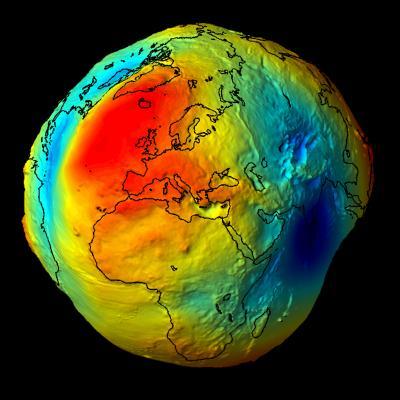
Where is 'sea level' and how far above sea level is a particular place located? 

Quite a lot of things may go wrong in bridge building and the inhabitants of the German and the Swiss parts of Laufenburg were looking forward to a new bridge over the Rhine, the High Rhine Bridge, when they were taken aback by an embarrassing error: The heights of the two bridge parts growing towards each other differed by 54 centimeters.

Researchers have managed to measure the internal pressure that enables the herpes virus to infect cells in the human body, a discovery which paves the way for the development of new medicines to combat viral infections and indicates ways to stop herpes infections in the future.

Are you on Team Quantum Dots or Team Nanowires when the topic of future nanoscale energy-harvesting technology in solar panels comes up?

10 percent of the US is left handed and that is a similar ratio to many populations around the world so it would seem to be biological.

But a new paper in the journal Heredity has ruled out a 'strong genetic determinant' in influencing handedness. 

Professor John Armour, Dr. Angus Davison (both The University of Nottingham) and Professor Chris McManus (University College London) conducted a twin study examining the whole genome of nearly 4,000 subjects from the London Twin Research Unit to compare left and right handed participants. 

Knocking on wood is a common superstition in Western culture, mostly used to prevent bad luck after talking about good fortune, but sometimes to reverse bad fortune or undo a "jinx."

Other cultures maintain similar practices, like spitting or throwing salt, after someone has tempted fate. Even people who aren't superstitious often participate in these practices.  And since this baseball playoffs start today, don't even get one of them going about their crazy superstitions and rituals. 

Because an uninterrupted sequence of fossilized pollen from flowers begins in the Early Cretaceous, approximately 140 million years ago, it is generally assumed that flowering plants first evolved around that time. 

A new study documents flowering plant-like pollen that is 100 million years older, implying that flowering plants may have originated in the Early Triassic (between 252 to 247 million years ago) or even earlier.  Flowering plants evolved from extinct plants related to conifers, ginkgos, cycads, and seed ferns.  

Here is a (partial) overview of (some of) the recent academic literature on the subject of 'Humming'

Security

Humming-based human verification and identification

“The experimental results show that linear prediction cepstral coefficients and perceptually linear prediction coefficients are conducive to verification and identification, respectively.”

Medicine


