




Law, Lies and Logic


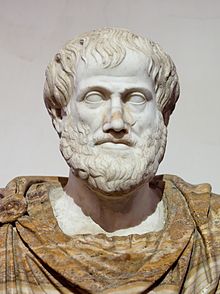
The foundations of logical science, and of that part of law which concerns itself with logic rather than rhetoric, were laid by Aristotle, in 350 B.C.E.

His analysis of reasoning with demonstrable facts, as against appeals to "reason", came in a golden age of rhetoric.  He noted that the tools of rhetoric had not been built from an analysis of how language is used, but had been built piecemeal.  He, on the other hand, built his tools of logic from an observational foundation.

Humans have long been yearning for an immortal life and everlasting youth—to continue living freely without having to confront death. A renowned novel written by Mary Shelley, Frankenstein, reveals this desire for immortality.

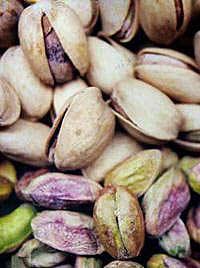
A team from the School of Family and Consumer Sciences at Eastern Illinois University have discovered a reliable method of persuading people to eat up to 50% less pistachio nuts – just leave them in their shells.
Statistics data analysis is one of those things that experimental physicists learn along the way. It is not a topic usually included in the curriculum studiorum of physics students at Universities: only few basic ingredients are taught during laboratory courses, and not much is added to that during a typical Ph.D. program.

One usually learns the most common tools to fit histograms, combine measurements, estimate uncertainties on the field, as these things are always needed to produce publishable physics results. But several key statistical concepts often remain fuzzy and obscure in the mind of a large fraction of experimental physicists throughout their career. I know this because this happened to me, too - for quite a few years after my graduation.
Recently I attended a talk by Ronnie de Sousa, a philosopher at The University of Toronto, by the somewhat unusual, almost oxymoronic, title of “Love and Reason” (as opposed to, say, Love or Reason). It turned out to be a fascinating tour de force ranging from the Countess of Champagne and her 1176 verdict on the nature of love, to cognitive scientist’s Helen Fisher studies of the chemical underpinning of different aspects of love. Here I will limit myself to a few aspects of de Sousa’s talk (who graciously provided me with his original slides), but Ronnie is finishing a paper on the subject, so stay tuned for much more if what follows happen to sufficiently stimulate your curiosity.

Temple Grandin’s “The Autistic Brain: Thinking Across the Spectrum” [1] belongs to a new(ly fashionable but old) way of thinking that supports my own approach, namely that pathologic (psychopathic) thinking is necessary for new-enlightenment, for example in the face of existential dangers evolving in the technological substrate (Robopocalypse, Global Suicide).

A few brief days in embryonic life lays out our body's construction plan. The appearance of limbs and vertebrae is orchestrated by a family of 'architect' genes called Hox, each providing precise instructions at a given time.

New research has demonstrated that these genes were aligned within our chromosomes according to the order of structures - collinear expression in developing limb buds: first the components of the shoulder, then the arm, and finally the fingers.

If you've been to a whispering gallery, a quiet, circular space often underneath a dome or vault that captures and amplifies sounds as quiet as a whisper, you have witnessed parabolics in action. The sound waves are efficiently propagated by the concave surface and similar whispering-gallery waves are evident in light.

Researchers are applying similar principles in the development optomechanical sensors that will help unlock vibrational secrets of chemical and biological samples at the nanoscale.

Using social media like Twitter, Facebook and others is said to be like drinking from a fire hose.

A team of data scientists at the Department of Energy's Pacific Northwest National Laboratory, is trying to drink from 7 billion firehoses.  They have created a system capable of analyzing billions of tweets and other social media messages in an effort to discover patterns and make sense of all the information. They call the analysis tool "SALSA" (SociAL Sensor Analytics).

"The world is equipped with human sensors – more than 7 billion and counting. It's by far the most extensive sensor network on the planet. What can we learn by paying attention?"  Court Corley, data scientist at PNNL, said.

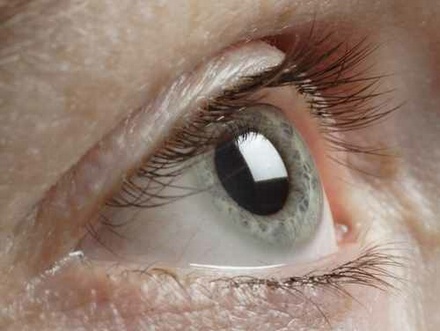
Visually impaired individuals and people with uncorrected refractive error, those who could benefit from glasses to achieve normal vision but don't wear glasses, have a significantly greater risk of diminished balance with their eyes closed on a compliant, foam surface than individuals with normal vision.

The research suggests that vision may play an important role in calibrating the vestibular system, which includes the bones and soft tissue of the inner ear, to help optimize physical balance. The work provides direction for more targeted studies on how poor vision impacts vestibular balance, and how to better develop fall prevention strategies for those with poor vision.

