Many are troubled by
dark energy. I will tell you first why dark energy is really crazy. Then I tell you that the crazy part is not actually the problem of dark energy, but one of basic general relativity. Many educated people are proudly critical of dark stuff, but when it comes to relativity, they do not want to be found hanging out in the crack-pot corner. In other words, my post is directed at the guys who go: “I know about relativity and agree it is more or less fine what those cosmologists did then, but this dark stuff now is going too far! Stop the wild guessing and go back to doing proper science.”
Proteins are the indispensable catalytic workhorses, carrying out the processes essential to life in today's sophisticated organisms, but long ago ribonucleic acid (RNA) reigned supreme.
Researchers have produced an atomic picture that shows how two of these very old molecules interact with each other and it provides a rare glimpse into the transition from an ancient, RNA-based world to our present, protein-catalyst dominated world.
Want to kill about 8,000 hours of your life? Go to data.gov and start looking around. In the interest of transparency (well, sometimes - see Recovery Accountability and Transparency meeting not open to the public), the Obama Administration has posted over 270,000 sets of raw data from its departments, agencies, and offices on the World Wide Web.
Good luck figuring it out, right? The best place to hide stuff is in plain sight, skeptics will claim.
Nope, some folks at Rensselaer are here to make it simple.
I am 26,160 words into my
squid racing novel, about halfway through the plot, and enjoying
NaNoWriMo quite thoroughly. But I just had to pop out of my month of hibernation to link a few really cool squid-in-the-news stories. Evidence continues to build that squid are basically awesome:
SQUID FLY: We've known for a long time that
squid can fly, but a recent review paper summed up all the evidence and made some cool calculations about velocity and body postures.
Plants often get shorted on attention among biologists. Don't get me wrong -- there is a huge scientific community of plant biologists, field botanists, and agronomists out there, and plenty of research is conducted on plants.
For the bulk of biologists, though, the most interesting questions are those which relate closely to our own species. It's hard to resist the draw of learning where we came from or potential medical miracles such as stem cell research. We can't really learn much about those kinds of things from plants.
Or can we?

Equations relating speed and mass go back to Newton and beyond.
But what about relating speed and MESS?
Simply, how fast should you expect a clean kids' room to get messy?
Gad Saad, who likes to link evolution to consumption and marketing phenomena, says the length between the second and fourth finger is an indicator of high levels of prenatal testosterone and therefore risk-taking and potential financial success in adult men.
His hypothesis suggests that alpha males may take greater risks in relationships, in sports and in the financial markets, which we all sort of knew because that is the origin of the term 'alpha male'.
At The Hazard Of His Ears
What has the hazard of a person's ears to do with science history?
The history of Arctic science, exploration and discovery is sprinkled with many as yet unsolved mysteries, many concerning the meanings of words in old documents. In this, the first article in a short series, I present my thoughts on some of these mysteries for discussion. By clarifying an obscure passage in an old document we may add to its credibility as a source of historical or scientific data. Thus the solving of these mysteries will - I suggest - add to our knowledge of Arctic history, and hence of Arctic science.
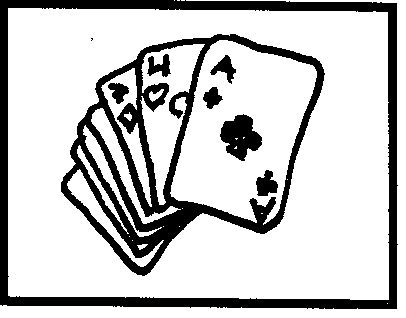
In the Iowa Gambling Task, a participant is presented with four, facedown decks of cards. He or she can flip over cards from any deck. Most cards earn a reward and some cards incur a penalty. Of the four decks, some are better (contain more reward-earning cards) than others.
Over time, participants should learn which decks are best and start flipping cards only from the highest-paying decks. The test is thought to measure the emotional component of learning, or intuition—based on reward and punishment, participants begin to "feel" which decks are best and worst.
As life expectancies increase, so does the number of elderly people undergoing surgical procedures. Recently, there has been growing about potential neurotoxicity of anesthetics and their role in post-operative cognitive decline.
Alzheimer's Disease(AD) is a devastating disease most commonly found in elderly people. It is manifested by severe memory loss, language problems, impaired decision making and affected activities of daily living.