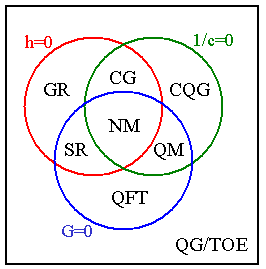


Physical reality is composed of properties like distance, duration, velocity, area, volume, mass, energy, and temperature. To quantify these properties you need to measure them. And the act of measuring boils down to comparing against an agreed yardstick, a unit of measurement such as a foot, a gram, etc. 

Do you need a dedicated yardstick for each quantifiable property?

Would the answer to this question be 'yes', then physics as we know it, would not be possible. We would not be able to relate the various properties to each other, physics laws would not exist. Fortunately, the answer to the question is a clear 'no'. We need far fewer units than one might expect based on the number of physical properties. 
You may not know the name Hammer Films, but if you have watched movies at all you have probably heard of Peter Cushing and Christopher Lee.    In 1957 they appeared in a British 'horror' movie called THE CURSE OF FRANKENSTEIN and it put both of them, and the studio, on the cultural map.
If you're like me, not only do you want to be buried, you want to be buried with your treasure in a vast underground labyrinth dug from the stone, behind a series of traps and secret doors, and your treasure will be in the very last room with my undead Lich guarding it.

Want your inheritance, descendants?  Bring a sword.

Lich

But other people have long been more environmentally responsible and made the 'ashes to ashes, dust to dust' route a little more direct than a decomposing coffin much less a concrete, subterranean bunker.   They get cremated.

Wow; I haven't gotten one of these in a long time:

ATTENTION!

A message you recently sent to a 0Spam.com user with the subject "[redacted]" was not delivered because they are using the 0Spam.com anti-spam service. Please click the link below to confirm that this is not spam. When you confirm, this message and all future messages you send will automatically be accepted.

I wrote about challenge/response anti-spam systems about three years ago, but probably haven't seen a challenge message in at least two years. I thought people had given up on them.

Alas, no.

The CMS experiment has just released a new result which excludes the possibility that quarks have a substructure at energy scales below 4 TeV. The result comes from the analysis of just a handful of inverse picobarns of collision data -2.9 to be precise- and shows excellently just how well suited are the LHC collisions for this business. The limit is extended by over one TeV above the former result of the Tevatron experiments, and some 600 GeV above the results of the ATLAS collaboration, who also recently reported on their search for of quark compositeness in 7 TeV collisions, finding a limit at 3.4 TeV.

