

Cells and tissues grow, develop and interact in a 3-D world, why not study them that way?  The methods of culturing and studying human cells have traditionally been carried out on flat impermeable surfaces and those techniques have obviously produced a steady stream of critical insight into cell behavior and the mechanisms of infection and disease,  but those cell cultures have limitations inreproducing the tissue environment in vivo.

Researcher Cheryl Nickerson and her team at the Biodesign Institute at Arizona State University highlight an innovative approach for studying cells in 3-D in order to better understand disease onset and progression, particularly the responses of host cells to infectious pathogens. 
Sure, high energy physics costs billions these days (and watch out for birds - and lightningbut table-top experiments with tuned lasers and sensitive detectors can also continue to achieve the precision necessary for exploring the basic laws of physics at the heart of relativity and quantum mechanics.

Skimming by Earth as close as 11 million miles on October 20, the apparently young Hartley 2 comet will be nearly visible to the unaided eye. With binoculars, it will appear even better as a fuzzy, green blob, and a backyard telescope will offer excellent viewing.

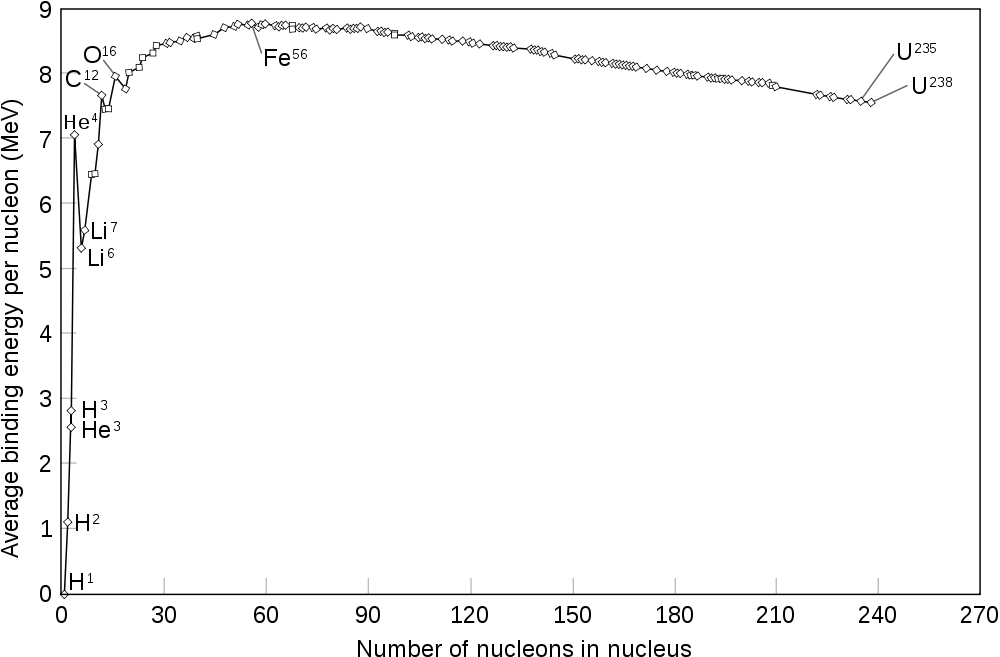
To get a basic understanding of nuclear reactions, a high school level knowledge of a few basic concepts will suffice. In this regard, I'll start with a short recap of some concepts that will be used.

Structure of the atom

A basic atomic model will suffice for our discussion. In general, we can consider the atom to be composed of protons and neutrons tightly bound within the nucleus of the atom surrounded by electrons. The nucleus comprises almost the entirety of the mass of the atom, while the orbiting electrons make up the size of the atom.

Nuclear reactions
Arthur Clarke's Childhood's End was my main pick for 1953 in our survey of post-apocalyptic sci-fi, but John Wyndham's Kraken Wakes is another great apocalypse novel from the same year. (It was published as Out of the Deeps in the US. Apparently Americans weren't expected to know what Kraken means, until the second Pirates of the Caribbean movie, because now China Mieville can publish a novel just called Kraken and people purchase it.)


