



Using data from two recent national surveys, University of Toronto sociologist Scott Schieman has found that most Americans believe God is concerned with their well-being and is directly involved in their personal affairs.

The research, he says, uncovered  the ways these beliefs about divine intervention differ across education and income levels. The results are published in Sociology of Religion.
Traditionally, scientists believed that nicotine inhaled in a puff of cigarette smoke took a mere seven seconds to be taken up by the brain, but new evidence indicates that nicotine takes much longer to reach peak levels in the brains of cigarette smokers, according to a new study in PNAS.

Using PET imaging, Duke investigators found for the first time that cigarette smokers actually experience a steady rise of brain nicotine levels during the course of smoking a whole cigarette.
Natural Killer (NK) cells ensnare dangerous cells, such as tumour cells and those infected with bacteria and viruses that are on the run with a bungee-like nanotube, according to research published this week in PNAS. The study shows that NK cells use this bungee to destroy cells that could otherwise escape them.

Researchers are keen to understand how NK cells work because they help the body to fight infection and stop tumours from growing. It is thought that it may ultimately be possible to design drugs that harness the cells' ability to fight disease.
In the past week or two, there have been several news stories and blogs (including here on SB) written in regards to a paper that came out this month titled, "Why Liberals and Atheists Are More Intelligent". It would be easy for the untrained eye to read such a headline and think, "Gee.... this was published in a peer reviewed journal, so this must really be something..." However, if you read through the paper in detail, and look at the longitudinal data methods used for the analysis, one begins to question the validity of such broad assumptions.
The jokes just write themselves, really. But poor sanitation is no laughing matter, especially if you're one of the 2.6 billion people on Earth without access to a toilet. And for pennies on the dollar, a Swedish entrepreneur is hoping to help that 40% of the world's population in more ways than one.
Imagine a child, standing in a school cafeteria. We'll assume that this child has reached or surpassed the age of reason (7 years old, for non-Catholics out there), meaning they can understand their choices and therefore can make the wrong choice along with the right one.

In front of this lovely child is a vending machine filled with tempting soda1 and sports drinks and other such calorie-laden, battery-acid-by-another-name, neatly packaged consumables.
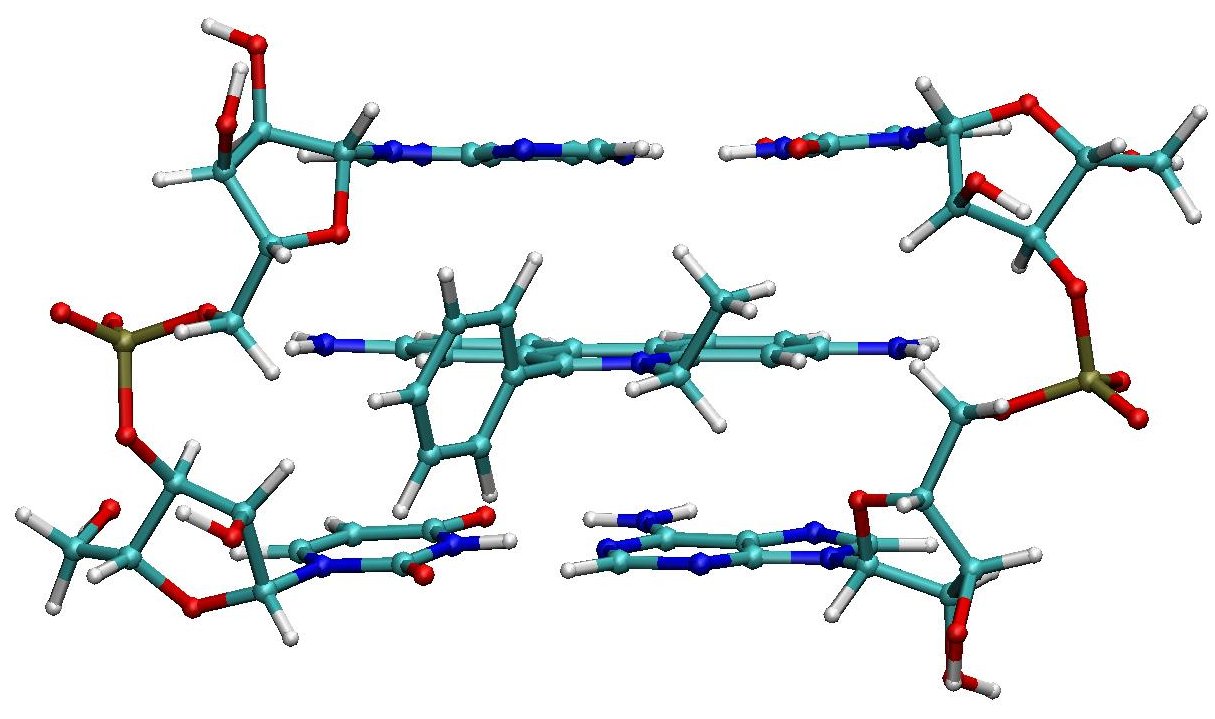
A team of Georgia Institute of Technology scientists are reporting that molecules they term "unselfish" may have midwifed the birth of life's original (sometimes called "selfish") genes. The Georgia Tech scientists are investigating the possibility that intercalator molecules such as ethidium could have assisted life's non-living building blocks in forming complex organic chains and might have entered into the selection of DNA double helix base pairs.
If you want to have staying power on the Internet, you need to have turnover, says a new analysis published in the Proceedings of the 2010 ACM conference on Computer supported cooperative work.

Not only do you need to be 'heterogeneous', you need to be diverse.

