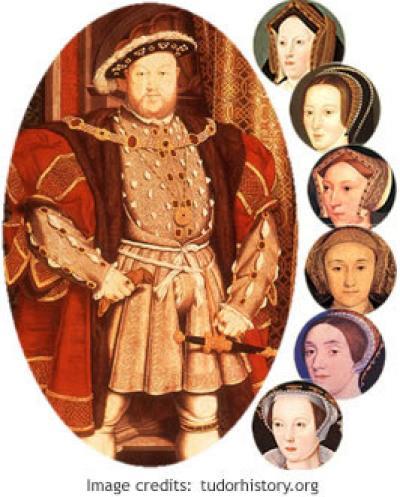
Henry VIII, King of England and founder of the Anglican Church, was basically the Brad Pitt of his day when he was younger. Charming, attractive and even kind, for a member of the Royal family. Yet he is most remembered for being gluttonous, impaired and executing wives.
What happened?
Thousands of artifacts made from chert, a flint-like rock used to make projectile points and other stone tools, are in some cases so delicate that their only practical use would have been on the water, says Jon Erlandson, professor of anthropology and director of the Museum of Natural and Cultural History at the University of Oregon, who has been conducting research on California's Channel Islands for more than 30 years.
The smartest, and yet most disingenuous thing, the homeopathy industry did was conscript 'natural medicine' as part of its umbrella. Homeopathy is clearly snake oil whereas natural remedies have worked since man discovered plants.
Scientists understand the distinction, even if proponents of homeopathy do not - or pretend they don't, if it will bilk unsuspecting people out of money. And because scientists understand the value of natural medicine the goal has always been to understand why things work and, when possible, to synthesize them and make them affordable.
If you saw the film version of "Mamma Mia!" you may have wondered why some of the actors could act, sing and dance and some, clearly, could not.
A new study in Current Biology says that people who are fast to learn a simple sequence of finger motions, like a piano piece, or quick to pick up dance numbers, are also those whose brains show large changes in a particular chemical messenger, gamma-aminobutyric acid(GABA), following electrical stimulation. GABA is important for the plasticity of the motor cortex, a brain region involved in planning, control, and execution of voluntary movements.
Sunspots are dark spots on the sun, at least as we see them, caused by magnetic activity in the plasma on the surface of Sol.
For 200 years scientists have known that they occasional disappear but no one was sure exactly why. A trio writing in Nature say they have solved the mystery and now can even predict the next time. Piet Martens, Dibyendu Nandi and Andres Munoz-Jaramillo say they have discovered why sunspots were missing from 2008 to 2010, which coincided with an extra-long "solar minimum" and unusually weak magnetic fields at the sun's poles. The fields are ordinarily much stronger when solar activity is minimal.