


A software that can drastically reduce CO2 emissions (and energetic costs) on computers all over the world has been developed by Portuguese scientists and is freely available to anyone interested.
Without question, a booming worldwide population and the need to feed them have resulted in greater greenhouse gas emissions.   The goal of any civilized society has always been to make food affordable to everyone regardless of income and we are converging on that rapidly.   If anything, the rising obesity problem is because we are reaching a Utopian ideal of enough food for everyone in richer countries.
Do you live for moments where "you're so absorbed by the task at hand that you lose track of time and place"?  Some call this 'the zone', psychologists call it Flow, and I'll pointlessly coin a acronym, 'SPS' (super productive state).  CSM guest blogger Trent Hamm has some insights on how to flip [your] mental switch and find 'the zone'.  Why flip that switch?
"figure out how to get in the zone and do it as often as possible. If you can do that, everything else really is secondary. You will find success."
The U.S. spends more per capita on health care for its citizens than any other nation and, its proponents note, the quality is higher, but where area where spending has not helped is the life expectancy of older people - at least when it comes to increases in life expectancy.
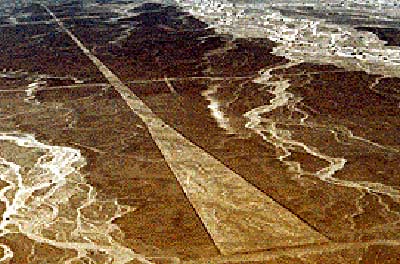
Well, we now know what a Cargo Cult is, and we are now up to date on the recent research into the Nasca Lines. What I haven’t brought you completely up to date on is the actual Ancient Alien Theory explanation of the Nazca lines. The History Channel sums it up pretty succinctly:

“The Nazca Lines


Etched into a high plateau in Peru’s Nazca Desert, a series of ancient designs stretching more than 50 miles has baffled archaeologists for decades. Along with simple lines and geometric shapes, they include drawings of animals, birds and humans, some measuring more than 600 feet across.
Abstract

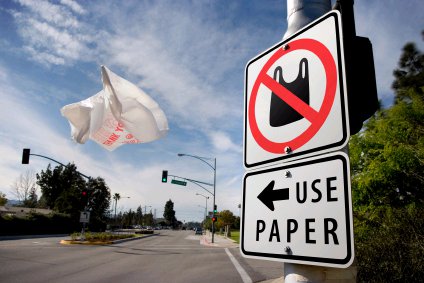
The banning of plastic bags may not be the salvation of the environment, but it could be a useful way to begin reducing waste pollution.
Plastic bags:

-  are one of the plastic products produced in the greater numbers, and one of the products most commonly dispersed in the environment;

-  have a slow rate of decomposition, and are very dangerous for sea life;

-  are a sources of "microplastic" particles (or "plastic plankton"), which is vastly present in many marine areas around the world;

