
Thanks to science and technology, food is no longer a luxury, it is a commodity. If anti-science groups spent less time scaring uneducated people and more time caring about humanity, there would be enough food to feed 10 billion people right now, just by reducing food waste.

Right now, almost 50 percent of the world's fruit and vegetable crops are lost, much of it due to perishable foods, according to the Food and Agriculture Organization (FAO) of the United Nations. A new study has one interesting solution - an odorless, biocompatible silk solution so thin as to be virtually invisible that keeps fruit fresh for more than a week without refrigeration. 

A study finds greater prevalence of mental health symptoms in the lesbian, gay, bisexual and questioning (LGBQ) community in your bisexual women. 

During routine visits with physicians, participants in the study, numbering 2,513 between the ages of 14 and 24, took a survey through Behavioral Health Screen, a tool designed to uncover mental health concerns in patients. The tool was developed by Guy Diamond, PhD, director of the Family Intervention Science program and co-author of the study.

ITHACA, NY--Potato plants boost the chemical defenses in their leaves when Guatemalan tuber moth larvae feed on their tubers, report researchers at the Boyce Thompson Institute (BTI).

While the potato's response may seem counterintuitive, it protects against leaf-eating pests, ensuring that the plant can maintain sugar production, to continue growing tubers during the moth larvae infestation. The study, which was led by BTI Professor Georg Jander and Katja Poveda, Assistant Professor of Entomology at Cornell University, appears in the journal Oecologia. The discovery may one day help reduce potato damage from insect pests and increase tuber yields.

Pregnancy sounds like the ultimate form of animal cooperation – mothers share their own bodies to grow and support their children’s prenatal development. But in reality, embryos use every trick in the book to take more than their fair share. Mothers, in turn, marshal their best defensive tactics.

Ultimately, it’s an evolutionary arms race. Offspring continually evolve strategies to steal resources, while mothers evolve strategies to defend their resources. Natural selection will favor embryos that are able to steal resources, but this will impose costs on the mother.

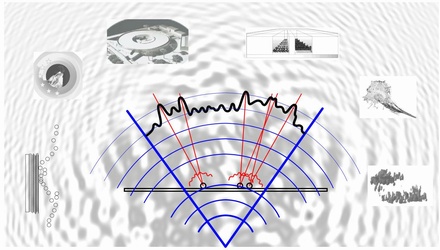
The twelfth edition of “Quark Confinement and the Hadron Spectrum“, a particle physics conference specialized in QCD and Heavy Ion physics, will be held in Thessaloniki this year, from

By studying fossils from southern China, scientists have gained insights into how primates in Asia evolved to resemble the array seen today. The results suggest that a distinct period marked by cooler weather served as a filter of sorts in Asia, altering the makeup of primates there to reflect fewer anthropoids (monkeys and apes) and more strepsirrhines, a suborder of primates that includes lemurs. Primates are sensitive to shifts in temperature, and thus, to climate change.

Males who evolve in male-dominated populations become far better at securing females than those who grow up in monogamous populations, according to new research into the behaviour of fruit flies at the University of Sheffield.

The study, led by Dr Allan Debelle and Dr Rhonda Snook in the University's Department of Animal and Plant Sciences, looked at the mating patterns of fruit flies after they evolved for 100 generations in either polyandrous populations (where several males have to compete for a single female) and monogamous populations (where each male has access to only one female).

May 5, 2016 -- Exchange of immunization data between a centralized city immunization registry and provider electronic health records led to significant improvements in pediatric immunization coverage, a reduction in over-immunization for adolescents, and increased completeness of immunization records, according to a study conducted at Columbia University's Mailman School of Public Health, Columbia University Medical Center, NewYork-Presbyterian, and the New York City Department of Health and Mental Hygiene's Citywide Immunization Registry. Researchers compared the percent of children who were up-to-date for their age-appropriate immunizations and those who received extra, unnecessary immunizations before and after the implementation of two-way data exchange at point of care.

HANOVER, N.H. - Context plays a big role in our memories, both good and bad. Bruce Springsteen's "Born to Run" on the car radio, for example, may remind you of your first love -- or your first speeding ticket. But a Dartmouth- and Princeton-led brain scanning study shows that people can intentionally forget past experiences by changing how they think about the context of those memories.

The findings have a range of potential applications centered on enhancing desired memories, such as developing new educational tools, or diminishing harmful memories, including treatments for post-traumatic stress disorder.

The study appears in the journal Psychonomic Bulletin and Review. A PDF is available on request.

ANN ARBOR, Mich. -- Every hospital's intensive care unit has treated them -- the critically ill patients who spend weeks going from crisis to crisis, never quite getting better enough to get out of the ICU, but never quite dying.

Now, new research shows they really are a different kind of patient -- and that despite their tiny numbers, they're using a vast chunk of healthcare resources.

Just 5 percent of ICU patients account for 33 percent of all days that ICU beds get used, the study shows. The researchers have even given a name to what these patients have: Persistent Critical Illness, or PerCI for short.

