



More women than men suffer from chronic pain, described as pain that persists for more than six months. In addition, much of this pain remains undiagnosed or untreated.

As well as the pain associated with menstruation or the bearing of children, waiting rooms of pain physicians, rheumatologists and gastroenterologists show clear majorities of women.

Clouds can increase warming in the changing Arctic region more than scientists expected, by delivering an unexpected double-whammy to the climate system, according to a new study by researchers at NOAA, the University of Colorado Boulder and colleagues.

Many strokes that required immediate treatment in emergency rooms may have been preventable, but stroke prevention has not advanced the way therapy for acute stroke has. Stroke prevention has fallen by the wayside as stroke patient outcomes have improved but the close monitoring of blood pressure, cholesterol levels and cardiac conditions remain important, finds a paper in JAMA Neurology.

Using a prevention scale they developed for this study, University of California Irvine neurologist Dr. Mark Fisher and colleagues discovered that 76 percent of acute stroke patients exhibited some degree of stroke preventability, while 26 percent exhibited high preventability.

A pesticide called heptachlor epoxide and used in 1970s was found in milk at that time - and it being linked to Parkinson's disease now, in a paper in Neurology.

Syracuse Earth sciences professor Christopher Scholz and former Ph.D. student Robert Lyons have an unprecedented glimpse into the past of a lake with explosive biodiversity. Along with colleagues from six other universities, Scholz and Lyons have unearthed a 380-meter-deep time capsule from Lake Malawi.

Lyons says the core shows that "East African moisture history over the last 1.3 million years is a lot more complicated than was previously postulated."

It has long been suspected that sulfur emissions can brighten clouds. Water droplets tend to clump around particles of sulfuric acid, causing smaller droplets that form brighter, more reflective clouds.

But while humans have pumped sulfur into Earth's atmosphere since the Industrial Revolution, it's been hard to measure how this affects the clouds above. New University of Washington research uses a huge volcanic eruption in Iceland to measure the change.

The new study, to be published in Geophysical Research Letters, a journal of the American Geophysical Union, shows that sulfur emissions do indeed result in smaller cloud droplet size, leading to brighter clouds that reflect significantly more sunlight.

As world leaders hold climate talks in Paris, research shows that land surface temperatures may rise by an average of almost 8C by 2100, if significant efforts are not made to counteract climate change.

Such a rise would have a devastating impact on life on Earth. It would place billions of people at risk from extreme temperatures, flooding, regional drought, and food shortages.

The study calculated the likely effect of increasing atmospheric levels of greenhouse gases above pre-industrialisation amounts. It finds that if emissions continue to grow at current rates, with no significant action taken by society, then by 2100 global land temperatures will have increased by 7.9C, compared with 1750.

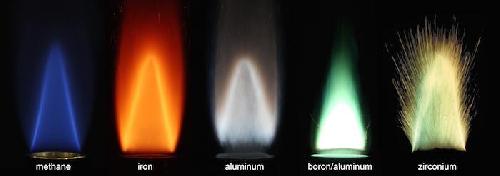
Can you imagine a future where your car is fueled by iron powder instead of gasoline?

Metal powders, produced using clean primary energy sources, could provide a more viable long-term replacement for fossil fuels than other widely discussed alternatives, such as hydrogen, biofuels or batteries, according to a study in the Dec. 15 issue of the journal Applied Energy.

pic

Stabilized flames of different metal powders burn with air, compared to a methane-air flame. Credit: Alternative Fuels Laboratory/McGill University

A study of a million UK women has shown that happiness has no direct effect on mortality nor does unhappiness and stress directly cause ill health.

Studies that claim it had simply confused cause and effect.  

Life-threatening poor health can cause unhappiness, and so unhappiness is associated with increased mortality but that is more confirmation bias than neutral analysis. Smokers also tend to be unhappier than non-smokers but accounting for previous ill health, smoking, and other lifestyle and socio-economic factors, the investigators found that unhappiness itself was no longer associated with increased mortality.

Climate change can influence everything from pine beetle outbreaks in the Rocky Mountains to rising sea levels in Papua New Guinea. In the face of a rapidly changing earth, plants and animals are forced to quickly deal with new challenges if they hope to survive. According to a recent paper by Jason Fridley, associate professor of biology in Syracuse University's College of Arts and Sciences, recently minted SU Ph.D. Catherine Ravenscroft, and University of Liverpool professor Raj Whitlock some species may be able to handle environmental changes better than others.

