
Ovarian cancer is the seventh most common cancer among women worldwide, and it often goes undetected until it has spread to other parts of the body. More than 70% of ovarian cancer patients experience relapse; when recurrent cancers become resistant to chemotherapy, they become extremely difficult to treat. But what if patients could make use of their own immune system?

A group of researchers from the University of Helsinki and the University of Edinburgh have been the first to find the genetic material of a human virus from old human bones. Published in the journal Scientific Reports, the study analysed the skeletal remains of Second World War casualties from the battlefields of Karelia.

Upon infection, many viruses remain in the tissues and their DNA can be analysed even decades thereafter. Although their genetic material has been found in many organs, the researchers show that viral DNA is also present in bone.

"Human tissue is like a life-long archive that stores the fingerprint of the viruses that an individual has encountered during his or her lifetime," describes Klaus Hedman, professor of clinical virology.

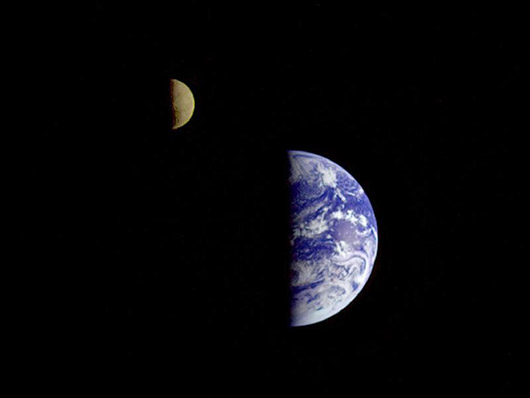
By Marsha Lewis, Inside Science TV. The moon — it can appear full, shining like a beacon in the night or just a sliver of a nightlight. Still, it’s always there.

Image Credit: NASA.gov

But what if we didn't have a moon?

Here’s the top five things we would miss without it.

1.       Nights would be much, much darker. The next brightest object in the night sky is Venus – but it still wouldn’t be enough to light up the sky – a full moon is nearly two thousand times brighter than Venus is at its brightest.

Scholars have found that the causes of congenital face blindness can be traced back to an early stage in the perceptual process. 

Groundwater in Bangladesh, Cambodia, India, Myanmar, Vietnam and China commonly contains concentrations of arsenic 20 to 100 times greater than the World Health Organization's recommended limit, resulting in more than 100 million people being poisoned by drinking arsenic-laced water. Now scientists have found where the microbes responsible for releasing dangerous arsenic into groundwater in Southeast Asia get their food. 

Seville, Spain - 5 December 2015: Latin American migrants in Spain should be screened for Chagas disease, particularly women before pregnancy, doctors urged today at EuroEcho-Imaging 2015.1

The annual meeting of the European Association of Cardiovascular Imaging (EACVI), a registered branch of the European Society of Cardiology (ESC), is held 2 to 5 December 2015 in Seville, Spain.

There have been recent high-profile claims suggesting genetics and neuroscience are set to radically change the way we think about crime and punishment. Author Sam Harris, for example, argues that recent discoveries in neuroscience undermine our notion of free will, while Adrian Raine states there is a “biological basis also to recidivistic violent offending”.

But are our notions of blame and responsibility really heading for a revolution?

The extinct three-horned palaeomerycid ruminant, Xenokeryx amidalae, found in Spain, may be from the same clade as giraffes, according to a study published December 2, 2015 in the open-access journal PLOS ONE by Israel M. Sánchez from the Museo Nacional de Ciencias Naturales-CSIC, Madrid, Spain, and colleagues.

A 13,000 year-old engraving uncovered in Spain may depict a hunter-gatherer campsite, according to a study published December 2, 2015 in the open-access journal PLOS ONE by Marcos García-Diez from University of the Basque Country, Spain, and Manuel Vaquero from Catalan Institute of Human Paleoecology and Social Evolution - IPHES, Spain.

Manuel Vaquero suggests that this "paleolithic engraving from northeastern Spain brings us the first representation of a human social group."

New research from of the Sexuality and Gender Laboratory at Queen's University shows that heterosexual women have more diverse patterns of sexual response than previously reported.

Research on women's sexual orientation and patterns of sexual response has previously focused on women's genital and subjective sexual arousal relative to their sexual identity, as heterosexual, bisexual or lesbian. Among women, however, there is significant diversity among women in their sexual attractions to other women and men, regardless of sexual identity. For example, a substantial minority of heterosexual women (20 per cent in some studies) also report some attraction to women.

