Researchers have unveiled a new way to use sunlight to produce steam and other vapors without heating an entire container of fluid to the boiling point. The research could lead to inexpensive, compact devices for purification of drinking water, sterilization of medical instruments and sanitizing sewage.
Metallic nanoparticles - so small that 1,000 would fit across the width of a human hair - absorb large amounts of light, resulting in a dramatic rise in their temperature. That ability to generate heat has fostered interest among scientists in using nanoparticles in a range of applications. These include photothermal treatment of certain forms of cancer, laser-induced drug release and nanoparticle-enhanced bioimaging.
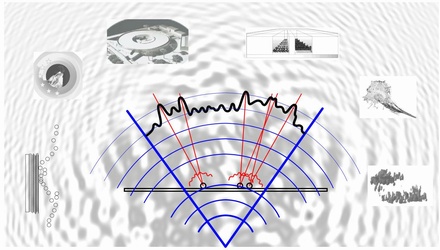
A new approach to invisibility cloaking goes beyond transformation optics and those tiresome Harry Potter analogies. It is instead for us at sea to shield floating objects, like oil rigs and ships, from rough waves and is based on the influence of the ocean floor's topography on the various "layers" of ocean water.
Reza Alam, assistant professor of mechanical engineering at the University of California, Berkeley, will describe at the American Physical Society's (APS) Division of Fluid Dynamics (DFD) meeting how the variation of density in ocean water can be used to cloak floating objects against incident surface waves
Work-hour caps for surgical residents designed to lessen complication rates have not accomplished that. Instead, the period after work-hour limits were introduced saw an uptick in complication rates , according to findings which raise concerns that limiting residents' work hours isn't really a benefit.
The analysis was designed to evaluate the patient safety impact of rules limiting the hours worked by residents, a measure introduced in 2003. The goal of the limits, a maximum of 88 hours per week, was to reduce the risk of errors and injury related to resident fatigue.
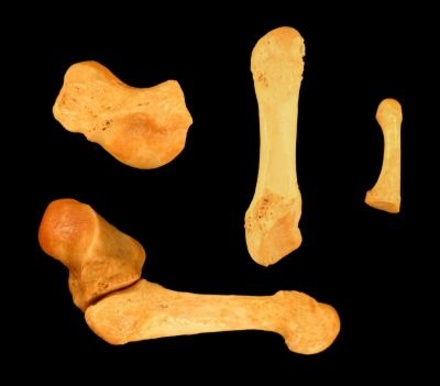
An international team of researchers has resolved the evolutionary relationships of Necrolestes patagonensis, the so-called “grave robber” because of its burrowing and underground lifestyle. This much-debated fossil mammal from South America has been a paleontological riddle for 121 years but a recent fossil discovery and comparative anatomical analysis helped researchers to correctly place the strange 16-million-year-old Necrolestes, with its upturned snout and large limbs for digging, in the mammal evolutionary tree.
The moon is both easy and tough to figure out. Of the many things Galileo got wrong, the moon was the biggest, despite it being studied for millenia by then, unless you think we only have one tide per day. And last year some people wanted to believe
an earthquake in Japan was caused by a 'Supermoon', where our friend Luna was slightly closer to us.
A new annual analysis has again attempted to determine whether society can achieve something similar to the a Rousseaunian social contract. In order to do this, the economists carried out an experiment that reproduced in a laboratory setting some of the important characteristics of the welfare state.
UPDATE: BBC radio contacted me to let me know they corrected their mistake. I am very glad to hear that! So you can continue reading BBC after all!
Probability inversion is one of the nastiest mistakes one can do handling the results of a statistical analysis, invalidating to the roots the interpretation of the data to the point that the whole work effectively becomes useless. Unfortunately, it is a very common entertainment for journalists reporting scientific results, and oftentimes scientists themselves fall in the trap.
A
recent article addressing the subject of Nikolas Tesla, chose to focus on his opinions regarding eugenics.
One of Tesla’s most disturbing ideas was his belief in using eugenics to purify the human race.
Of course, this statement is framed in the modern "correct" view, because it is clearly colored by the Nazi atrocities that followed those decades, and from which everyone invariably wishes to distance themselves.
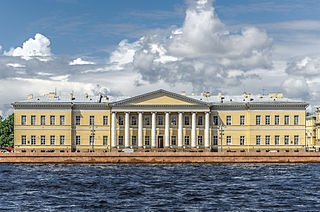
In the history of statistics, economy and decision theory, the St. Petersburg paradox plays a key role. This lottery problem goes back a full three centuries to the mathematician Nicolas Bernoulli who first formulated the problem in 1713. Twenty five years later, in 1738, his nephew Daniel Bernoulli presented the problem to the Imperial Academy of Sciences in St. Petersburg. That presentation not only gave the paradox its name, it also created a lot of commotion amongst mathematicians.
Car accidents are the number one killer of teenagers in America! There is something that should have been done a long time ago and that would help all drivers and of course their "victims". We don’t do it, because people are afraid to doubt their own agency and rationality. Benjamin Libet’s research is not difficult but people refuse to accept the science. The pet assumption in this case? That you are consciously aware of what you are doing at the time you are doing it, which you* are not! Libet’s research [1, 2] quantified how large the problem is, and it is huge when sitting in a ton of metal bolting down a busy street.