I'm not much of a drinker, never have been. I have always assumed it was because I did competitive athletics until I was about 25, which means I was outside the age where you 'learn' to like the taste of alcohol, so I never picked it up.
Older now, I can drink a beer socially and I sometimes drink a glass of red wine because the consensus says it is good for you in moderation, but I am still not really a drinker.
New research on Pelargoniums ('Geraniums' and 'Storkbills'), which have been cultivated in Europe since the 17th century and are now one of the most popular garden and house plants around the world, shows targeting two bacterial genes can produce long-lived and pollen-free plants.
Pelargoniums have been selectively bred to produce a wide range of leaf shapes, flowers and scents, and have commercial traits such as early and continuous flowering, pest and disease resistance and consistent quality and now they are getting some modern science engineering to allow people to enjoy them with less medicine.
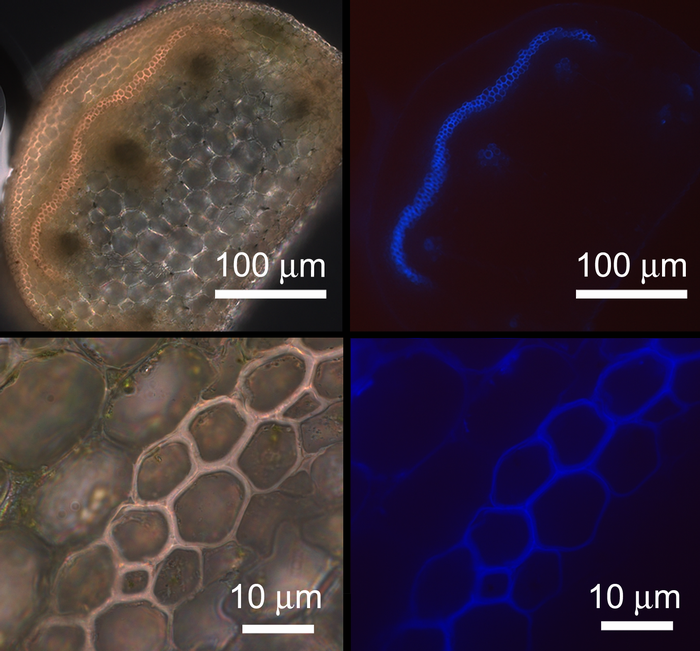
Instead of unwinding into a flat ribbon when stretched, like an untwisted coil normally would, a cucumber’s tendrils actually coil further - which has led to discovery of a biological mechanism for coiling and an unusual type of spring that is soft when pulled gently and stiff when pulled strongly.
Understanding this counterintuitive behavior required a combination of head scratching, physical modeling, mathematical modeling, and cell biology—not to mention a large quantity of silicone. A new study describes the mechanism by which coiling occurs in the cucumber plant and suggests a new type of bio-inspired twistless spring.
Cutting carbon dioxide emissions is not easy; it requires a buy-in from developing nations who have coal and want a better life also, or a greater implementation of natural gas. One alternative idea is to transport materials into the stratosphere to reduce the amount of sunlight hitting Earth and therefore reduce the effects of global climate change.
A new paper says that the basic technology currently exists and could be assembled and implemented in a number of different forms for less than $5 billion a year - a tiny fraction of the amount that cutting emissions costs. Put into context, the cost of reducing carbon dioxide emissions is currently estimated to be between 0.2 and 2.5 per cent of GDP in the year 2030, which is equivalent to $200 billion to $2 trillion.
Women who have breast cancer and are treated with two chemotherapy drugs, anthracycline and trastuzumab, may experience more cardiac problems like heart failure than shown in previous studies, according to a new Cancer Research Network study by Group Health researchers and others in the Journal of the National Cancer Institute.
Researchers have found that a human monoclonal antibody developed by MassBiologics of the University of Massachusetts Medical School (UMMS) protected chimpanzees from hepatitis C virus (HCV) infection in a dose-dependent manner.
The study was conducted at Texas Biomed's Southwest National Primate Research Center. Chimpanzees are the only species other than humans that can be infected by HCV and therefore the results from this study were critical in the development of the monoclonal antibody.
Social security is in a crisis even worse than Medicare. Because Congress has consistently spent contributions, social security is always on the edge of insolvency and now that the Baby Boomers have begun retiring, the crisis is going to get worse, with not enough workers to fund the retirees.
Ideas such as raising the retirement age are floated by University of Michigen economists have a more positive approach; they say if we stop collecting social security payroll taxes when workers are 55-years old, their take-home pay would jump by 10.6 percent, older people would work 1.5 years longer on average and end up still paying more in income taxes and helping to reduce the Federal deficit while not drawing retirement.
The question is posed, and then answered, by
Jonathan Harrison, former chair of Philosophy at the University of Nottingham, UK, in his online essay
“Is Eating People Wrong?”
The professor points out that -
 “Animals that can be eaten are often better taken care of than men, whose artificially induced inedibility provides those responsible for them with no such incentive. “
That said, however -
Neil Armstrong, the first man to walk on the moon, died last Saturday in Ohio at age 82 and his funeral service is tomorrow. Like most everything else about him, the service is private.
Yet the cosmos has decided to ignore the wishes of his family and so Armstrong is getting a special event for the occasion: a blue moon. Either that, or his family is being clever.
There is little doubt that there is an abundance of evidence regarding the role of cooperation among social animals and it is mentioned here as a precondition for the discussion of group selection and altruism; specifically in humans.
While many of the elements that constitute human behavior are present in other animals, there is little question that humans represent an extremely unique existence. Beyond even the obvious differences regarding intellectual capacity, humans represent a
eusocial mammal that exploits an extreme division of labor, such that it is human society that operates to support human existence, rather than the capabilities of any individual (1).