


The U.S. Food and Drug Administration continue to be the kind of nimble agency it once was in response to the SARS-CoV-2 coronavirus pandemic, and the hundreds of U.S. deaths COVID-19 has caused.

They are not only facilitating access to antibody-rich plasma donated by people who have recovered from COVID-19, in hopes transfusions could lessen the severity or duration of the illness, they have gone a step further and are helping create a master protocol so independent investigators can work on this without the usual 'I won't share data in case I get beat to publication' concern that besets the life sciences. Actual collaboration.
There are a number of drugs that may be beneficial in treating coronavirus but how do we convey that a treatment is not a cure? And that what prevents one disease may not prevent another when used off-label? How can outlets stress the importance of preventing spread of SARS-CoV-2, the 2019 coronavirus that set off the flu in Wuhan, China, late 2019, later called COVID-19, without conflating cases of the virus with cases of the disease?
It's not often that a guy who can't order lunch in under a thousand words can be stumped for what to say, but when it comes to "Automatic Reload" by Ferrett Steinmetz, I am at a loss. Mostly because all of the good one-liners were taken by others before I got my galley.

The best cyborg meet-cute you'll read this year? I can't use that, Corey White did. A cyberpunk rom-com? Yes it is, but I'd be cheating if I say it. 

I should start at the beginning. No, that's boring, I will start at the end.

Why are some prostate cancers are more aggressive and result in death when others can be treated? The answer could mean more optimal treatment; aggressive forms could still get the full treatment while less harmful forms can get a less damaging approach.

Few in the UK seem to realize that our policy for controlling COVID-19 differs radically from the WHO recommendations. The WHO say we need to test all suspected cases, quarantine them, trace all close contacts and ask them to self isolate. The UK was doing that until the 12th March when they decided to stop testing for mild cases.

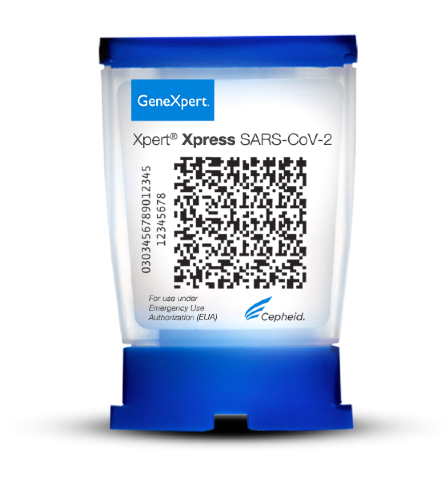
Diagnostics company Cepheid has received emergency authorization from FDA for the first point-of-care SARS-CoV-2 test. Unlike existing tests, it can provide results in about 45 minutes, which means we have a better chance of reducing the spread of the virus which leads to COVID-19, which has killed nearly 14,000 across the world.

The US Army has developed a quantum sensor that can detect communication signals over the entire radio frequency spectrum, from 0 to 100 GHz, using a single antenna. That is currently impossible with a traditional receiver system, and would require multiple systems of individual antennas, amplifiers and other components.

The director general gave a really good speech on Friday, and I am sharing it here, to help people have more courage in what are going to be difficult times.

Up until March 20th, the WHO said this is the first pandemic we can stop.

Now the WHO say that Wuhan has its first day with no cases which shows the world that even the most severe situation can be turned around.

They are particularly concerned about the effects if it reaches vulnerable populations of malnourished children and people with AIDS which is endemic in parts of sub Saharan Africa.

He says however none of this is inevitable. This is the first pandemic in history where we have the power to change the way it goes.

Singapore is controlling its outbreak with case finding and contact tracing. Any other country can do the same. Singapore is a particularly clear case. They test everyone for COVID-19 if they go to a doctor or clinic for treatment with symptoms of a respiratory disease. For instance if you are living in Singapore, and get a cough or fever, and go to see your doctor - he or she will take a swab which is automatically tested for COVID-19. That's in a country of over 5 million, as large as Scotland.

skip to: Contact tracing in Singapore

A new study claims the recent form of coronavirus, SARS-CoV-2, that causes the COVID-19 disease remains far longer in aerosol form than other experiments showed and up to 3 days on some surfaces.

The study says the virus is detectable for up to three hours in aerosols, up to four hours on copper, up to 24 hours on cardboard and up to two days on plastic and stainless steel. This is far longer than other studies of viruses in aerosols, which found them for 45 minutes.

