Most of the time, fishermen fish for one particular creature--be it tuna, sardines, or shrimp. Unfortunately, species tend to exist in a commingled muddle called ecology, and it's often difficult to separate them with fishing gear.
On the east coast of the US, longfin squid are caught with trawl nets. When dragged through the water, trawl nets also collects things which are not squid, called bycatch. And although the population of longfin squid seems to be reasonably healthy, some of these bycatch species are not doing so well.
The news of the world are filled again with anti-Chinese propaganda. I am appalled at how simplistic anti-Chinese bickering is allowed to be, because it hides the real problems and dangers of China, and there are also positive aspects, like that China has done much for secularism and science.
Franz Hörmann, professor at the Vienna University for Economics (Wirtschaftsuniversität Wien), distinguishes between Expert-Knowledge (Fachwissen) and Experience-Knowledge (Erlebniswissen). The latter rests on memories formed by personal involvement. He has not personally experienced the Nazi-Jew holocaust; he has no Experience-Knowledge of it. He is not an expert on history, so he claims no Expert-Knowledge on the holocaust either. Nice – somebody who is humble. Hörmann
states that:
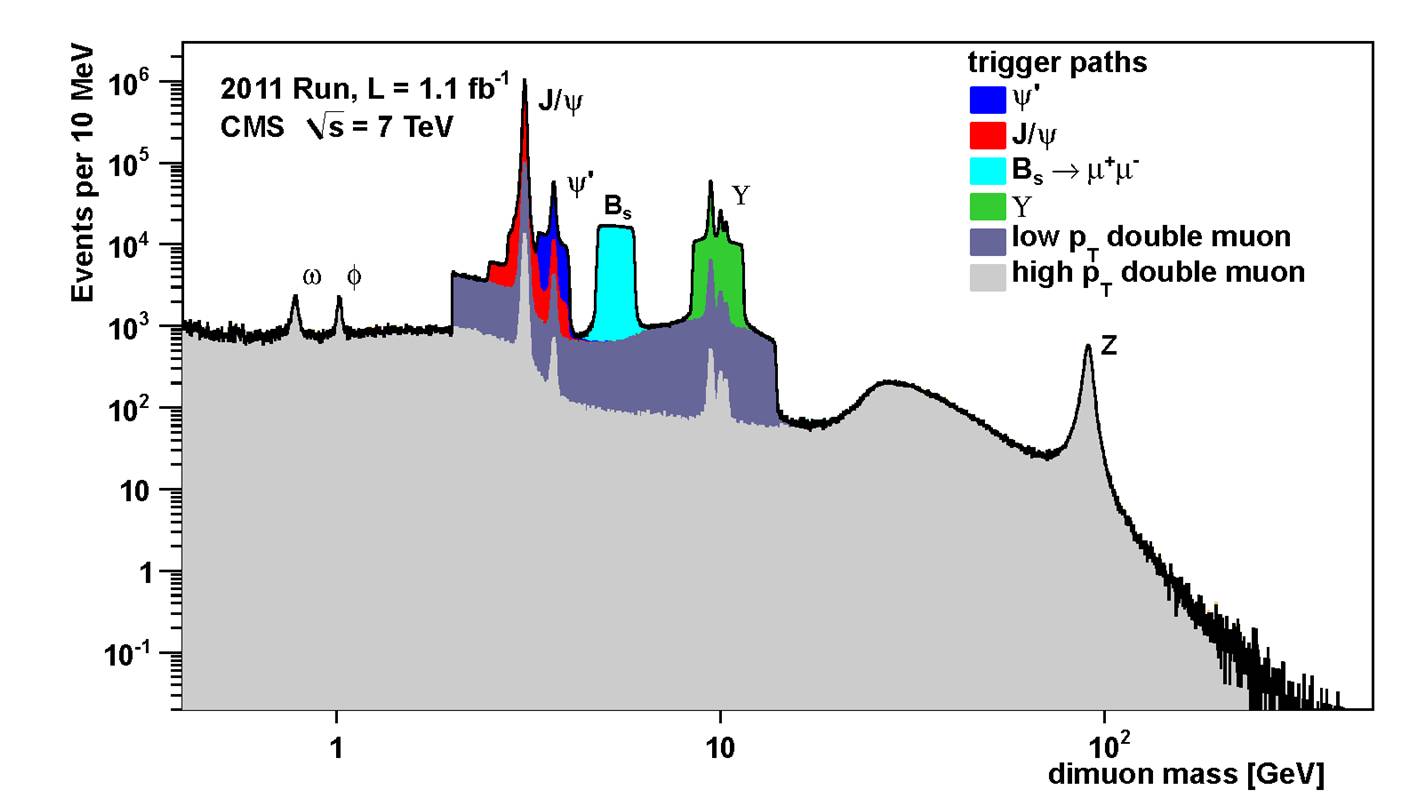
The CMS Collaboration has just
released the results of a deep study of their sample of lead-lead collisions, produced at a center-of-mass energy of 2.76 TeV per nucleon by the Large Hadron Collider.
Taking notes during class? Topic-focused study? A consistent learning environment? All are exactly opposite the best strategies for learning. Really, I recently had the good fortune to interview Robert Bjork, director of the UCLA Learning and Forgetting Lab, distinguished professor of psychology, and massively renowned expert on packing things in your brain in a way that keeps them from leaking out. And it turns out that everything I thought I knew about learning is wrong.
Here's what he said.
In China, drinking alcohol is often still a vital part of doing business. Science is important in China, which has become the
scientific leader in
several ways, but science is business of course. At times, alcohol belongs to science here.
Scientists have developed a soap composed of iron rich salts dissolved in water that responds to a magnetic field when placed in solution. That's right, magnetic soap.
But there is a practical side. The generation of this property in a fully functional soap could calm concerns over the use of soaps in oil-spill clean ups and improve industrial cleaning products.
A neuro-imaging study found that personal values that people refuse to disavow, even when offered money to do so, are processed differently in the brain than those values that are willingly sold.
Sacred values - those 'sell your soul' issues - prompted greater activation of an area of the brain associated with rules-based, right-or-wrong thought processes, as opposed to the regions linked to processing of costs-versus-benefits, where selling out can be rationalized.
I think most people - certainly myself - get that grim "what, another one?" feeling when you first hear news that there has been a big earthquake.
But is it justified? In other words, have we recently been experiencing an increased rate of earthquakes? This from Beroza (2012),