


Earlier today, Dr. Leonardo Trasande and colleagues from New York University (NYU) published yet another in a series of economic studies which they interpret to indicate that low level general population exposures to some brominated flame retardants (PBDEs)1 and organophosphate pesticides (OPPs)2 are now causing a larger share of societal economic burden from IQ loss and intellectual disability than from what they regard as the more traditional threats of lead and methylmercury. 

Last week, Netflix dropped the trailer for Gwyneth Paltrow’s new show The Goop Lab. It is a six-episode docuseries launching on Jan. 24 that, according to the trailers, focuses on approaches to wellness that are “out there,” “unregulated” and “dangerous.” (Read: science-free.)

Every year humans buy and sell hundreds of millions of wild animals and plants around the world. Much of this commerce is legal, but illegal trade and over-harvesting have driven many species toward extinction.

One common response is to adopt bans on trading in threatened or endangered species. But research shows that this approach can backfire. Restricting high-value species can actually trigger market booms.

Solar panel proponents rave about their solar energy. They tout how low their electricity bills are, that the utility is forced to buy energy from them at the same price they sell it, and that they are helping the planet.
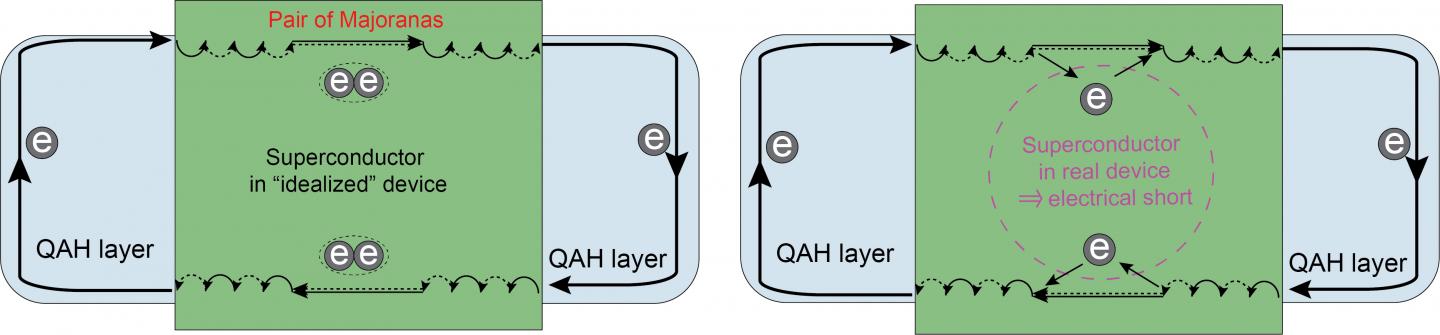
Majorana fermions, particles that act as their own antiparticle and were first hypothesized by Italian physicist Ettore Majorana in 1937, have not been detected after all.

A 2017 report of the discovery of a particular kind of Majorana fermion, the chiral Majorana fermion, was a false alarm, finds a new study, which means construction of a topological quantum computer also remains elusive.

Some particle physicists are using underground observatories to discover if the ghost-like particle known as the neutrino, a subatomic particle that rarely interacts with matter, might be a Majorana fermion.

Online misinformation works, or so it would seem. One of the more interesting statistics from the 2019 UK general election was that 88% of advertisements posted on social media by the Conservative Party pushed figures that had already been deemed misleading by the UK’s leading fact-checking organization, Full Fact. And, of course, the Conservatives won the election by a comfortable margin.

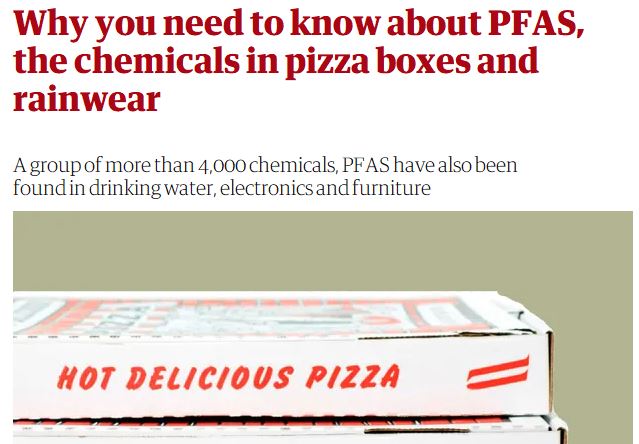
A few years ago I sent an employee to a debate to argue over what was more harmful for your body, the pizza or the pizza box.

I am not kidding. A subset of activists absolutely says with straight faces that a trace chemical in a box is more harmful than getting fat. And now they have gotten Democrats in Congress to demonize over 6,000 forms of PFAS and open up nearly every company in America to lawsuits.
Every time a disaster occurs, people show their philanthropic side, but the same framing that works for blood drives, such as 'gift of life' appeals, is far less effective when it comes to organ donation.

Though much is known about why people donate blood or register as an organ donor, we don't know a lot about why individuals continue to choose not to do so. Most people do not and never will donate so it makes sense that asking people 'why not' rather than 'why' has more value.  The anonymous data for the study was collected via a survey promoted by Australian donation organisations including Zaidee's Rainbow Foundation, Kidney Health Australia, and Transplant Australia.
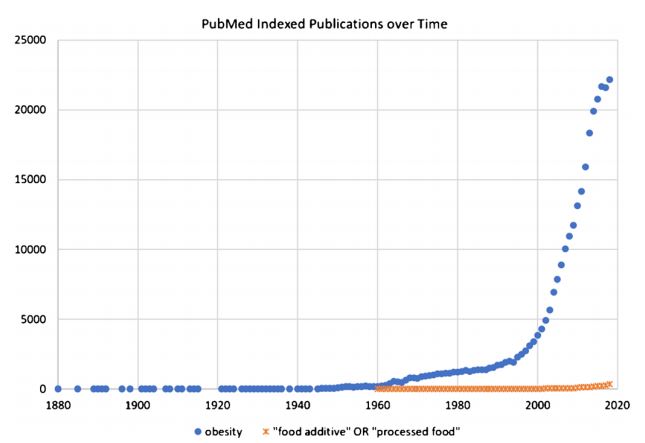
In a Current Treatment Options in Gastroenterology review, a nutritionist and a gastroenterologist claim that "ultra-processed" food causes obesity.

If you are not familiar with ultra-processed food, that is a new-ish designation, an arbitrary metric of numerous things to separate it from regular processed food. All bread made in the last 10,000 years is "processed" food, for example, and 'all food is processed' reality hobbled efforts by integrative medicine/food is medicine proponents to claim our modern lifestyle is killing us, when the science community instead knows it's simply obesity that is the risk factor.
When Christopher Columbus discovered a continent unknown to Europeans, his accounts included harrowing descriptions of native pirates who cannibalized men and kept women as sex slaves, but more recent humanities scholars, even ones who readily accept oral histories long changed, dismissed that as myth.

However, the belief stuck. He had no reason to lie, the Spaniards didn't know they had a new continent and didn't colonize it until that realization happened.

