CHARENTON-LE-PONT, France, January 15 /PRNewswire/ -- Essilor International announced today that its US subsidiary, EOA Holding Co. Inc., has signed a share purchase agreement whereby it has offered to acquire the entire capital of Signet Armorlite, a manufacturer of ophthalmic lenses. The agreement is subject to certain standard conditions precedent, including approval by competition authorities in Signet Armorlite's main host countries. The acquisition is expected to be completed in the first half of the year.
JERUSALEM and NEEDHAM, Massachusetts, January 15 /PRNewswire/ --
- Oridion Microstream(R) Technology to be Incorporated Into Market Leader's Patient-Controlled Analgesia (PCA) Device
JERUSALEM and NEEDHAM, Massachusetts, January 15 /PRNewswire/ --
Oridion Systems Ltd. (SIX Swiss Exchange: ORIDN) today announced an agreement with a global healthcare company that is a market leader in medication infusion systems. Under this agreement, Oridion's Capnostream(TM) carbon dioxide (CO2) monitor using Microstream(R) capnography technology will be incorporated into a PCA infusion device at a future date, allowing hospital patients to control the flow of their pain medication within specified limits.
Rats whose mothers were fed alcohol during pregnancy are more attracted to the smell of liquor during puberty, say researchers writing in Behavioral and Brain Functions. They say rats exposed during gestation find the smell of alcohol on another rat’s breath during adolescence more attractive than animals with no prior fetal exposure.
Free-range chickens are more prone to disease than chickens kept in cages, according to a study published in Acta Veterinaria Scandinavica. This also applies to all chickens kept in litter-based housing systems.
Researchers led by Oddvar Fossum, at the National Veterinary Institute in Sweden, noted that during the switch in housing from battery cages to enriched cages and litter-based systems, including free-range, there was an increase in the number of chickens dying. During the study, the authors compared the causes of deaths in flocks of chickens kept in different types of housing across Sweden.
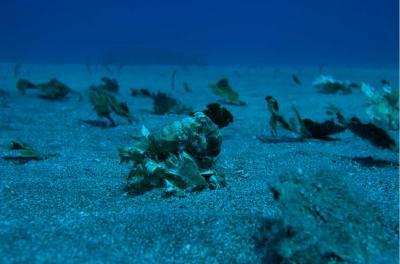
Uniform and mottle patterns are what most people recognize as camouflage and those patterns function by resembling the background. True background matching is not simple, though, and Roger T. Hanlon and colleagues say they are making one of the first efforts to quantify camouflage body patterns.
Although they have begun to compare camouflage tactics in many animals — large primates, amphibians, reptiles, fishes, insects — they are currently focusing on the cephalopods, which include squid, octopus, and cuttlefish. Remarkably, these soft-bellied mollusks are able to dynamically produce all three classes of camouflage body patterns (termed uniform, mottled, and disruptive).
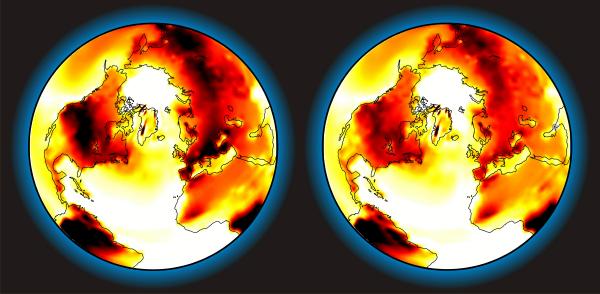
By carefully selecting which varieties of food crops to cultivate, much of Europe and North America could be cooled by up to 1°C during the summer growing season, say researchers from the University of Bristol, UK. This is equivalent to an annual global cooling of over 0.1°C, almost 20% of the total global temperature increase since the Industrial Revolution.
The growing of crops already produces a cooling of the climate because they reflect more sunlight back into space, compared with natural vegetation. Different varieties of the same crop vary significantly in their solar reflectivity (called 'albedo'), so selecting varieties that are more reflective will enhance this cooling effect. Since arable agriculture is a global industry, such cooling could be extensive.
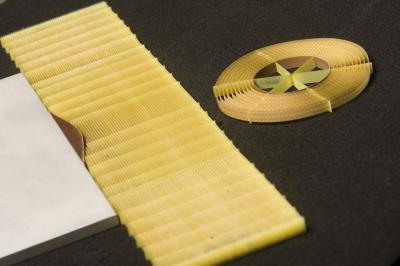
'Cloaking' devices bend electromagnetic waves, such as light, in such a way that it appears as if the cloaked object is not there. In the latest laboratory experiments by Duke researchers, a beam of microwaves aimed through the cloaking device at a "bump" on a flat mirror surface bounced off the surface at the same angle as if the bump were not present. Additionally, the device prevented the formation of scattered beams that would normally be expected from such a perturbation.
The underlying cloaking phenomenon is similar to the mirages seen ahead at a distance on a road on a hot day.
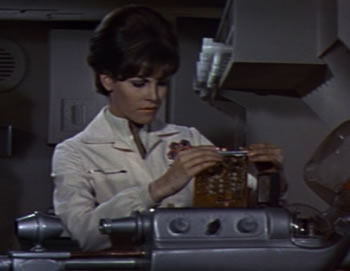
Ever since the 1966 Hollywood movie "Fantastic Voyage", written by Harry Kleiner (with what is actually a pretty good novelization by Isaac Asimov afterward) and starring Raquel Welch as the most convincing portrayal of a scientist ever , doctors have sought a day when they could have access to the real thing – a medical vehicle shrunk small enough to "submarine" in and fix faulty cells in the body. According to new research by Tel Aviv University scientists, that may be only three years away.
Blasting biofuels for significantly contributing to greenhouse gas emissions is sooooo 2006, according to a new Michigan State University analysis. Much like the environmental hype in the 1990s about how much better we would be with ethanol, the scorn heaped on biofuels has been exaggerated as well, calling into question the benefits of making fuel from plant material.
The scorn comes from assumptions that may not be correct, write Bruce Dale, Distinguished Professor of chemical engineering and materials science, and co-authors in Environmental Science&Technology.
The downside to new antibiotics is that bacteria think of new ways to become resistant to them. While resistant bacteria continue to increase, scientists keep searching for new sources of drugs in this week's
Journal of Biological Chemistry, one potential new bactericide has been found in the tiny freshwater animal Hydra.
The protein identified by Joachim Grötzinger, Thomas Bosch and colleagues at the University of Kiel, hydramacin-1, is unusual, and clinically valuable, as it shares virtually no similarity with any other known antibacterial proteins except for two antimicrobials found in another ancient animal, the leech.
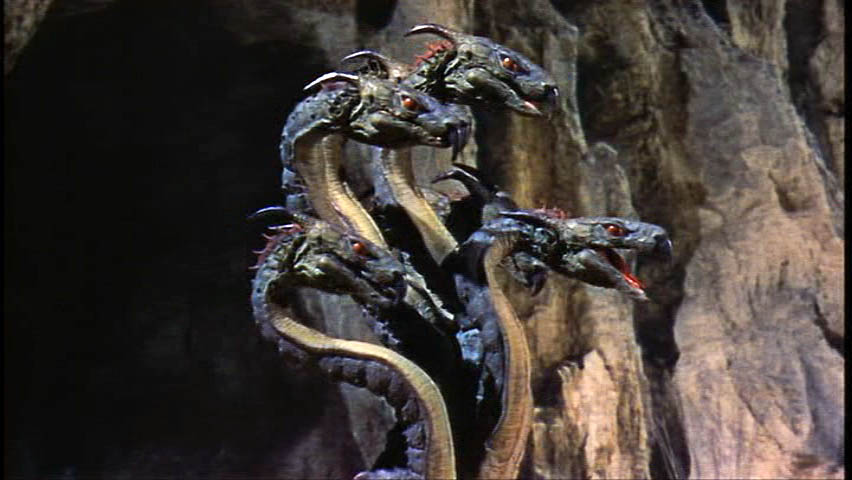 Not this Hydra.