





FREDERICK, Maryland, February 11 /PRNewswire/ --

Cancer research pioneer Michael G. Hanna Jr. Ph.D., also Vaccinogen, Inc.'s Founder, Chairman and CEO has acquired the rights to OncoVAX(R), a vaccine with the potential to prevent colon cancer from recurring in many patients.

"This agreement represents a major step forward in defeating cancer by increasing the body's immunity to it," said Dr. Hanna, who has been working on cancer vaccines for more than 30 years.

NEW YORK, February 11 /PRNewswire/ --

- Application performance testing early in the development lifecycle enables innovative company to easily predict and resolve application production issues, making the roads safer for everyone.

BARCELONA, Spain, February 11 /PRNewswire/ --

HP and Qualcomm today announced that they are working together to incorporate Qualcomm's Gobi TM global mobile Internet technology in select 2008 HP business notebooks to enable high-speed connectivity on 3G UMTS HSPA / EV-DO networks with a single wireless solution.

Gobi technology enhances HP notebook customers' choice of mobile operators and will help increase international roaming capabilities(1). With a multi-mode Gobi powered HP notebook and an activated carrier service, customers benefit from multiple connection options to the latest network technologies and enhanced capabilities for increased connectivity.

GENEVA, Switzerland, February 11 /PRNewswire/ -- In the news release, "Acrongenomics on Track to Acquire Molecular Vision" issued on 11 Feb 2008 12:20 GMT, by Acrongenomics, Inc. (OTC:AGNM) over PR Newswire, we are advised by a representative of the company that there are several changes to the original release and the version below should be used. Complete, corrected release follows:

- First Quarter Target Agreed

LONDON, February 11 /PRNewswire/ -- Today (11 February) representatives from the Road Haulage Association and Freight Transport Association met with the Chancellor of the Exchequer Alistair Darling to stress the importance of abandoning plans to increase fuel duty by a further 2p per litre from 1 April.

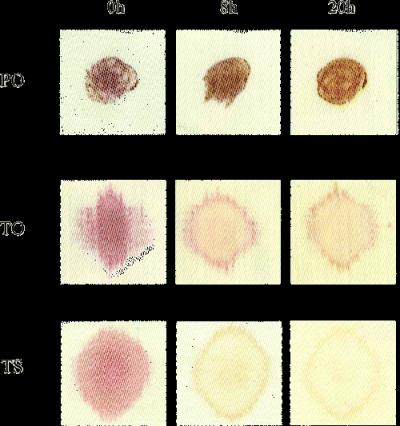
Wool skirts and silk ties may avoid those pricey trips to the dry-cleaner in the future and clean themselves, researchers in Australia and China suggest. They are reporting development of a nanoparticle coating that could lead to “self-cleaning” wool and silk fabrics.

Wool and silk, which are composed of natural proteins called keratins, are among the most prized and widely used fabrics in the clothing industry. However, they are difficult fabrics to keep clean and are easily damaged by conventional cleaning agents. A better way to fight stains in these and other protein-based fabrics is needed, scientists say.


In a recent laboratory study, wool treated with a new nanoparticle coating (bottom row) removed red wine stains more effectively than plain wool (top row) and wool coated with another stain-fighting chemical (middle row), scientists say. Credit: Courtesy of the American Chemical Society

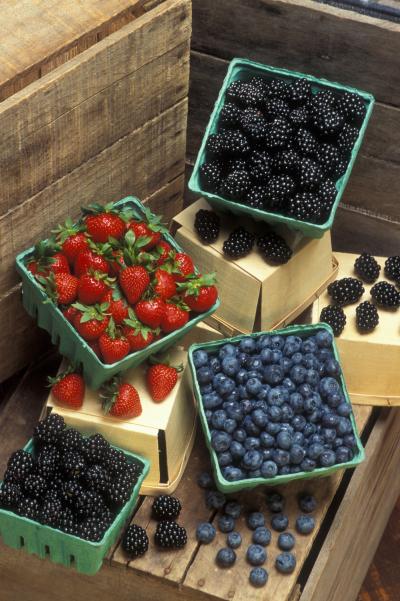
Scientists are reporting new evidence that natural pigments responsible for the beautiful blue/purple/reddish color of certain fruits and vegetables may help prevent obesity. Their animal study, published in the Feb. 13 issue of Journal of Agricultural and Food Chemistry, reports one odd qualification - eating the whole fruit containing these pigments seems to be less effective than eating an extract of the berry.

Ronald L. Prior and colleagues, who did the new study, note that past research has shown that the pigments — called anthocyanins — prevent obesity in laboratory mice fed a high-fat diet. Anthocyanins are found in grape skins, blueberries, blackberries, purple corn, and other foods. The mice also had other healthful changes in disease-related substances found in the blood.


Mmmmm, lose weight. Colorful pigments found in the skin of blueberries, strawberries and other fruits and vegetables may help prevent obesity, according to recent animal studies. Credit: Courtesy of USDA Agricultural Research Service

Even though Brodie is said to have first described diffuse symmetrical lipomatosis with predilection for the neck already in the 1846 (Clinical Lectures on Surgery, Delivered at St. George's Hospital Philadelphia: Lea and Blanchard pub. Pp 201-201. Brodie, B.C.) still unknown is today the pathogenesis of Launois Bensaude' Lipomatosis.

Klopstock et Al. are found in muscle biopsy specimens ragged and red fibers, pathologic subsarcolemmal accumulations of mitochondria, suggesting a mitochondrial abnormality. Biochemical analysis of respiratory chains shows a decreased of cytochrome c oxidase activity.

Can a machine taste coffee? Scientists have been working on it for decades. Researchers in Switzerland published a study on their coffee-tasting machine is scheduled for the March 1 issue of Analytical Chemistry.

For the food industry, “electronic tasters” could prove useful as quality control devices to monitor food production and processing. Christian Lindinger and colleagues at Nestlé Research pointed out that coffee scientists have long been searching for instrumental approaches to complement and eventually replace human sensory profiling.

However, the multisensory experience from drinking a cup of coffee makes it a particular challenge for flavor scientists trying to replicate these sensations on a machine. More than 1,000 substances may contribute to the complex aroma of coffee.

Move over, compact discs, DVDs, and hard drives. Researchers in Japan report progress toward developing a new protein-based memory device that could provide an alternative to conventional magnetic and optical storage systems, which are quickly approaching their memory storage capacities. Their study is scheduled for the March 4 issue Langmuir.

Just as nature chose proteins as the memory storage medium of the brain, scientists have spent years exploring the possibility of similarly using proteins and other biological materials to build memory-based devices with the potential for processing information faster and providing greater storage capacity than existing materials. Although a few protein-based memory materials have shown promise in experimental studies, developing such materials for practical use remains a challenge.


