



It's classical music for the "Guitar Hero" generation - a way to compose and perform at the same time, with infinite variations.    That's right, you can be Ludwig van Beethoven (except not deaf) and perform his Ninth symphony, armed with a laptop and a midi system that samples different tones, processes them, and sends them back in ever-changing variations.  And an orchestra, if that helps.

You can call it “Ode to Joy 2008” because the basic theme is instantly recognizable but you can alter it in real-time, with ever-changing variety.

Official professional standards in both Scotland and England which aim to nurture the development of new teachers pay too little attention to what 'becoming' a teacher is really like, according to new research funded by the Economic and Social Research Council (ESRC) which finds that existing standards ignore the emotional, relationship and personal issues which are the real challenge for teachers starting out in their careers, focussing instead on the acquisition of skills and knowledge.

Resulting from the study, researchers propose a new model which aims to improve existing standards by capturing the multi-dimensional experience of new teachers.

Professor of Teacher Education at the University of Strathclyde, Jim McNally, says: "Existing competence-based professional standar
Multiple high-definition videos and other data-rich services may soon stream through homes, offices, ships and planes via new hybrid optical/ultra-wideband-radio systems developed by European researchers.

Moshe Ran, Coordinator of the EU-funded project, UROOF (Photonic components for Ultra-wideband Radio Over Optical Fiber), has a vision. He wants to see streams of high-definition video and other high-bandwidth services flowing through homes, office buildings, and even ships and planes, through a happy marriage of optical and ultra-wideband radio technologies.

“It’s a natural combination that can bring a lot of advantages to the world,” says Ran.
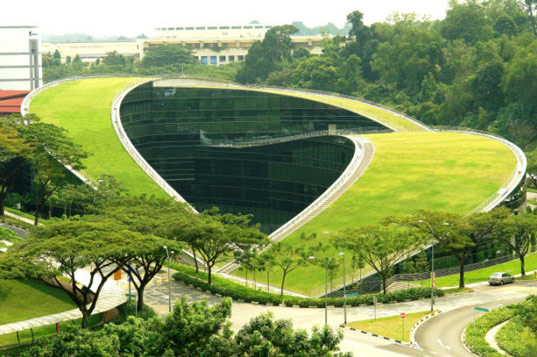
A Spanish research study has tested different combinations of supports and indigenous plants to determine which are the best for reducing energy consumption inside buildings. This type of roof is a “rurban”, sustainable architectural solution that will lead to a reduction in environmental and acoustic contamination levels in cities, and be visually pleasing.

Researchers from the Polytechnic University of Madrid (UPM) have built a roof covered with plants and a watering system that will optimise the consumption of a building’s heating and cooling systems thanks to its insulation. It is a third-generation ecological roof, characterized by its sustainability and the use of indigenous plant species.
A team of investigators from Valencia has developed a machine that separates automatically the seeds from the rind and pith of the pomegranate. The mechanism uses a computer vision system to distinguish and sort the different parts of this fruit, according to a study published on-line by the Journal of Food Engineering.

The difficulty in peeling pomegranates and separating out the seeds disheartens many consumers when they eat the fruit of the pomegranate (Punica granatum). Now this Spanish invention enables the food to be de-seeded automatically.
Breast cancer, the leading cause of death among women in France, is the most commonly occurring cancer in women. Sporadic breast cancer, which is non-hereditary, turns out to be the most widespread, representing 85 to 90% of all cases, but remains the least well-known. Researchers at CNRS and CEA (1), working with a team from Hôpital Saint-Louis (2), have just discovered the cause of 50% of sporadic breast cancers. The results should also explain epidemiological studies which suggest that hormone treatment predisposes patients to breast cancer. The work is published in Cancer Research.

Yesterday our department hosted Peter and Rosemary Grant, who spoke about their 30+ years studying natural selection and finches in the Galapagos. (If you're interested in the book version of their work, check out Jonathan Weiner's Pulitzer Prize-winning The Beak of the Finch.)

While the Grants give a great presentation, full of pictures the Galapagos finches in action, my first impression was that none of this was really groundbreaking. As the Grants mentioned multiple times in the talk, Darwin anticipated so much of what they observe in the Galapagos. In an age of molecular genetics, a long-term, non-molecular field study is bound to seem a little old fashioned, although the Grants have recently been taking DNA samples and incorporating the tools of molecular genetics into their work.

In the end, I came away from the talk satisfied. This work may not be conceptually groundbreaking, but I find it important for at least one reason: this is evolution in detail, in the wild.
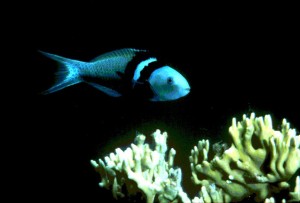
At a younger age I was completely enthralled with undersea life. Since high school biology, the difference between freshwater anatomy and marine physiology led me conduct some not so nice tests on goldfish. Hey, they were only 10 cents each, plus, I wanted to see if osmosis really worked differently with cells from saltwater fish.   I couldn't just trust the teachers, after all. As I entered a marine biology course, I found marine life to be even more interesting, particularly due to their evolution.

What always interested me was an organism's ability to manipulate it's sex. Most reef fish have the ability to up and switch sex, but why do they? What is the notion behind this act, and does it propose an evolutionary benefit to the survival of it's species?

LONDON, November 21 /PRNewswire/ -- The Road Haulage Association is disappointed that despite a further drop in the price of petrol, the price for diesel remains much higher. To that end, the Association is demanding not only a diesel price reduction as a matter of extreme urgency but that any proposed increase in the price of fuel duty that the Chancellor may announce in his forthcoming pre-Budget statement be abandoned.

PARIS, November 21 /PRNewswire/ -- The first melatonergic antidepressant - Valdoxan(R)/Thymanax(R) (agomelatine) - has received a positive opinion from the European Medicines Agency's (EMEA) Committee for Medicinal Products for Human Use (CHMP) for its use in the treatment of adult patients with major depressive disorder (MDD).

Upon approval by the European Commission in early 2009, Valdoxan is expected to be marketed by Servier in European countries in the following months.

