





Treatment of mice with a ‘friendly’ bacteria, normally found in the soil, altered their behavior in a way similar to that produced by antidepressant drugs, reports research published in the latest issue of Neuroscience.

These findings, identified by researchers at the University of Bristol and colleagues at University College London, aid the understanding of why an imbalance in the immune system leaves some individuals vulnerable to mood disorders like depression.

Tree frogs have the unique ability to stick to smooth surfaces even when they are tilted well beyond the vertical - some small tree frogs can even adhere when completely upside down. Conversely when walking or jumping they can detach their toe pads easily. Researchers from the University of Glasgow will present insights into how this fascinating ability is controlled at the Society for Experimental Biology’s Annual Meeting in Glasgow, UK.

“The toe pads of tree frogs are coated with a thin mucus which adhere to surfaces by wet adhesion, like wet tissue paper sticking to glass.

Inherent gender differences – instead of more sun exposure – may be one reason why men are three times more likely than women to develop certain kinds of skin cancer, say researchers at Ohio State University Medical Center.

Squamous cell carcinoma is the second most common form of skin cancer, accounting for nearly 200,000 new cases in the United States each year. While occurring more often than melanoma, squamous cell carcinoma is not nearly as worrisome. Still, it can be lethal in some patients, especially those with suppressed immune systems, including transplant recipients or people who are HIV-positive.

Cultured fish cell lines and organs such as gills, heart, liver and intestines are being used to investigate the effects of toxins on fish such as freshwater trout and carp in a move to cut down the number of experiments carried out on live fish. Fish Biologists will be presenting new culture methods to help replace the use of live fish for safety testing of chemicals when they meet in Glasgow for the Annual Main Meeting of the Society for Experimental Biology on Sunday 1st April 2007.

In the April 1 issue of Genes & Development, a Korean research team led by Dr. Kyong-Tai Kim (Pohang University) describes how melatonin production is coordinated with the body's natural sleep/wake cycles.

Something old is now something new, thanks to Lamar University researcher Jim Westgate and colleagues. The scientists' research has led to the discovery of a new genus and species of primate, one long vanished from the earth but preserved in the fossil record.

A diet high in carbohydrates but low on the glycemic index, which measures the impact of carbohydrates on blood sugar levels, may help promote weight loss, decrease body fat and reduce cardiovascular disease risk, according to a report in the July 24 issue of Archives of Internal Medicine, one of the JAMA/Archives journals.

Carbohydrates have been at the center of recent debates about the best diet for weight loss, according to background information in the article. Public attention has focused on low–glycemic index and high-protein regimens. Clinicians continue to recommend low-fat, high-carbohydrate plans; concerned that many sources of protein are high in saturated fats, physicians and nutrition experts have called for more research into the benefits and risks of each diet.

Not from marijuana but from ... ethanol.

Many will be familiar with cravings for sweet food after having overindulged in alcohol the night before. Some may have cravings for salty foods after using marijuana - in Amsterdam, where it is legal, of course.

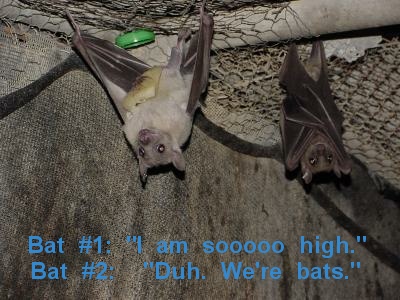
It appears that Egyptian fruit bats also crave particular types of sugar to reduce the effects of ethanol toxicity. Francisco Sanchez from the Ben-Gurion University of the Negev (Israel) will present data demonstrating this on Sunday 1st of April at the Society for Experimental Biology’s Annual Meeting in Glasgow.


Original photo ( not the text): Francisco Sanchez

After the events that conspired during the day, the continuum of CINF presentations to which my attention was dedicated, the fitful moments of disgust over $8 sandwhiches in between presentations, amplified by the inability to wait in lines for physically destructive food, I was fortunate enough to be encouraged to partake in the social event that coupled with the evening the sacrement of free food and good company.

Is there a specific memory for events involving people? Researchers in the Vulnerability, Adaptation and Psychopathology Laboratory (CNRS/University Paris VI France ) and a Canadian team at Douglas Hospital, McGill University (Montreal), have identified the internal part of the prefrontal cortex as being the key structure for memorising social information. Published in Journal of Cognitive Neuroscience, February 2007.

