
HAMBURG, Germany, August 25 /PRNewswire/ --

- Cremer Care Ensures European Distribution-Rights for the Cosmetics Raw Materials Organic Glycerine and Soap-Noodles

Since July, 1st, 2008 Cremer Care has become the exclusive distributor of organic products from the renowned Daabon group of Colombia for the European cosmetics market. A long tradition in bio-production and the special social commitment of the South-American producer fits perfectly with the principles of the North German supplier of cosmetics ingredients - expressed in Cremer Care's motto 'Inspired By Nature'.

Neanderthals (Homo neanderthalensis) did not become extinct because they were less intelligent than our ancestors (Homo sapiens), says a research team that has shown that early stone tool technologies developed by our species, Homo sapiens, were no more efficient than those used by Neanderthals.

They say their discovery debunks a textbook belief held by archaeologists for more than 60 years.

The team spent three years flintknapping (producing stone tools). They recreated stone tools known as 'flakes,' which were wider tools originally used by both Neanderthals and Homo sapiens, and 'blades,' a narrower stone tool later adopted by Homo sapiens. Archaeologists often use the development of stone blades and their assumed efficiency as proof of Homo sapiens' superior intellect. To test this, the team analysed the data to compare the number of tools produced, how much cutting-edge was created, the efficiency in consuming raw material and how long tools lasted.

Is sleep essential? The answer seems obvious, since we all have to do it, but to a sleep scientist, the question of what constitutes sleep is so complex that scientists are still trying to define the essential function of something we do every night.

The search for the core function of sleep can seem as elusive as the search for the mythological phoenix, says Chiara Cirelli, an associate professor of psychiatry at the University of Wisconsin School of Medicine and Public Health in Madison.

Some scientists argue that sleep is merely a way to impose a quiet, immobile state (rest), and isn't important by itself in mammals and birds. This is the so-called "null hypothesis," and Cirelli and co-author Giulio Tononi reject it.

COPENHAGEN, Denmark, August 25 /PRNewswire/ --

- Front Line CLL, NHL and CLL Retreatment and Japanese Development Studies Planned

Genmab has announced plans to begin four studies of ofatumumab in chronic lymphocytic leukemia and non-Hodgkin's lymphoma.

Genmab A/S (OMX: GEN) announced today plans to begin four studies of ofatumumab in chronic lymphocytic leukemia (CLL) and follicular non-Hodgkin's lymphoma (NHL) this year.

When it comes to predicting the rate of inflation, consumers know what they spend and that helps them be as accurate as professional economists, according to research by a Kansas State University professor.

Lloyd B. Thomas, head of the department of economics, says that household surveys predict the inflation rate fairly accurately. While pros employ statistics like the unemployment rate, money supply growth and exchange rate changes, consumers participating in surveys are more likely to think about how much they spent at the grocery store that week.

"Surprisingly, the median household is just as good as the average professional economist," said Thomas. "I'm a little surprised because economists are using sophisticated models. But the consumers know what's happening with milk prices."

Researchers at the Yerkes National Primate Research Center, Emory University, have shown capuchin monkeys, just like humans, find giving to be a satisfying experience. This finding comes on the coattails of a recent imaging study in humans that documented activity in reward centers of the brain after humans gave to charity.

Empathy in seeing the pleasure of another's fortune is thought to be the impetus for sharing, a trait this study shows transcends primate species.

Frans de Waal, PhD, director of the Living Links Center at the Yerkes Research Center, and Kristi Leimgruber, research specialist, led a team of researchers who exchanged tokens for food with eight adult female capuchins. Each capuchin was paired with a relative, an unrelated familiar female from her own social group or a stranger (a female from a different group). The capuchins then were given the choice of two tokens: the selfish option, which rewarded that capuchin alone with an apple slice; or the prosocial option, which rewarded both capuchins with an apple slice. The monkeys predominantly selected the prosocial token when paired with a relative or familiar individual but not when paired with a stranger.

Overton's Rule says that the easier it is for a chemical to dissolve in a lipid (fat) the easier and faster it will be transported into a cell. The Rule was first outlined in the 1890s by Ernst Overton of the University of Zürich. He declared that substances that dissolve in lipids pass more easily into a cell than those that dissolve in water. He then set forth an equation that predicted how fast that diffusion would happen.

One of the key parameters in that equation is K which defines the lipophilicity (oil-liking nature) of the chemical. The higher the value of K, the faster the predicted cell permeation rate. For over a century, medicinal chemists have used this relationship to shape their studies and clinical trials.

A new study by research chemists at the University of Warwick has challenged that century old rule of pharmacology that defined how quickly key chemicals can pass across cell walls. The new observations of the Warwick researchers suggest that the real transport rates could be up to a hundred times slower than predicted by the century old Overton's Rule. This could have major implications for the development and testing of many future drugs.

DNA barcoding is a movement to catalog all life on earth by a simple standardized genetic tag, similar to stores labeling products with unique barcodes. The effort promises foolproof food inspection, improved border security, and better defenses against disease-causing insects, among many other applications.

But the approach as currently practiced churns out some results as inaccurately as a supermarket checker scanning an apple and ringing it up as an orange, according to a new Brigham Young University study.

With the International Barcode of Life project seeking $150 million to build on the 400,000 species that have been "barcoded" to date, this worthy goal warrants more careful execution, the BYU team says.

HOUSTON, August 25 /PRNewswire/ --

Endeavour International Corporation (Amex: END) (LSE: ENDV) announced today that Barry J. Galt, a member of the board of directors, died on August 22, 2008. Galt served as a director of the corporation since 2004 when Endeavour was first established as a North Sea-focused oil and gas exploration and production company.

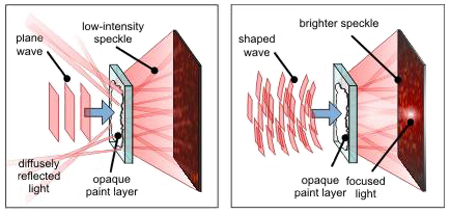
Materials such as milk, paper, white paint and tissue are opaque because they scatter light, not because they absorb it, but no matter how great the scattering, light was always able to get through the material in question, went the theory.

Researchers Ivo Vellekoop and Allard Mosk of the University of Twente have now shaped the waveform of light and confirmed this with experiments. By doing so they have found the predicted ‘open channels’ in material along which the light is able to move.

In materials that have a disordered structure, incident light is scattered in every direction possible. In an opaque layer, so much scattering takes place that barely any light comes out ‘at the back.’ However, even a material that causes a great deal of light scattering has channels along which light can propagate. This is only possible if the light meets strict preconditions so that the scattered light waves can reinforce one another on the way to the exit.