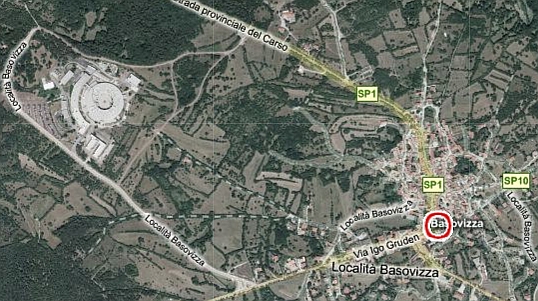
Just over a year ago, the Daresbury synchrotron closed down (Is The Ring Destined For The Cracks Of Doom?) and I was contemplating the prospect of travelling to THE Continent (OK, the European mainland) in order to continue our Small-angle X-ray scattering work.
Are women naturally different from men when it comes to detecting emotions? Biology may play a role, since there are few opportunities for socialization to shape such gender differences, and some evolutionary psychologists have suggested that females, because of their role as primary caretakers, are wired to quickly and accurately decode or detect distress in preverbal infants or threatening signals from other adults to enhance their chances at survival.
But women are better than men at distinguishing between emotions, especially fear and disgust, according to a new study published in Neuropsychologia and have a keener sense for processing auditory, visual and audiovisual emotions.
Lightweight drinkers rejoice, it may be nature that keeps you from pounding shots like Indiana Jones squeeze Marion in "Raiders of the Lost Ark".
Researchers at North Carolina State University have found a genetic 'switch' in fruit flies that plays an important role in making flies more tolerant to alcohol. If you're reading this site, you will not that doesn't automatically translate to humans but a counterpart human gene contributes to a shift from metabolizing alcohol to the formation of fat in heavy drinkers. This shift can lead to fatty liver syndrome – a precursor to cirrhosis.
It takes two to reproductively tango for humans but even when plants (or animals) can self-fertilize their offspring have longer lives when a mate is involved in the process, according to over 100 mini-evolution experiments involving nematode worms (Caenorhabditis elegans) at the University of Oregon. Going it alone increases susceptibility to genetic mutations and reduces that adaptability to changing environments, says their report in Nature.
By studying the Y chromosome from human dental remains from the Canary Islands, researchers have determined the origin and evolution of paternal lineages from the pre-Hispanic era to the present day. To date, only mitochondrial DNA had been studied, which merely reflects the evolution of maternal lineages, but a team of Spanish and Portuguese researchers carried out molecular genetic analysis of the Y chromosome (transmitted only by males) of the aboriginal population of the Canary Islands to determine their origin and the extent to which they have survived in the current population.
The results suggest a North African origin for these paternal lineages which, unlike maternal lineages, have declined to the point of being practically replaced today by European lineages.
Global climate reminds us it is one world afterall. NOAA’s National Climatic Data Center released the September temperatures. Separately, the combined global land and ocean surface temperature or the average land surface temperature proves September the second warmest on record, behind 2005. The former was 1.12 degrees F above the last century's average of 59.0 degrees F while the latter 1.75 degrees F above the last century's average of 53.6 degrees F. In addition, the global ocean surface temperature was tied for the fifth warmest on record for September. Most of the world’s land areas experienced higher-than-average temperatures.
When I was 12 years old, I entered the seventh grade quite unremarkably. Short, scrawny, and high-voiced, I saw nothing too exciting about my future. Perhaps worse, those around me saw nothing either. It was during this time I met Mrs.
A Canadian SUV was just
hit by a meteorite. Some people have all the luck
For most of recorded history, no one had ever been hit by a meteorite. This was a useful factoid for us scientists when speaking to the public. It reaffirmed both probability-- how little of the Earth's surface area we cover-- and safety concerns.
Then, in 1823 it all changed. A horse was hit. Life had been damaged from space for the first time on record.
Infants can correctly identify humans as the source of speech and monkeys as the source of monkey calls even when they are as young as five months old, says a new Proceedings of the National Academy of Sciences (PNAS) study.
While young children know that humans speak, monkeys grunt and ducks quack, it's not clear when we come to know which vocalizations each of these animals produce. Much is known about infants' abilities to match properties of human voices to faces, such as emotion, but it is unknown whether infants are able to match vocalizations to the specific species that produces them.
A new groups of exoplanets announced today comprises no less than 32 new discoveries. Including these new results, data from HARPS have led to the discovery of more than 75 exoplanets in 30 different planetary systems.
In 1999, ESO launched a call for opportunities to build the High Accuracy Radial Velocity Planet Searcher, better known as HARPS, a high resolution, extremely precise spectrograph for the ESO 3.6-meter telescope at La Silla, Chile.