This is in response to a “Nature comment” Climate tipping points — too risky to bet against which is scaring people. There are no new research findings in it and nothing to overturn the IPCC's conclusions. Of course it is important to look carefully at tipping points and the IPCC has done so with its high level reviews, and examined many research papers on the topic. The IPCC and climate scientists fully appreciate the importance and significance of tipping points. The reports are saying that factually the science doesn't support them in this case for global warming at the levels of CO2 emissions considered.

This exceptionally well-preserved crinoid, Delgadocrinus oportovinum, was found on October 11, 1905, by Nery Delgado during his work mapping the geology and paleontology of Portugal. 

Crinoids are marine animals in the class Crinoidea. They are echinoderms related to starfish, sea urchins, sea cucumbers and brittle stars. Adult crinoids have a mouth located on the upper surface surrounded by feeding arms. These have feathery pinnules and are spread wide to gather planktonic particles from the water.
Let's say your Generation Z child is concerned about chemicals in your Thanksgiving meal and you want to avoid that awkward moment when they don't look up from their phones while saying "OK Boomer" as you try to explain to them that all food has chemicals.

Maybe they just don't want scientific chemicals. Maybe they want the organic kind that are healthier, according to, well, organic industry trade groups and journalists at the Mother Jones company.

So you trudge off to Whole Foods or a store you read about on a Facebook page and buy the stuff on your menu, all certified expensive. I hate to alarm you but it all has chemicals that are known carcinogens. That's right, they cause cancer.

We are headed for the next round of climate pledges in 2020. So, what do we need to do to stay within 1.5 C? This is based mainly on the new UN Emissions Gap Report 2019

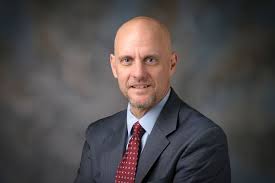
With endorsements from five previous FDA Commissioners and a Republican Senate deciding his fate, Stephen Hahn, M.D., is certain to become the next Commissioner of the U.S. Food and Drug Administration.

He's qualified, but most FDA heads have been(1). He also understands politics, and that is always part of FDA because a Commissioner has to let career scientists do their jobs while navigating demands from both the White House and Congress, which can often be politically motivated. And he s a lung cancer doctor, so he understands better than most what really causes lung cancer (smoking) and what is hype promoted by pharmaceutical companies and other groups who have tremendous influence inside organizations like the American Medical Association.
“The history of the bow and arrow is the history of mankind,” said Fred Bear.

If you want to get a fresh turkey for Thanksgiving, you don't need to spend $120 for something that calls itself Heritage, you can honor your actual heritage and go get one the way your ancestors did. With a bow and arrow.

Since that time, a lot of has improved about archery. Though guns haven't changed much in the last 100 years, archery has gone through a technological renaissance. Entire science conference presentations are devoted to it, and that happened this weekend at the annual meeting of the APS Division of Fluid Dynamics in Seattle.


Credit: INSEP, France.
"Many people have dogs. We have stem cells," says Cedars-Sinai Hospital lab manager Loren Ornelas-Menendez about why they will be working on Thanksgiving, hand-feeding a special formula to their charges and making sure they stay at just the right temperature. Like they do every day, 365 days a year.

This is not just any lab, it houses stem cells derived from hundreds of healthy donors and patients, and a catalog of human ills, including diabetes, breast cancer, Alzheimer's disease, Parkinson's disease and Crohn's disease.

Short summary: A Koala population in New South Wales has been severely impacted by fires with loss of perhaps 70%, at least 350 of them killed, and it could be more, leading to headlines of "1000 koalas killed". However there is no way even this population is functionally extinct (i.e. can't produce a new generation). It will recover again, not immediately but in a couple of decades. A koala population can triple in population in 12 years. It depends on eucalyptus leaves and those trees have died, but the eucalyptus grows quickly too.

When it comes to news literacy, schools often emphasize fact-checking and hoax-spotting. But as I argue in my new book, schools must go deeper with how they teach the subject if they want to help students thrive in a democratic society.

As a new poll shows that Americans struggle to know if the information they find online is true, news literacy remains essential in student education.

This is the latest of several articles I've done about NASA / ESA’s plan to return a sample from Mars. The samples would be geological ones, but they also could contain life indeed NASA motivate the mission by the possibility of life, especially past life but present day life can't be ruled out. This means it could lead to extraterrestrial life coming into contact with Earth's biosphere. That leads to the question - what are NASA or ESA doing to prepare the planetary protection procedures and the supporting environmental legislation for a sample return?