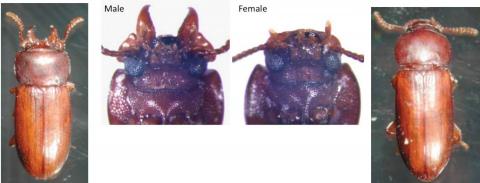
The "loser effect"- avoiding violence after losing a fight - evolves independently of any change in fighting ability,
according to results after scientists studied male broad-horned flour beetles, which regularly fight over females, to see how long they avoided fights after a defeat.
Most would not start a fight for about four days after a loss, but researchers selectively bred the beetles for a shorter duration of this loser effect and found that it evolved to be shorter - despite no improvement in fighting prowess.
A Neptunian planet named NGTS-4b has been found in what should be a 'Neptunian Desert' using the Next-Generation Transit Survey (NGTS) observing facility, designed to search for transiting planets on bright stars. NGTS-4b is so small other ground surveys wouldn't have spotted it.
But small is relative. Though NGTS-4b is 20% smaller than Neptune, that is about 3 times the size of Earth, and 20 times our Earth in mass. It has been nicknamed the 'Forbidden' planet by researchers and is hotter than Mercury at 1,000 degrees Celsius. It orbits around the star in only 1.3 days - the equivalent of Earth's orbit around the sun of one year.
Palm oil is being blamed for a lot but two academic conservationists note that those who ask to boycott all palm oil due to its contribution to deforestation should also consider boycotting coffee, chocolate and coconut if they wish to be consistent.
Are you against or really against palm oil?
Ask anyone who has followed any environmental news related to palm oil if they are for or against it and they will most likely say 'Against.' They'll mention destroyed orangutan habitats and rainforests disappearing.
Evolution will happen, in medicines like antibiotics, and in crop protection like herbicides. Though some groups may continue to use older, less effective products such as organic copper sulfate, evidence-based agriculture works to create new products that do less environmental damage, such as neonicotinoids.
I work in the field of bioprinting, where the aim is to build biological tissues by printing living cells into 3D structures.
Last month I found my Facebook news feed plastered with an amazing story about “the first 3D printed heart using a patient’s own cells”. A video showed a beautiful, healthy-looking heart apparently materializing inside a vat of pinkish liquid.
If you want to annoy someone in their late 30s, joke that all they care about are avocado toast points or beard grooming or running off to Coachella when a project needs to be finished. Because they are millennials.
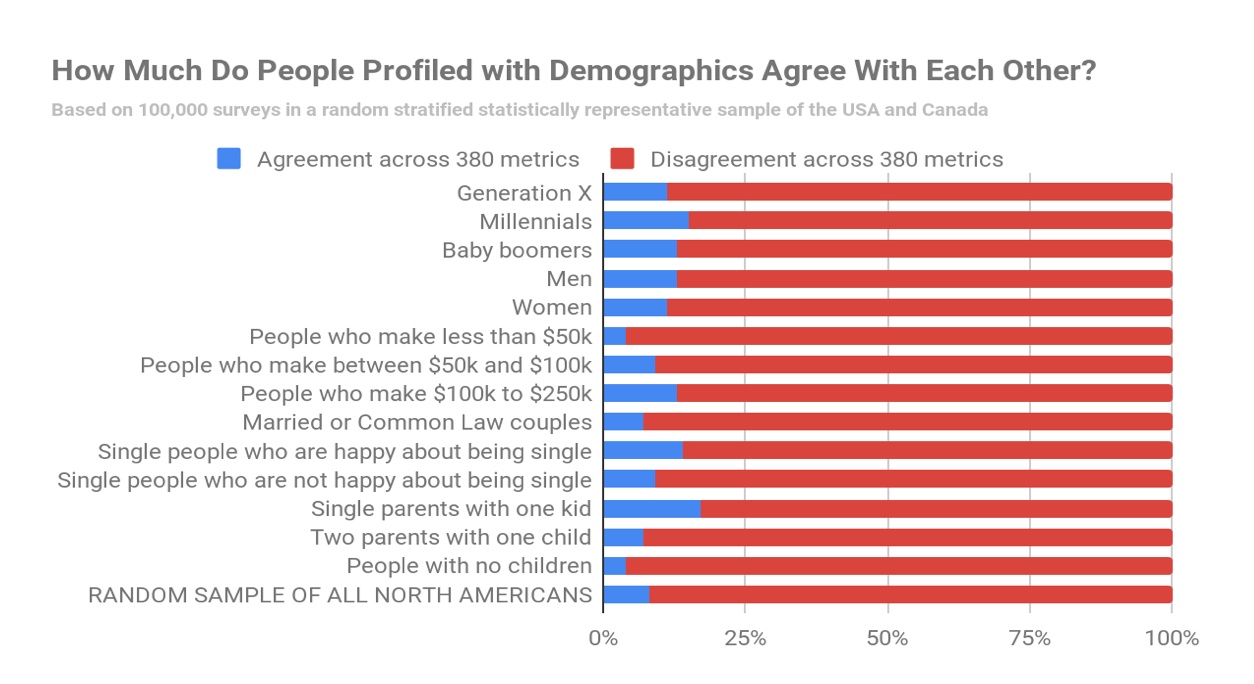
You can also stereotype Baby Boomers or Generation X(1) and get a rise out of them. Everyone seems to know that these "generation" classifications were entirely manufactured by advertisers, but they caught on and have become part of the lexicon. Advertisers created these sweeping generalizations based on demographics.
Yet they may not be right at all. They may even be shockingly wrong.
If you have cooked a steak or a hamburger you know that by the time you are ready to serve it, and certainly after you cut or bite into it, there will be liquid that oozes out of it.
Anti-meat groups know it isn't blood(1) but they use that imagery to try and sway people to their cause. And groups who make substitutes for meat also use that imagery, because they think that's important to meat eaters. Because marketing groups have long used it, people think it's blood, and even use the term "bloody."
Were dinosaurs green? You'd think so going by pop culture imagery but there is no way to know if they were green or grey or something else.
Have you read this week a claim by the Harvard School of Public Health that Food Z is linked to cancer or from our U.S. National Institute of Environmental Health Sciences (NIEHS) claims Chemical X is linked to Harm Y?
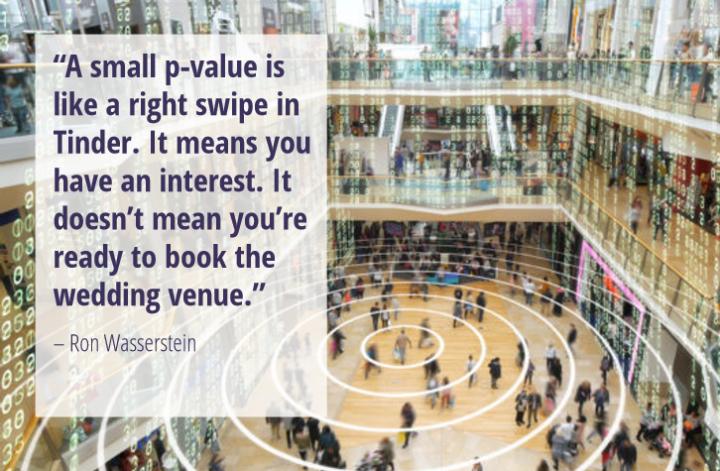
It's technically true, though in high-profile cases like with the International Agency for Research on Cancer in France, what they leave out is that to create their statistical hazard, they use studies with up up to 10,000 times the normal dose. To create hazard, they torture data but because they were able to get a p-value>.05 they declare it statistically significant.
Australia has changed in many ways over the past two decades. Rising house prices, country-wide improvements in education, an aging population, and a decline in religious affiliation, are just some of the ways it has changed. At the same time, political power has moved back and forth between the two major parties. How much can we attribute changes in political power to changes in who we are?
Quite a lot, as it turns out.
Finding the ‘average’ electorate
We analyzed election results from 2001 to 2016 and mapped them against data from the census to see how socio-demographic characteristics influence voting patterns, and how this has changed over time.