A
common definition of the word dust refers to fine, dry particles of
matter. From dust storms on earth to
cosmic dust, just about everywhere that any form of matter is present, dust
will also be present. That includes the ubiquitous
household dust that seems to magically appear in our homes on every surface and
in the form of dust bunnies under furniture.
Hydrogen peroxide (H2O2) is best known for use in bleach and hair treatments and is often invoked as a scary chemical by environmental groups promoting concern about food and products, but it is produced naturally in our bodies. A new study shows it is a useful chemical across nature; plants use it to control how their cells react to varying levels of light.
Like preventing plant sunburn.
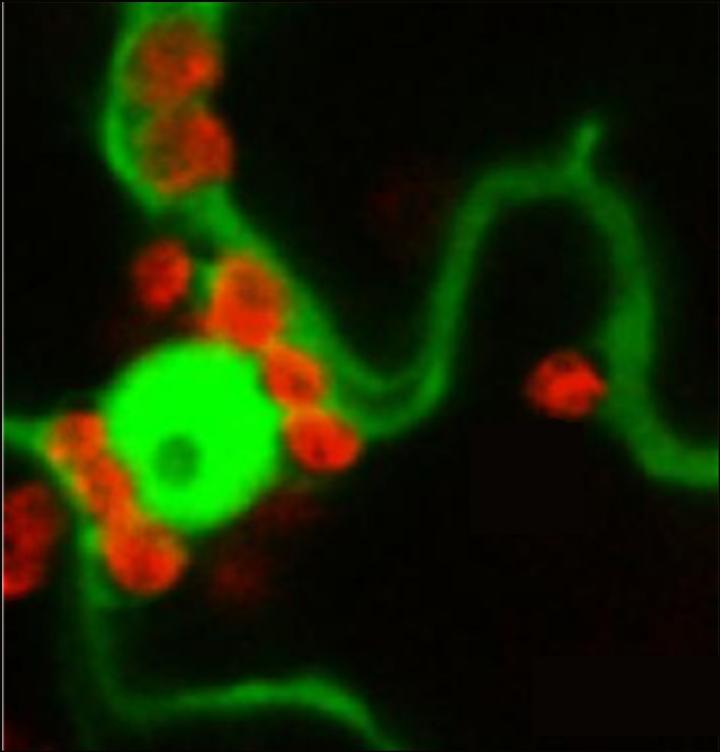
Hydrogen peroxide is a by-product of photosynthesis in parts of plant cells called chloroplasts, much like it is in our bodies by cellular respiration. Using a fluorescent protein that detects hydrogen peroxide, the researchers behind a new study in Nature Communications observed how H2O2 moves from chloroplasts and can be detected in cell nuclei.
What will cost $400 billion, a giant leap over California’s total health care budget for 2018 of $179.5 billion, yet is not mentioned by California lawmakers? California's free "single-payer" healthcare proposal.
We're in a lifelong struggle against nature every single day, the ultimate arms race. Viruses have continually infected humans just as they do today.
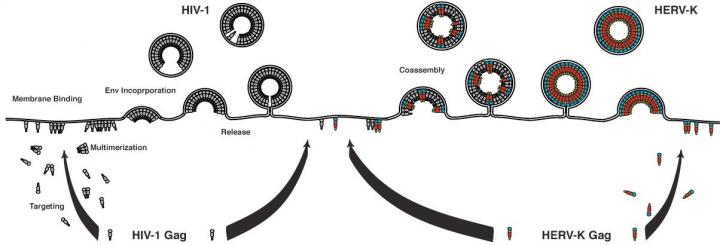
Some early viruses even became integrated into our genome and are now known as human endogenous retroviruses (HERVs). Over millions of years, they became inert due to mutations or major deletions in their genetic code.
Today, one of the most studied HERV families is the HERV-K family, which has been active since the evolutionary split of humans and chimpanzees with some members perhaps actively infecting humans within the past couple hundred thousand years.
The documentary film Food Evolution provides a fresh,
scientific look at the technology of crop genetic engineering and some
situations it has, or could, help solve problems for farmers. It shows the ugly politics and distortions
that have maligned a useful technology that has served farmers well for twenty
years, worldwide.
Tormented water masses with distant horizons in flames. Multicoloured reflexions over living oceans. Moving images with an astounding visual impact. These are the first words that come to my mind if I try to describe Paola Nicoletti's paintings. Needless to say, I like them a lot - but judge for yourself from the three images below, or by visiting her web site. And if you do, please drop her a line! Paola is a friend, who has recently taken her painting quite seriously. I believe these pictures give ample justification for it. Here is what Paola herself writes to describe some of her works:
Last night was the premiere of "Food Evolution", a documentary on the science in our dinner, and I saw it with a large audience for the second time.
Wait, premiere? Second time? Which is it?
It's both. And that is how it became a tale of two cities. And maybe even a metaphor for the two Americas we now live in.
Two weeks ago I moderated a panel on communicating science and, more importantly, risk, at the University of Guelph, Canada's most prominent agriculture school. In the evening, there was a showing of "Food Evolution" in an auditorium there. I don't know how many people attended, it was packed, and before the movie there was a show of hands on how many people were okay with GMOs, how many distrusted them, and how many were unsure.
No, this post is not about some exotic new physics model predicting dark photons or other useless concoctions which physicists sometimes entertain with, in their frustration for the lack of guidance from experimental data of what really is it that the Standard Model is an effective theory of. For that kind of stuff, please wait and check out my blog at some other time.
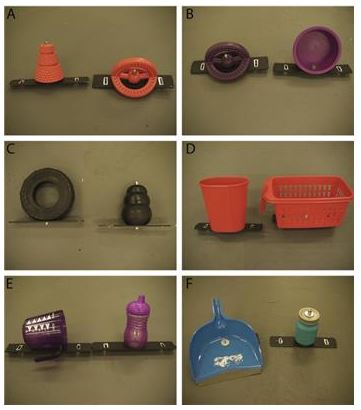
Kids are stimulated by new experiences. So are pigs. If you watched the 2014 video where a camera falls out of a plane and crashes into a pig sty you saw how intrigued they were by it, even though it clearly was not food.
A new study says that such "consumerism", a preference for shiny new stuff, is universal across the animal kingdom. And they showed it in piglets.
Since 2014, China has spent $4 billion on advanced agricultural science and is approving new technologies rapidly. Meanwhile, our food science regulatory system remains trapped in the 1980s, paralyzed by environmental lobbyists who buy full-page ads in the New York Times claiming they are "unsure", it just "needs more testing."