


LOUISVILLE, Ky. - The mouth is one of the "dirtiest" parts of the body, home to millions of germs. But puffing cigarettes can increase the likelihood that certain bacteria like Porphyromonas gingivalis will not only set up camp but will build a fortified city in the mouth and fight against the immune system.

University of Louisville School of Dentistry researcher David A. Scott, Ph.D., explores how cigarettes lead to colonization of bacteria in the body. Scott and his research team have identified how tobacco smoke, composed of thousands of chemical components, is an environmental stressor and promotes bacteria colonization and immune invasion.

Scientists working in the Gulf of Mexico have found that contaminants from the massive 2010 Deepwater Horizon oil spill lingered in the subsurface water for months after oil on the surface had been swept up or dispersed. In a new study, they also detailed how remnants of the oil, black carbon from burning oil slicks and contaminants from drilling mud combined with microscopic algae and other marine debris to descend in a "dirty blizzard" to the seafloor.

We've seen increasingly bizarre claims from social psychologists and advocates with confirmation bias: American liberals are evolving into a different species, they have prettier children, conservatives are motivated by fear, and more. 

One thing is truth, people are more likely to mate by education level now, there are very few scenarios where smart people simply don't go to college in a culture where government spends money convincing young people they need a college degree.  That would have to change the genetic makeup of subsequent generations, right?

A new study published in Diabetologia finds that children with a strong family history of cardiovascular disease (CVD) and/or type 2 diabetes were found to have cholesterol levels significantly higher than children with no family history of those conditions.

The research found that one third of the 12-year-olds studied had a strong family history of one or both diseases. This group also had unfavourable levels of cardiometabolic markers in the form of higher total cholesterol, and a higher ratio of total cholesterol to HDL cholesterol than the groups with moderate or no family history of disease.

Children with elevated levels of these markers may also have a higher risk of heart attacks and strokes in adulthood.

Though wind energy is not viable everywhere, there are places it can work. The Galapagos Islands, a fragile ecosystem, is touted as one example, because it otherwise has to import diesel fuel. 

A performance summary and recommendations for the expansion are contained in a new report by the Global Sustainable Electricity Partnership (GSEP), which led and financed the $10 million project. The project's three 51-meter-tall wind turbines and two sets of solar panels have supplied, on average, 30% of the electricity consumed on San Cristóbal, the archipelago's second-largest island in size and population, since it went into operation in October 2007.

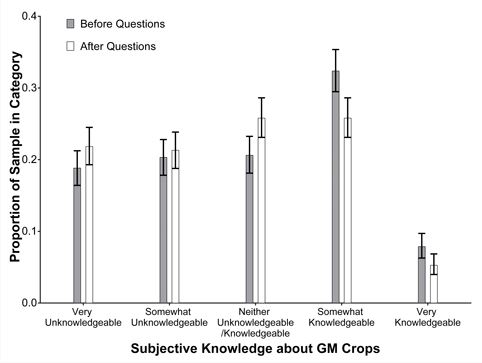
Consumers are aware of genetically modified crops but their knowledge level is limited and often at odds with the facts, according to a new paper in the FASEB journal.

Last year, Brandon McFadden, an assistant professor of food and resource economics at the UF Institute of Food and Agricultural ‌Sciences, published a study that showed scientific facts scarcely change consumers’ impressions of genetically modified food and other organisms.

Washington, DC -- Obese teenagers already show signs of hormonal differences from normal-weight peers that may make them prone to weight gain, according to a new study published in the Endocrine Society's Journal of Clinical Endocrinology & Metabolism.

The study found obese teenagers have lower levels of a hormone potentially tied to weight management than normal-weight teens. Studies of adults have found that the hormone, called spexin, is likely involved in regulating the body's fat mass and energy balance.

Bacteria use a form of "social media" communication called quorum sensing to monitor how many of their fellow species are in the neighborhood, allowing them to detect changes in density and respond with changes in collective behavior. Because of the importance of quorum sensing to the behavior of disease-causing bacteria like Vibrio cholerae, the cause of the deadly disease cholera, understanding how it works has the potential to allow us to disrupt it for therapeutic purposes.

Passed in 2016 in the United Kingdom and due to come into force on 26 May, the Psychoactive Substances Act bans all new psychoactive substances (NPS) except those specifically exempted, such as alcohol and tobacco. The Act has attracted much criticism from scientists and experts. But what better alternative exists? The scientific journal Addiction has today [25 May] published the opening statement in a debate by leading addiction researchers from around the globe.

The opening statement, by Prof Peter Reuter and Bryce Pardo of the School of Public Policy, University of Maryland, outlines three problems with the Psychoactive Substances Act's total ban of NPS:

Brivaracetam (trade name: Briviact) has been approved since January 2016 as add-on therapy for adolescents from the age of 16 years and adults with epileptic seizures. The German Institute for Quality and Efficiency in Health Care (IQWiG) now examined in an early benefit assessment whether this drug offers an added benefit for patients in comparison with the appropriate comparator therapy.

The drug manufacturer presented no data from a study of direct comparison, and the indirect comparisons conducted in its dossier were unsuitable for the derivation of an added benefit for several reasons. IQWiG therefore sees no hint of an added benefit of brivaracetam in comparison with the appropriate comparator therapy.

