







Will the medicines you take make their way back into your food?  They might, especially of you take your cue from an old Yorkshire song which deals with human recycling in the food chain, via worms and ducks.  Now, research [1] from the university of York (where else?) has studied one step of this process in detail.

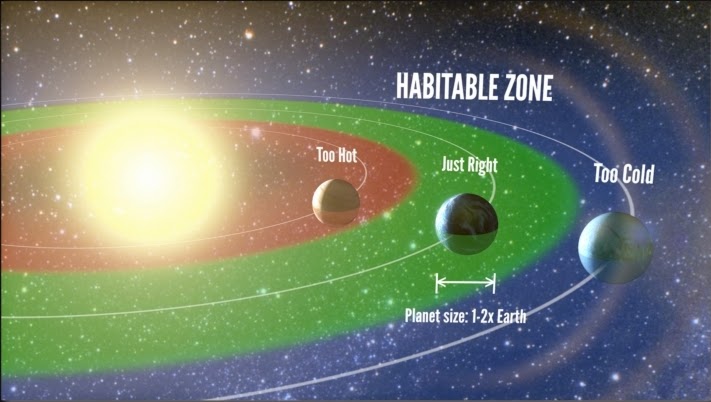
Think of our poor sister world Venus – almost the same size as Earth, it probably had oceans at the beginning. But Venus orbits closer to the sun -- and was never in the Continuously Habitable Goldilocks Zone, or CHZ.

Instead our poor sister world quickly spiraled into a greenhouse effect that erased its oceans and drove all the water away, leaving a desert planet, coated with dense clouds of sulfuric acid and carbon dioxide.

What is the best way to learn a dance sequence?

Professional dancers make it look easy. A choreographer rattles off a long list of moves, kicks and turns and the dancers somehow remember it all. But what about the rest of us who will be hitting the club this weekend?

Researchers from Bielefeld University and the Palucca University of Dance in Dresden are here to help. They  researched whether dancers learn a dance sequence better by seeing or by listening, that is, if a dance instructor first demonstrates the sequence, or if he or she first gives a spoken explanation.

An experiment with 42 people under functional magnetic resonance imaging (fMRI) found that if people see pictures of others being loved and cared for, it subsequently reduces
the brain's threat monitor, the amygdala,
 response to threats. 

This occurred even if the person was not paying attention to the content of the first pictures.

The study in Social, Cognitive and Affective Neuroscience, suggests that being reminded of being loved and cared for dampens the threat response and may allow more effective functioning during, and activation of soothing resources after, stressful situations. This was particularly true for more anxious individuals.


It’s been a disappointing couple of weeks for the Scotch whisky industry.

Diageo reported that it is delaying plans on a £1 billion new-build distillery just north of Inverness following a slow-down in the company’s key whisky markets, particularly Latin America and China.

In World War II, did people with bird feeders have substantially different chirping friends than we see today?

Probably not, but a group of researchers warns than 2075 might look a lot less like then, or even 1975, or today. The distribution of birds in the United States could change a lot.

A new U.S. Geological Survey study in PLOS ONE predicts where 50 bird species will breed, feed and live in the conterminous U.S. by 2075. While some types of birds, like the Baird's sparrow, could lose a significant amount of their current U.S. range, other ranges could nearly double.    

Last year, two experiments at the Large Hadron Collider announced the finding of a new elementary particle - the long-theorized Higgs particle. 

Many calculations indicate that the particle discovered last year in the CERN particle accelerator was indeed the famous Higgs particle. Physicists agree that the CERN experiments did find a new particle that had never been seen before, but an international team say they are not convinced it was the Higgs particle. 

Maybe it just looks like it. And maybe it is not alone. 

The research team analyzed the existing scientific data from the LHC and published an analysis in Physical Review D

 Another American election season has come and gone.  In San Francisco, Rep. Nancy Pelosi, Minority Leader of the House, campaigned only modestly, even in a year when voters turned on Democrats nationwide she was sure to get 80 percent of the vote, and once again she talked about abortion, saying that if Democrats were not in charge, they would be banned.

It is hard to imagine that 1 person out of 435 would cause a 40-year-old abortion law to be overturned but the implication has always been that the federal government must control it because of the dangers of 'back alley abortions' that were unsafe.

If you voted for a Democrat this week, it may not be because of the issues, it may be because your emotions caused you to gloss over facts, according to a paper in Personality and Social Psychology Bulletin.

Emotions are obviously powerful forces in human behavior and attitudes and to some extent they play an important role in guiding policy support. A paper by researchers at Tel Aviv University and the Interdisciplinary Center in Herzliya studied the interaction between emotion and political ideology, showing that the motivating power of emotions is not the same for those on different ends of the ideological spectrum.

